Hunting traps have been a vital tool for humans for millennia—used not only for food and fur but also in modern times for wildlife management, research, and mitigating human-wildlife conflict. Today’s trappers rely on a range of types of hunting traps, each designed with specific goals in mind: quick, humane kills or safe live captures. These tools are far from outdated; they’re evolving with technology, ethics, and regulation to balance effectiveness with animal welfare.
The two main categories of traps are quick-kill traps—like body-grip traps and snares—and live-hold traps, such as foothold and cage designs. Each serves distinct purposes depending on the target species, environment, and legal requirements. While trapping remains controversial due to risks to non-target animals and concerns over animal suffering, responsible use under proper training and regulation plays a critical role in conservation and ecological balance.
This guide breaks down every major trap type, explains how they work, and outlines best practices for ethical, legal trapping. Whether you’re a trapper, land manager, researcher, or concerned citizen, understanding the types of hunting traps is essential for informed decisions about wildlife interaction.
Quick-Kill Traps: Design and Application

Quick-kill traps are engineered to dispatch animals swiftly, minimizing pain and distress. They’re typically used in remote or aquatic areas where frequent trap checks aren’t feasible, and humane euthanasia is a priority.
Body-Grip Traps (Conibear Style)
Named after Frank Conibear, who invented the modern version in 1957, body-grip traps—often called Conibears—use powerful coil springs to snap steel jaws shut on an animal’s neck or torso. When correctly placed and sized, they cause instant death through cervical dislocation or cardiac compression.
Available in standardized sizes:
– #110: Targets mink and muskrat
– #120: Effective for raccoons and opossums
– #220: Ideal for raccoons, otters, and smaller beavers
– #330: Built for large beavers and adult raccoons
These traps are most effective in water sets, such as muskrat runs or beaver channels, where animals must pass through the open jaws. To reduce non-target captures—especially domestic pets—many trappers use elevated pole sets or enclosed boxes.
Pro Tip: Offset triggers allow smaller animals to pass through without setting off the trap, improving selectivity.
Despite their design for instant kills, studies like one from 2019 show that some models fail to kill consistently, particularly if triggered off-center. In Canada, regulations in some provinces allow these traps to remain unchecked for up to 14 days, raising serious welfare concerns. Modern improvements, such as the Magnum Conibear and Sauvageau models, offer better sensitivity and durability, preferred by professional trappers.
Killing Snares: Mechanics and Risks
A killing snare consists of a steel cable loop that tightens around an animal’s neck or body when triggered, leading to strangulation or spinal injury. Made from aircraft-grade steel—often nylon-coated for stealth—snares are lightweight, inexpensive, and highly adaptable.
Key components:
– Cable: 3/32″ to 1/8″ diameter
– Locking mechanism: Ensures one-way tightening
– Swivel: Prevents cable twist and improves retention
– Anchor: Secures the snare to a tree, stake, or log
Snares are set along trails, den entrances, or near water. Their effectiveness lies in customization—trappers adjust loop height, size, and tension based on the target species.
Safety Feature: Stop-loss knots limit how far the loop can close, helping to exclude large non-target animals like deer or moose.
Despite innovations, snares remain among the most controversial traps. Documented cases include:
– 15 cougars killed in Alberta wolf snares
– Golden eagles maimed
– Domestic dogs caught and injured
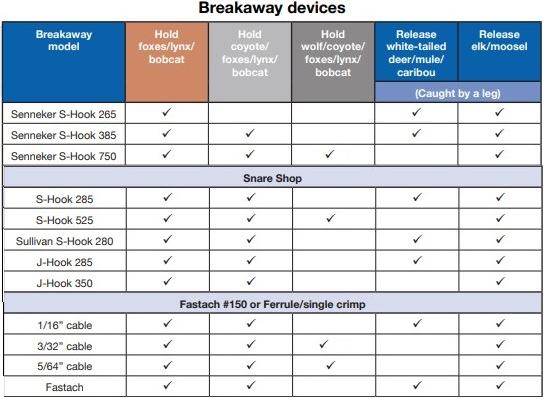
Some U.S. states, including California and Arizona, ban snares entirely. Others require breakaway links or daily inspections. The term cable-restraint trap is increasingly used for non-lethal versions with relaxing locks that stop tightening after capture.
Drowning Sets for Aquatic Traps
Drowning is a humane dispatch method used with foothold traps or snares in water. Once triggered, the animal is pulled underwater and drowns quickly—a standard practice for furbearers like beavers, otters, and muskrats.
Common setups:
– Dive stick: A pole extending over water; animal dives and pulls itself under
– Submerged foothold: Trap placed fully beneath the surface
– Cable slide-foothold combo: Hybrid design using snare and foothold mechanics
This method reduces scavenging and visibility, ideal for remote areas. It’s also used to avoid body-grip traps in certain habitats. Because it relies on submersion, it only works with semi-aquatic species capable of holding their breath briefly.
Visual Cue: Look for bubbles or disturbed water—signs of recent activity.
Most jurisdictions require regular inspections, even for drowning sets, to ensure compliance and animal welfare.
Live-Hold Trap Designs: Capturing Without Harm
Live-hold traps are essential for humane wildlife control, relocation, and scientific study. They allow animals to be captured unharmed and released or transported.
Foothold Traps: Function and Use
Despite the outdated term “leg-hold,” these are correctly called foothold traps—they secure the foot pad, not the leg. When properly sized and set, they cause minimal injury and are widely used by biologists and trappers.
Types include:
– Longspring: Older design with long coil springs
– Coil spring: Modern standard, compact and adjustable
– Jump trap: Small version for mink and weasels
Jaw types vary:
– Offset jaws: Leave a gap to preserve blood flow
– Padded jaws: Rubber-lined to reduce injury
– Laminated jaws: Wider surface for pressure distribution
Sizes:
– #1: Mink, weasel
– #1.5: Raccoon, fisher
– #2: Coyote, fox, bobcat
– #3+: Wolf, bear
Expert Note: Animals rarely chew off limbs unless the trap is too large or improperly placed. Self-mutilation is uncommon with correct use.
Placement techniques:
– Buried land sets: Camouflaged with dirt and leaves
– Water sets: Submerged for beavers and otters
– Cubby sets: Baited enclosures mimicking dens
Pan tension can be adjusted (e.g., 4 lbs for coyotes) to reduce non-target captures. Daily checks are mandatory.
Cage Traps for Safe Capture
Cage traps, or box traps, are fully enclosed metal boxes with spring-loaded doors. Bait is placed inside; when the animal enters, the door closes.
Sizes:
– Small (10″x10″x32″): Raccoons, opossums
– Medium (12″x12″x36″): Coyotes, foxes
– Large (18″x18″x48″): Bobcats, small bears
Made from galvanized steel or coated wire, they cause no physical harm and are ideal for urban areas.
Benefit: High selectivity when baited correctly—e.g., fish for raccoons, meat for coyotes.
However, cage traps are bulky, prone to theft, and require frequent monitoring. Confined animals can suffer stress, so unattended traps should never be left for long periods.
Enclosed Foothold Traps: Species-Specific Design
These specialized traps feature a steel and nylon tube that houses the trigger and jaws. Only animals with appropriately sized paws can reach inside, making them extremely selective.
- Diameter: ~3.75″
- Length: ~4.5″
- Weight: Less than 1 lb
Used primarily for raccoons in ecologically sensitive zones, they minimize non-target captures and injury. The paw is captured within a casing, shielding it from weather, predators, and excessive pressure.
Best For: High-welfare trapping in areas with domestic animals or protected species.
Specialty Traps and Niche Uses

Beyond standard designs, several specialized traps serve unique purposes.
Dog-Proof Traps: Raccoon-Only Sets
Dog-proof traps use an enclosed trigger that requires dexterous paw movement—something raccoons can do, but dogs cannot. Often elevated or enclosed, they’re vital in suburban areas.
Effectiveness: Nearly 100% dog exclusion when properly deployed.
New York State, for example, requires elevated or enclosed sets for #220 Conibear traps during certain seasons.
Pitfall Traps for Small Mammals
A pitfall trap is a concealed hole, often lined with plastic, that captures animals when they fall in. Used in ecological research to monitor rodents or amphibians.
- Dug 1–2 feet deep
- Covered with brush or leaves
- May include funnels or ramps
Because they expose animals to weather and predators, they require frequent checks—sometimes multiple times per day.
Ethical Concern: High risk of dehydration, predation, or injury limits long-term use.
Cuff-Style Traps: Inhumane and Risky
Marketed as “dog-safe,” cuff-style traps clamp around the front paw. Despite claims, they cause severe injury.
Documented cases:
– Raccoon chewed off paw in Burnaby, BC (2018)
– Cat in Ontario required amputation (2021)
– Mother raccoon wandered five days with embedded cuff (2020)
Animal welfare groups like The Fur-Bearers condemn them as inhumane.
Selecting the Right Trap
Choosing the correct trap depends on your goal, species, habitat, and local laws.
Match Trap to Target Species
| Animal | Recommended Trap | Size/Model | Notes |
|---|---|---|---|
| Rabbit, Squirrel | Snare, Cage Trap | Small snare, 10″ cage | Add stoppers |
| Raccoon | #220 Conibear, #1.5 Foothold | Elevated or enclosed set | Avoid dogs |
| Beaver | #330 Conibear, #3 Foothold | Use drowning setup | Aquatic placement |
| Coyote | #2 Foothold, 3/32″ Snare | Adjust pan tension (~4 lbs) | Reduce pet captures |
| Bobcat | #2 or #3 Foothold | Use cubby set with lure | High selectivity |
| Mink | #110 Conibear, #1 Foothold | Water set essential | Small, fast |
Golden Rule: Use the smallest effective trap to minimize injury and improve selectivity.
Habitat-Based Placement Tips
- Forests and Trails: Snares and footholds along game paths
- Wetlands: Body-grip traps in water runs; use dive sticks
- Urban Areas: Cage traps only
- Research Zones: Enclosed footholds or pitfall traps (with permits)
Camouflage and scent control are key—bury footholds, cover snares, and avoid human scent contamination.
Legal and Ethical Trapping Rules
Trapping is regulated to protect wildlife, ensure humane treatment, and prevent conflicts.
Licensing and Season Requirements
All U.S. states and Canadian provinces require trapping licenses. Most mandate:
– Permits for certain species
– Seasonal restrictions
– Harvest reporting
Illegal trapping can lead to fines, gear confiscation, or criminal charges.
Prohibited Traps by Region
- Toothed foothold traps: Banned in several U.S. states and EU countries
- Snares: Banned in California, Arizona, and parts of Canada
- Conibears: Restricted in residential zones
Always verify local laws.
Best Practices for Humane Trapping
- Check traps daily
- Avoid pet food as bait
- Use breakaways and stoppers
- Participate in certified training
- Use natural concealment
Pro Tip: Apps like onX Hunt help track trap locations and ensure legal compliance.
Baiting and Luring Strategies
- Baits: Fish, meat, eggs—placed inside or near trap
- Lures: Urine, gland secretions—dabbed on nearby vegetation
Effective combinations:
– Raccoon: Fish + estrous raccoon urine
– Coyote: Meat + fox gland lure
– Beaver: Castor lure + aspen sticks
Avoid: Dog or cat food—strongly attracts pets.
Modern Trapping Technology
- GPS apps: Mark, track, and manage trap locations
- Remote monitoring: Cellular alerts when a trap is sprung
- Smart traps: Sensors and real-time notifications (emerging trend)
Innovations include 3D-printed parts and custom swivels.
Final Note: Understanding the types of hunting traps goes beyond mechanics—it involves ethics, law, and responsibility. Whether managing wildlife, conducting research, or resolving conflicts, using the right trap correctly ensures humane outcomes and public trust. Always prioritize training, follow regulations, and choose methods that balance effectiveness with compassion.
0 Comments