Hunting is more than just aiming and shooting—it’s a battle of wits, timing, and instinct against some of nature’s sharpest survivors. Whether you’re tracking a mature whitetail through remote timber or honing your skills on small game, success doesn’t come from luck. It comes from preparation, discipline, and the ability to outthink your quarry. With the right tips for hunting, even novice hunters can dramatically increase their odds of a clean, ethical harvest.
The best hunters aren’t always the ones with the most expensive gear. They’re the ones who master scent control, read the wind like a forecast, scout relentlessly, and stay in the woods when others call it quits. This guide distills expert-backed strategies used by seasoned outdoorsmen into actionable, real-world advice. You’ll learn how to move silently, set up smart, call effectively, and recover game with confidence—all while avoiding the costly mistakes that keep so many hunters empty-handed.
Prioritize Scent Control Like a Predator
Deer can detect human scent up to half a mile away under ideal conditions. Your smell is often the first warning sign—long before they see or hear you. To beat this, you must eliminate your odor at every level.
Eliminate Human Odor Completely
Start with your body and clothing. Wash all hunting gear in scent-free detergent and store it in airtight, odor-proof bags until use. Shower using unscented soap before every hunt—avoid deodorants, colognes, and even scented shampoos. Even your breath can give you away; switch to scent-free toothpaste and skip coffee before heading out. Never step on deer trails with your hunting boots—this contaminates the area and teaches mature bucks to avoid it.
Use Active Scent-Killing Tools
Passive washing isn’t enough. Wear activated carbon clothing that absorbs body odor throughout the day. Spray your boots, gloves, and gear with scent-eliminating sprays like Slay before entering the woods. For maximum effectiveness, consider an Ozonics unit mounted above your stand. It emits ozone to neutralize airborne human scent in real time, giving you a significant edge, especially in thermals.
Mask Your Presence Naturally
Sometimes, eliminating scent isn’t enough—deception works better. Use Evercalm or similar scent sticks around your stand to flood the air with natural deer odors like doe urine or earthy forest scents. This creates a “scent bubble” that masks your intrusion and actually calms nearby animals, making them less likely to flee.
Pro Tip: Always hang your hunting clothes in a sealed container with scent absorbers during the off-season. One whiff of garage air or laundry detergent can ruin months of preparation.
Master Wind and Thermals to Stay Undetected
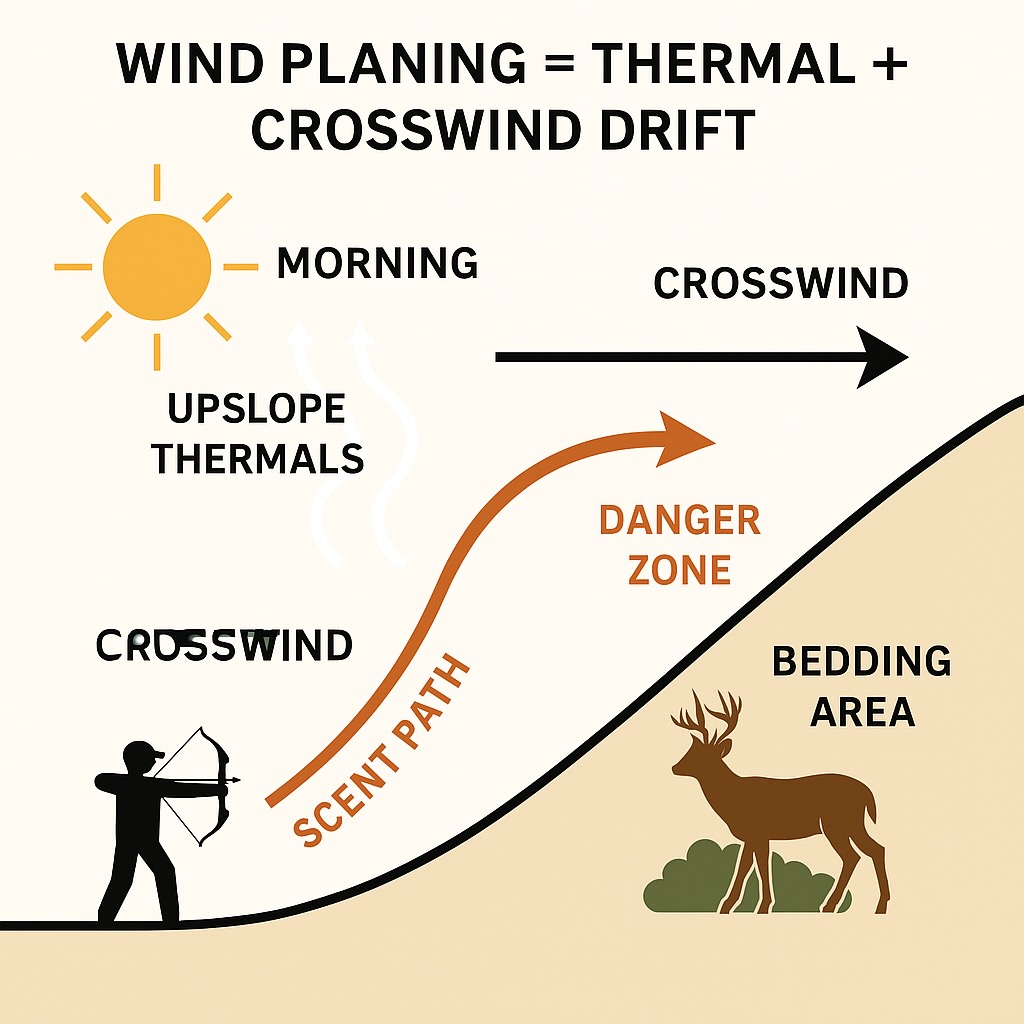
Wind direction is non-negotiable. Hunt with the wrong wind, and even perfect camouflage won’t save you.
Hunt Downwind or Crosswind Only
Always position yourself so the wind carries your scent away from deer travel zones. Never approach your stand with the wind at your back—this pushes your odor directly into bedding or feeding areas. If the wind shifts while you’re in your stand, be ready to abort.
Understand Thermal Currents
Surface wind isn’t the whole story. In cool mornings, thermals rise—air flows uphill. That means your scent can drift upward from a valley into a ridge-top bedding area, even if the surface wind seems favorable. Conversely, in warm afternoons, thermals fall—air moves downhill. Adjust your stand placement accordingly: hunt below bedding zones in the morning, above feeding areas in the evening.
Test Wind Frequently
Carry a wind checker—commercial puffers or crushed milkweed fluff work great. Test every 15 minutes while in your stand. A sudden shift can expose your position in seconds. And remember: high winds make deer nervous and reduce movement. Use them to mask your noise, but avoid exposed ridge tops during gales.
Warning: Don’t rely solely on weather apps. Real-time, on-the-ground testing is the only way to know for sure.
Scout Like a Tracker, Not a Tourist
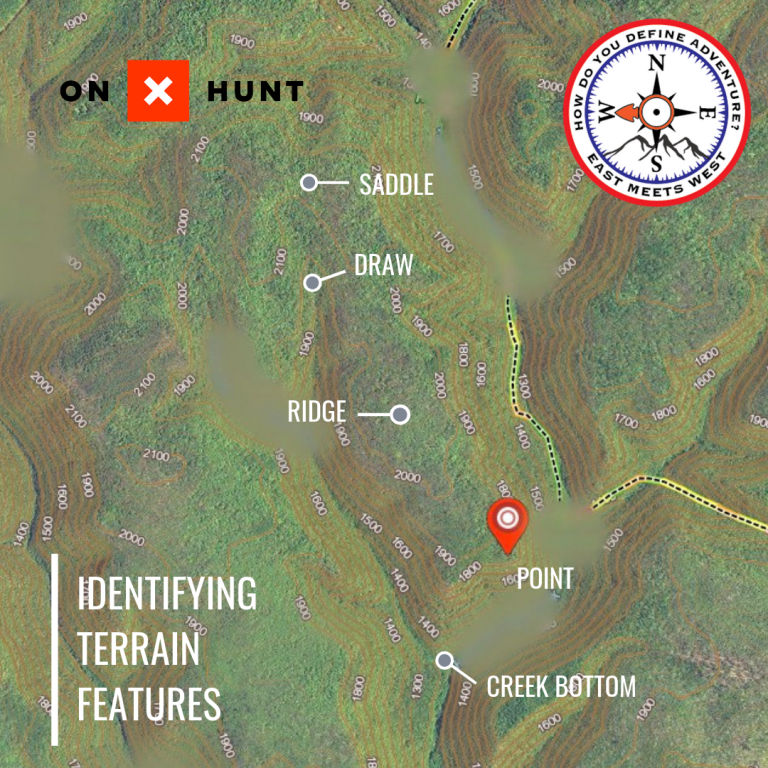
Time spent scouting is directly proportional to success in the field. The more you know about deer movement, the better your odds.
Focus on Fresh Sign
Look for rubs with oozing sap, green beds in thickets, fresh droppings, and clear tracks. These indicate current activity. Old rubs and dried beds are history—don’t waste time on them. Mature bucks often create rub lines along travel corridors; fresh ones mean he’s still using that route.
Map Key Terrain Features
Identify funnels (narrow paths between thickets), pinch points (where two ridges squeeze deer into a single trail), and travel corridors like creek bottoms or old logging roads. Use apps like Onyx to mark and analyze these zones from home. The best stand locations aren’t always the most comfortable—they’re where the deer have to go.
Use Trail Cameras Strategically
Place cameras on scrape edges, food plot perimeters, and funnel entrances—not directly over them. Cellular models let you monitor activity remotely, so you don’t risk disturbing the area weekly. And here’s a pro insight: most big bucks are killed before November 1st. Early season patterns are more predictable—don’t waste this critical window.
Expert Insight: Scout more than you hunt. The best hunters spend 70% of their time gathering intel, 30% pulling triggers.
Hunt When Others Quit
Deer don’t follow a nine-to-five schedule. The biggest opportunities come when most hunters are already back at camp.
Stay All Day During Rut
Mature bucks move around the clock during peak rut. Most hunters leave at noon—be the one still in the stand at 11 a.m. when a giant walks by. Midday movement spikes during full moons, especially after a cold front.
Hunt Midday Under Full Moon
A bright moon increases nighttime feeding, so deer rest at night and move during daylight. Combine a full moon with a temperature drop for explosive activity. Use solunar tables to predict peak movement periods.
Don’t Leave After Rain
Rain quiets the forest and cuts human pressure. Deer move more freely in wet conditions. Wear quality rain gear—there’s no bad weather, only bad clothing. Damp ground also masks your footsteps, making still-hunting far more effective.
Stat: Over 40% of mature buck movement on public land occurs between 10 a.m. and 12 p.m.—when 90% of hunters have already left.
Perfect Your Stand Setup
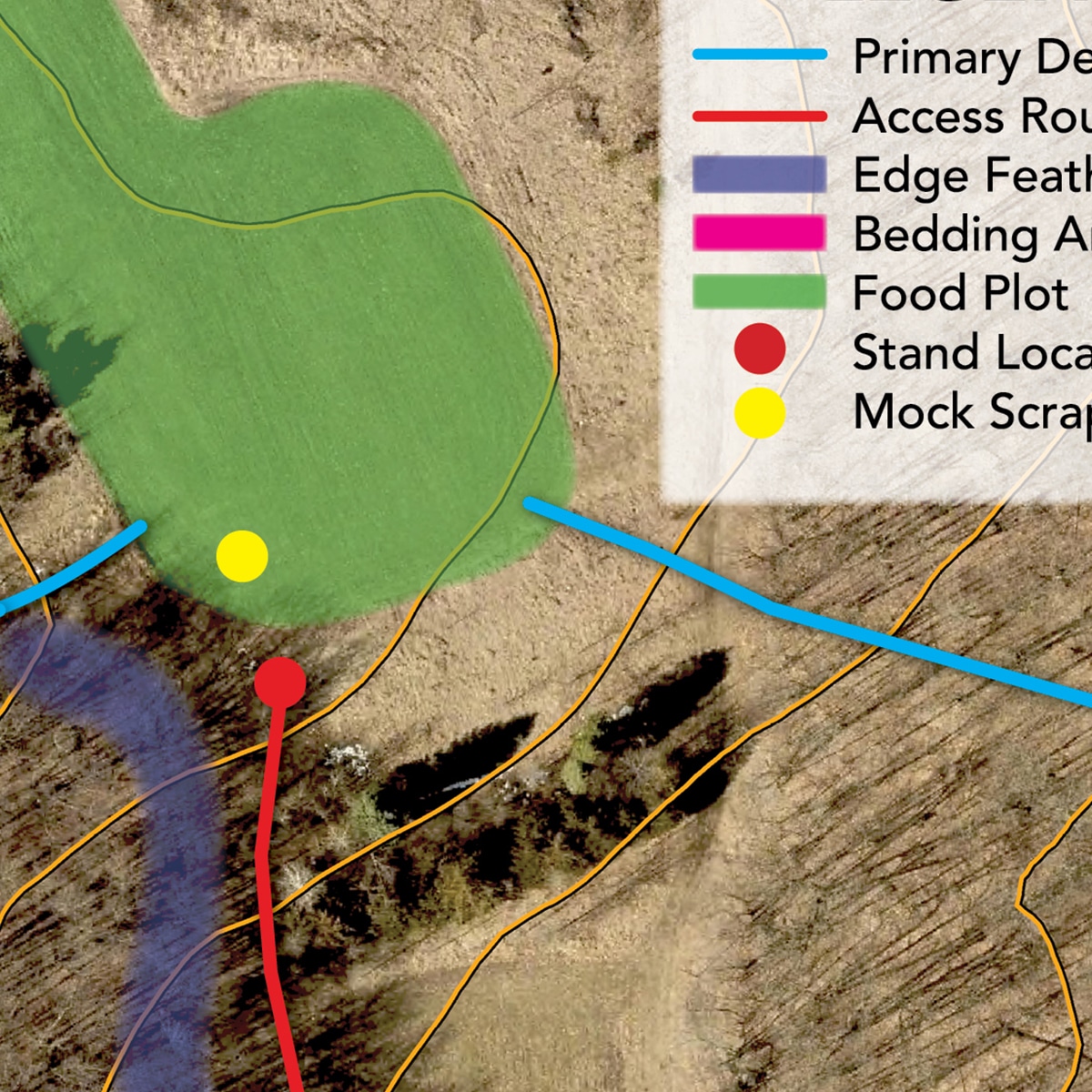
Location beats tree perfection—always.
Choose Placement Over Comfort
Don’t wait for the “perfect” tree. Hang where the deer travel. A 12-foot stand in a crooked oak beats a 20-foot perfect tree in the wrong spot. Prioritize shot lanes, concealment, and wind direction.
Plan Entry and Exit Routes
Approach from downwind. Take a longer, quieter path to avoid deer trails. Never walk directly to your stand—circle in from the side. And always check your backtrail: deer often follow hunters from behind, watching silently.
Rule: Face away from the sun. Glare ruins visibility and silhouettes you against the sky.
Still-Hunt with Precision
Move like a predator—slow, silent, deadly.
Use the 5-Step Rule
Move five steps, stop for 30–60 seconds, scan 360 degrees. Pause longer at ridgelines or openings. Let the forest settle before advancing.
Watch for Bedded Deer
Scan slowly. Look for ear twitches, eye reflections, or antler tips. A bedded buck may not move until you’re within 10 yards.
Pro Tip: Still-hunting works best in high-pressure areas or mid-to-late season when deer patterns shift.
Use Calling the Right Way
Call only when it counts.
Rattle Aggressively
Simulate a real fight. Loud, chaotic rattling attracts curious bucks. Quiet rattling sounds like play—ignore it.
Grunt When a Buck Hesitates
If he’s looking around or walking away, a soft grunt can trigger curiosity. Never call if he’s already coming.
Hunt Near, Not On, Scrapes
Bucks visit scrapes mostly at night. Set up downwind on the trail leading to the scrape—not right over it.
Fact: Most mature bucks ignore food plots after dark. Hunt travel routes, not feeding zones.
Train for Real-World Conditions
Your gear is only as good as your skill.
Practice Year-Round
Shoot weekly from realistic positions: sitting, kneeling, off-hand. Practice at your max expected range—30 yards for bow, 100–200 for rifle.
Zero Before Every Season
Rifles shift in storage. Re-zero at 100 yards. For bowhunters, switch to broadheads by June to ensure accuracy.
Carry a Shooting Support
Use a lightweight bag or bipod. Field accuracy can improve by 1,000% with proper support.
Warning: Never carry a firearm while climbing. Use a haul line.
Avoid Costly Mistakes
Even experts fail—here’s how not to.
- Don’t hunt history—focus on current sign.
- Don’t overhunt hot spots—save them for perfect conditions.
- Don’t guess distance—pre-scan with a rangefinder.
- Don’t move too soon after a shot—wait 30 minutes for lung hits, 6–8 hours for gut shots.
Golden Rule: Be sure of your shot. Regret is the most expensive thing in hunting.
Final Takeaways
Success in hunting isn’t luck—it’s preparation meeting opportunity. The best tips for hunting focus on what you can control: scent, wind, timing, and mindset. Master these, and you’ll consistently outsmart even the wariest game.
Key Habits of Elite Hunters
- Scout more than you hunt
- Stay in the woods all day
- Adapt to terrain, not ego
- Respect the animal, respect the craft
Start small—hunt squirrels with a .22 to build confidence. Learn prey behavior. Invest in mentorship. Hunt like you mean it: with purpose, precision, and patience.
“Next year’s hunt begins the minute this season ends.” — Fred Bear
Now go make your own luck.

0 Comments