Rabbit hunting is one of the most accessible and rewarding forms of small game hunting. Whether you’re filling the freezer, training a dog, or sharpening your fieldcraft during off-season, cottontails and hares offer a fast-paced, stealthy challenge. Known for their sudden bursts, zig-zag escapes, and masterful camouflage, rabbits demand patience, precision, and the right tactics. This guide delivers actionable rabbit hunting tips backed by behavior insights, gear recommendations, and field-tested strategies—so you can increase your success rate from the first step into the brush.
Hunt at Prime Times
Rabbits are crepuscular, meaning they’re most active at dawn and dusk. These low-light windows align with feeding cycles and cooler temperatures, making early morning and late afternoon your best shot at consistent action.
Target Feeding Windows
- Hunt 30 minutes before sunrise to 2 hours after.
- Return 2 hours before sunset until dark.
- In winter, look for midday movement on south-facing slopes during warm spells.
- After cold snaps, rabbits often bask in sunlight—use this to your advantage.
Pro Tip: Avoid midday hunts in summer. Rabbits retreat to shaded thickets and become nearly inactive.
Read Signs of Rabbit Presence
Before you start walking, confirm rabbits are in the area. Success begins with knowing where they live—not just guessing.
Look for These Clues
- Droppings: Blueberry-sized pellets in clusters near cover.
- Tracks: Small front prints with longer hind tracks behind—distinctive in soft soil or snow.
- Runs: Well-worn trails through grass, under fences, or along fence rows.
- Forms: Shallow depressions under brush where rabbits rest (not burrows).
Key Rule: Focus on areas where signs are within 10 feet of thick cover. Scattered droppings in open fields mean little.
Choose the Right Habitat
Not all brush is equal. Rabbits need food, cover, and escape routes. Target edge habitats where multiple elements converge.
Most Productive Hunting Grounds
- Fence rows and hedgerows between fields and woods.
- Overgrown homesteads with brush piles and fallen structures.
- CRP fields with mixed native grasses and shrubs.
- Logged or burned areas (1–5 years post-disturbance).
- Christmas tree farms offering dense, low canopy.
- South-facing slopes in winter for sunning.
Avoid: Large, uninterrupted blocks of brush over 40 acres—too many escape options reduce flush rates.
Use Weather to Your Advantage
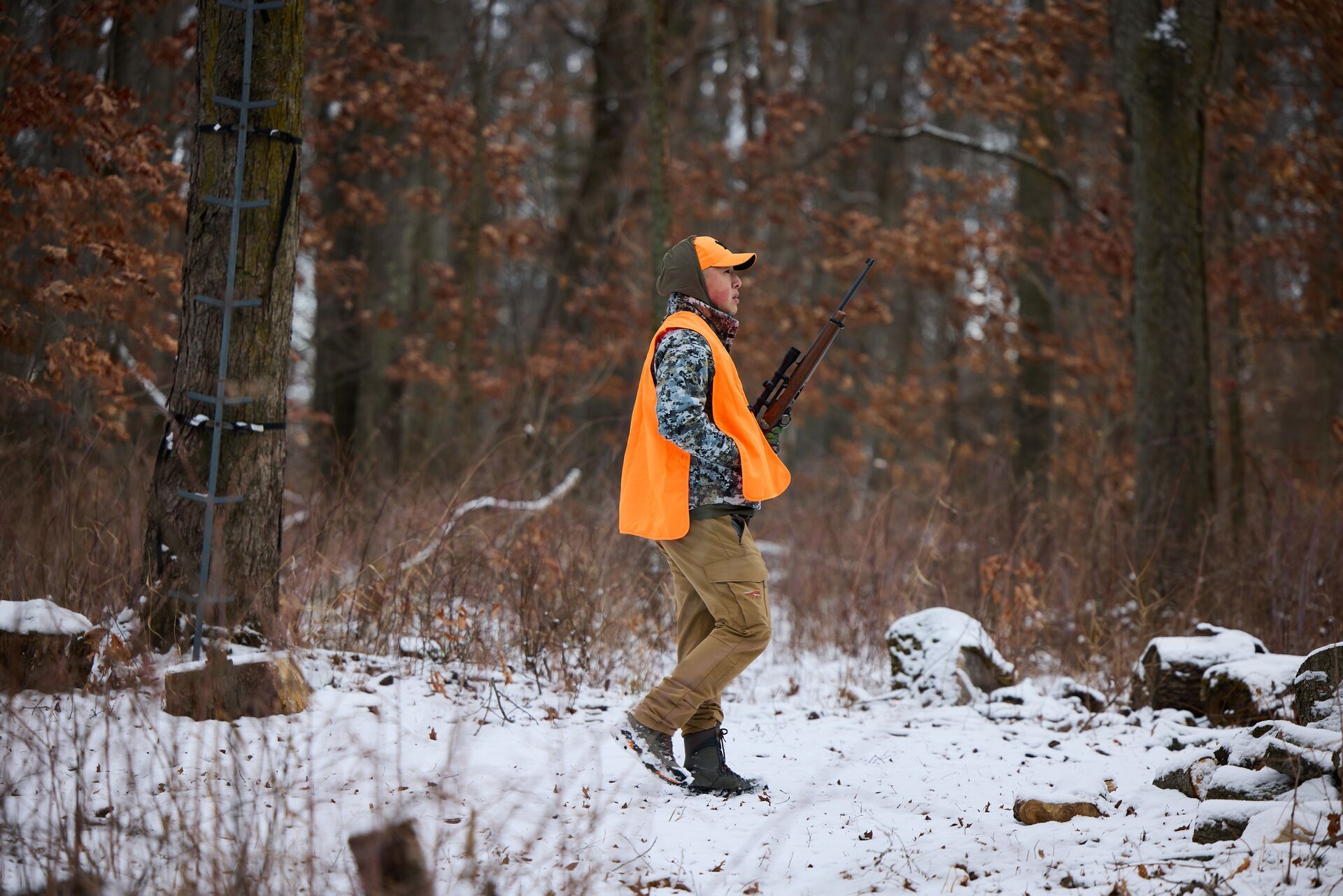
Smart hunters let conditions guide their strategy. Weather affects rabbit behavior more than many realize.
Best Conditions for Success
- Cool, cloudy days: Rabbits move more freely.
- Light snow: Tracks are visible, movement is funneled, and rabbits stand out.
- After a cold snap: Watch for increased midday activity on warm, sunny days.
- Windy days: Use wind noise to mask your approach.
Avoid: Hot, sunny days—rabbits hunker down and rarely flush.
Master the Walk-and-Flush Technique
This is the most common method for solo hunters. Done right, it maximizes your chance of surprising rabbits before they hear you.
Walk with Purpose
- Move slowly in a zig-zag pattern through cover.
- Pause every 20–30 seconds—rabbits often flush when they think they’ve been spotted.
- Scan ahead with binoculars to spot movement before stepping in.
- Keep your gun ready—flushes are sudden and close.
Common Mistake: Walking too fast. Rabbits freeze when they hear you; a slow pace gives them time to bolt into your range.
Run a Drive with Hunting Partners
Team hunting increases pressure and funnels rabbits toward standers—ideal for thick, expansive cover.
Set Up an Effective Drive
- Space hunters 15–20 yards apart in a line.
- Drivers walk through dense patches, pushing rabbits forward.
- Standers position on the edge, facing inward, ready to shoot.
- Use hand signals or radios to coordinate.
Safety First: Always wear blaze orange, maintain clear lines of sight, and never shoot toward the line of drivers.
Try the Ambush Method
Instead of chasing rabbits, let them come to you. This tactic works well in open areas with defined boundaries.
How to Ambush Successfully
- Find a high vantage point overlooking a field edge or run.
- Position near a known rabbit trail or form.
- Use a scoped .22 LR for head shots at 50+ yards.
- Stay motionless and silent—wear camouflage if needed.
Best For: Hunters with mobility limitations or those targeting hares in open terrain.
Hunt with Beagles for Higher Success
Beagles are the gold standard for rabbit hunting dogs. Their tracking ability and vocal chase make locating rabbits easier.
Match the Dog to the Prey
- Medium-speed beagles: Best for cottontails that make sharp turns.
- Faster-tracking beagles: Ideal for hares that run large circles.
How to Hunt with a Pack
- Release dogs into likely cover and let them pick up the scent.
- Listen for changes in bark—a shift means they’ve found the trail.
- Move quietly behind the pack, staying alert for the flush.
Critical Safety Rule: Never shoot a rabbit on its first break. Wait for it to circle at least once—this ensures it’s ahead of the dogs and reduces accident risk.
Pick the Best Firearm and Ammo

Your gear should match your hunting style—whether you’re walking, standing, or shooting on the move.
Firearm Options by Use Case
| Use Case | Recommended Gun | Why It Works |
|---|---|---|
| Flushing in thick cover | 20-gauge shotgun | Light, quick to shoulder |
| Long-range precision | Scoped .22 LR | Clean head shots, minimal meat damage |
| Minimal meat damage | .410 bore shotgun | Small shot pattern, less pelt destruction |
| Youth or beginners | Single-shot .22 | Low recoil, easy to handle |
Ammo Selection Tips
- Shotgun: Use #6 to #7.5 shot in lead or non-toxic.
- Load smart: Two high-brass (long-range), one low-brass (close) in the magazine.
- For meat: Choose non-lead shot to avoid contamination.
- .22 LR: Use hollow-point or hyper-velocity rounds for quick kills.
Gear Up for the Brush
Rabbit hunting means walking through thorns, briars, and wet ground. The right gear keeps you safe, dry, and focused.
Essential Hunter Gear
- Briar-proof clothing: Chaps, jacket, and bibs to resist thorns.
- Waterproof boots: Ankle support and grip for uneven terrain.
- Blaze orange vest: Required in many states for visibility.
- Heavy-duty gloves: Protect hands from brush and dressing.
- Game bag: Carry rabbits cleanly and cool them quickly.
- Headlamp: Crucial for early starts or night recovery.
Dog Equipment (If Using Beagles)
- GPS tracking collar: Prevents dog loss in thick cover.
- Bells: Audible tracking in dense brush.
- Leash and first aid kit: For injuries or control.
- High-energy dog food: Keeps dogs performing all day.
Aim for Clean, Humane Kills
Shot placement matters—especially when hunting for meat. A clean kill preserves more edible meat and respects the animal.
Best Shot Zones
- Head or upper chest with .22 LR—small caliber, high precision.
- Center body mass with shotgun—use #6 or #7.5 shot.
- Avoid gut shots—can ruin meat and prolong suffering.
Pro Tip: Wait for a broadside or quartering-away angle. Never shoot head-on.
Stay Safe in the Field
Rabbit hunting involves fast-moving animals, dogs, and often multiple hunters. Safety is non-negotiable.
Key Safety Rules
- Never shoot toward dogs—wait for the rabbit to circle.
- In team drives, maintain 20-yard spacing and clear line of sight.
- Always identify your target and what’s beyond it.
- Wear blaze orange—required in over 30 states.
Critical Reminder: Movement attracts rabbits. When hunting with dogs, stay still—a moving hunter can cause a rabbit to double back or retreat.
Field Dress and Process Properly
Proper handling ensures clean, safe, and tasty meat.
Step-by-Step Field Dressing
- Cut from anus to breastbone—avoid puncturing intestines.
- Remove windpipe, esophagus, and all organs.
- Take out anal glands and gall bladder—bile ruins meat.
- Skin by cutting around back legs and peeling hide down.
- Pat dry and cool quickly—wild rabbits carry fleas.
Post-Field Care:
– Soak in salt water for 24–48 hours to draw out blood (optional).
– Rinse thoroughly to remove hair.
– Cool completely before butchering.
Cook Rabbit for Maximum Flavor
Rabbit meat is lean and gamey—best when cooked slowly to retain moisture.
Best Cooking Methods
- Braising: Brown, then simmer in broth or wine for tender results.
- Roasting: Cook at 350°F until internal temp hits 160°F (72°C).
- Stewing: Combine with potatoes, carrots, and herbs.
- Frying: Bread and fry for crispy Southern-style rabbit.
- Grilling: Marinate first to prevent drying.
Try This: Slow Roasted Rabbit
- Season with salt, pepper, paprika, and garlic.
- Brown in oil.
- Bake with ketchup, Worcestershire, onion, and water for 90 minutes.
Follow Ethical and Legal Rules
Responsible hunting ensures sustainability and respect for the sport.
Ethical Practices
- Harvest only what you’ll eat.
- Aim for one-shot kills.
- Use non-lead ammo when possible.
Legal Requirements
- Check season dates, bag limits, and license rules in your state.
- Confirm blaze orange requirements.
- Get landowner permission for private land.
Use Trapping as a Backup Method
If hunting isn’t working, trapping can be effective—especially in high-traffic zones.
How to Trap Successfully
- Use wire snares or cage traps.
- Place near runs, trails, or burrow entrances.
- Bait with carrots, apples, lettuce, or clover.
- Check traps early each morning.
- Follow local laws on trap types and placement.
Note: Some states restrict snare use—always verify regulations.
Apply Pro-Level Tricks
Veteran hunters use subtle techniques to gain an edge. Try these advanced tips.
Lure Rabbits with Bait and Sound
- Set cabbage or apples near thick cover and wait downwind.
- Spray apple cider vinegar on bait—some swear it boosts attraction.
- Gently rustle brush to provoke a peek from a frozen rabbit.
Use Technology to Scout
- HuntWise or OnX Hunt:
- Pre-scout cover using satellite imagery.
- Track weather with HuntCast for optimal timing.
- Mark hotspots for future hunts.
Include Youth or Less Mobile Hunters
- Position them near groundhog holes or known escape routes.
- Rabbits often circle back—great chance for a clean shot.
- Ideal for introducing new hunters safely.
Know Your Rabbit Species
Tailor your approach based on the type of rabbit you’re hunting.
Cottontail Rabbits
- Found in brushy fields, fence rows, and edges.
- Rely on camouflage and quick bursts.
- Hunt with shotguns or .22s in dense cover.
Snowshoe Hares
- Live in high-elevation conifer or aspen forests.
- Turn white in winter—easier to spot.
- Leave large, snowshoe-like tracks.
- Require snowshoes or snowmobiles in deep snow.
Final Note: Patience Wins the Hunt
Rabbit hunting isn’t about luck—it’s about persistence. Even experienced hunters walk out empty-handed sometimes. But one flushed rabbit often means others are nearby. Stay quiet, move slowly, and keep coming back. With the right rabbit hunting tips, the right gear, and a deep understanding of rabbit behavior, your success will grow with every season.
Remember: the goal isn’t just meat. It’s tradition, skill, and connection to the wild—one quiet step at a time.


0 Comments