There’s nothing quite like the crackle of frost underfoot, the still morning air, and the sudden burst of baying echoing through the woods—your dog has picked up the trail. Training a dog for rabbit hunting isn’t about turning a pet into a machine; it’s about awakening instinct, building trust, and creating a partnership rooted in scent, sound, and shared purpose. Whether you’re raising a beagle pup or refining an older hound’s skills, success comes not from force, but from guiding natural ability with consistency, patience, and smart technique.
Dogs like beagles, basset hounds, and harriers are born with an extraordinary sense of smell—some say they can detect a rabbit trail hours old across hundreds of yards. But even the most gifted nose won’t deliver results without structured training that bridges instinct and obedience. This guide walks you step-by-step through the entire process: from introducing your 8-week-old pup to rabbit scent, to running full circles in the field, to standing calmly at your side when the shot is made. You’ll learn how to develop tracking drive, ignite prey response, build off-leash reliability, and condition your dog for real hunting conditions—all while keeping motivation high and safety paramount.
By the end, you’ll have a clear, actionable roadmap to train a dog that doesn’t just chase rabbits—it finds, flushes, and holds them, giving you the edge for clean, ethical shots season after season.
Start Early: Puppy Training Foundations (8 Weeks – 6 Months)
Introduce Rabbit Scent at 8 Weeks
The journey begins the moment you bring your pup home. At 8 weeks old, puppies are highly impressionable and eager to explore. Use this window to connect rabbit scent with excitement. Attach a real rabbit hide to a fishing pole or rope and drag it through grass while the pup chases. Reel it in like a fish—this playful “chase-and-catch” game builds focus and links movement with scent.
Avoid synthetic sprays; real fur and skin provide authentic odor and texture, which dogs respond to more naturally. Let the pup mouth the hide after the game—this reinforces the connection between scent, pursuit, and reward.
Pro Tip: Keep sessions under 5 minutes. Puppies learn through repetition, not endurance. Do three short sessions a day instead of one long one.
Build Obedience Before the First Trail
Before your dog ever sniffs a rabbit track, it must respond reliably to core commands: Sit, Stay, Come, Heel, and Leave it. These aren’t just manners—they’re lifesaving tools in the field.
Use positive reinforcement—treats, praise, and play—to reward correct behavior. For recall, attach a 20-foot para cord during yard training. If your pup ignores your call, gently tone the collar or apply light pressure, then praise instantly when they return. Never punish a delayed recall—this kills motivation.
Avoid: Harsh corrections early on. Fear-based training can suppress natural drive and create hesitation in the field.
Socialize for Confidence in the Wild
Expose your pup to different people, dogs, sounds, and environments. Take walks in woods, fields, and near roads. Let them hear car engines, wind in trees, and sudden noises. A confident dog won’t spook at a slamming truck door or a rustling leaf—it will stay focused when the chase begins.
Scent Training: Turn Nose Work Into a Game

Use Real Scent, Not Sprays
Forget synthetic scents—rabbit hides, pelts, or frozen fur-on rabbits are far more effective. Drag a thawing rabbit through your yard to lay a strong, realistic trail. The goal is to teach your dog that rabbit scent equals action.
Visual cue: Watch for the “head down, nose working” posture—this means your dog is truly scent-focused, not just running randomly.
Create Progressive Scent Trails
- Tie a rabbit hide to a rope.
- Drag it in a zigzag or spiral pattern through grass.
- Let your pup follow the trail to the end.
- Reward with a treat, toy, or short play session.
Start with short, fresh trails (10–20 feet), then gradually increase length and age—up to 30 minutes old. This teaches your dog to follow fading scent, just like in real hunting.
Pro Tip: Always lay trails downwind so your dog works into the breeze—this mimics natural hunting conditions.
Turn Tracking Into Play
Use a hot dog on a string to lay a trail for young pups. The food scent adds excitement while teaching tracking mechanics. Hide the source under leaves or behind a stump. Let the dog search and “win” the prize. This builds persistence, problem-solving, and scent discrimination.
Live Rabbit Exposure: Ignite Prey Drive Safely
Use Controlled Pens for Realistic Training
Set up a secure, fenced area with natural cover—brush piles, pallets, logs. Place a live rabbit inside, one that can escape under barriers but not leave the pen.
Keep the dog outside at first. Let it see, smell, and bark at the rabbit. Reward vocalization—this triggers the baying instinct. Then, open the gate and let the dog enter. The rabbit should evade safely, teaching the dog to chase but not kill.
Warning: Never leave dog and rabbit unattended. This is training, not free play.
Simulate Real Cover with Training Pens
Fill the pen with thick, natural cover—beech pions, honeysuckle, cedar cuttings. This forces your dog to rely on scent, not sight. Many trainers house live rabbits in the pen (without release) to saturate the area with natural odor.
Real example: A hesitant 6-month-old beagle named Checkers transformed after two weeks in a professional training pen—going from disinterested to leading the pack with head down and nose working.
Field Training: From Backyard to Wild Terrain
Transition to Natural Hunting Grounds
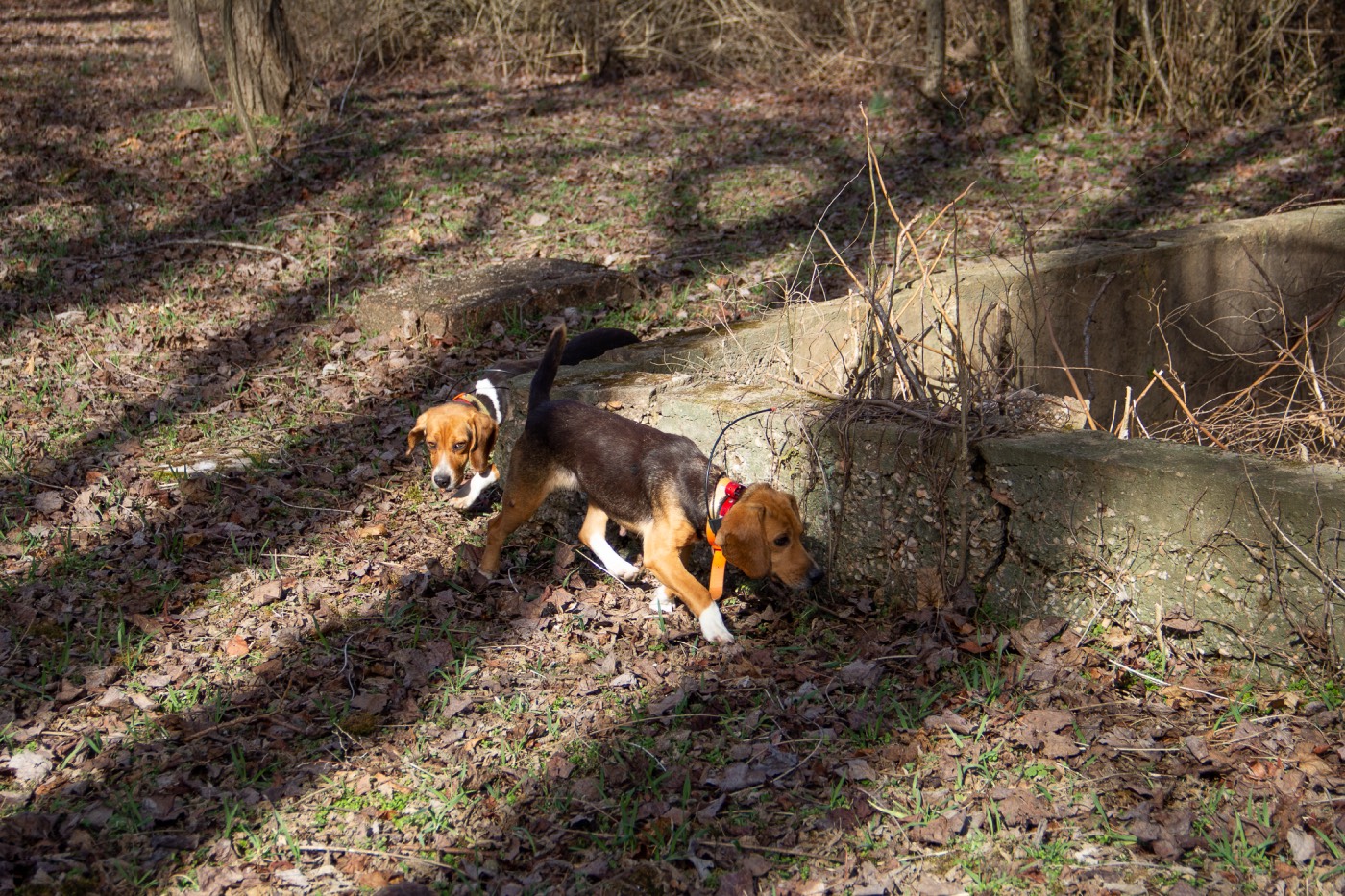
Move training to wooded areas, fence rows, brush piles, and drainage ditches—places where wild rabbits live.
Best times:
– Dawn or dusk, when rabbits are active.
– After a frost, when damp ground holds scent better.
Avoid dry, windy days—poor scent conditions will frustrate both you and your dog.
Sign of good scent: Dog moves slowly, head low, tail up—working the trail with focus.
Pair with a Mentor Dog
Train your young dog with an experienced, slow-working female. Avoid littermates or hyper males—they distract more than teach.
The mentor:
– Sets the pace.
– Models proper tracking.
– Triggers baying when she picks up a trail.
Your pup learns by imitation—following the older dog’s path, reading scent, and joining the chase.
Expert advice: “Take them out with an older female who is slow and methodical—preferably just her and one pup.” — Rick Watkins
Teach “Tree” or “Hold” Behavior
When the dog locates a rabbit in thick cover, it should stop, focus, and bark continuously—signaling the hunter.
Use the command “tree” when the dog freezes on a scent. Reward immediately with praise or a treat.
This allows you to:
– Locate the rabbit.
– Prepare for a shot.
– Prevent the dog from pushing the rabbit deeper.
Even if the rabbit holes up, the dog’s baying keeps pressure on—increasing chances of a flush.
Off-Leash Control: Recall and Focus in the Field
Develop 100% Reliable Recall
Off-leash hunting demands absolute recall reliability. Start with a 20–30 foot long line in a secure area.
- Call your dog using voice and tone.
- If no response, give a light tug and re-call.
- Reward instantly when they come.
Practice daily. Gradually increase distractions and distance.
Critical: Never call your dog to punish. Always make “come” a positive experience.
Stop Sight Chasing
Young dogs often chase by sight, not scent—leading to lost trails.
Fix this by:
– Training in thick cover where visual tracking fails.
– Using pack dynamics to model scent-based behavior.
– Rewarding only nose-down, methodical work.
Warning sign: Dog runs fast, head up, zigzagging—this is sight chasing, not hunting.
Gunfire Conditioning: Prepare for Real Hunts
Desensitize Gradually to Noise
Start by making loud noises during feeding:
– Bang pots.
– Clap hands.
– Play recorded gunfire at low volume.
Once comfortable, progress to .22 pistol shots from a distance while the dog runs a hot trail. Gradually move closer.
Timing tip: Wait until the dog has completed its first full circle on a rabbit (usually 8+ months) before introducing gunfire.
Coordinate Shot and Dog Interaction
After you shoot, retrieve the rabbit first—your dog is usually far behind. Then, let your dog “rough up” the dead rabbit—bite, toss, and bark. This reinforces the tracking-to-kill connection and builds excitement.
Expert note: “Let him rough one up—you can eat more later.” — Source 7
This isn’t about retrieving—it’s about rewarding the drive.
Hunting Tactics: Work the Terrain Like a Pro
Hunt in Cold, Damp Conditions
Best scent conditions:
– Cold mornings with frost or dew.
– Low wind.
– Before the sun dries the ground.
Avoid hot, dry, or windy days—scent evaporates quickly.
Pro tip: Walk quietly. Noise scares rabbits and breaks your dog’s concentration.
Use Terrain to Your Advantage
Rabbits use:
– Thickets for cover.
– Groundhog holes and brush piles as escape routes.
– Drainage ditches to travel unseen.
Hunters should:
– Wait when the dog circles a thicket—don’t rush in.
– Position at pinch points (fence gaps, ditches) to intercept escaping rabbits.
– Work as a team—spread out slightly to cut off escape routes.
Key insight: “If you’re scattered, the rabbit runs around you. But working as a team, you can take rabbits.” — Source 4
Teamwork and Safety: Protect Your Partner
Communicate with Clear Calls
Use:
– “Hot! Hot! Hot!” when the dog has the rabbit.
– “Tree!” when the dog is baying on a hold.
Move parallel to the dog’s circle, not directly behind—this positions you to intercept the rabbit’s return path.
Protect Your Dog
- Wear blaze orange—for visibility.
- Attach a bell to the collar—to track location and deter coyotes.
- Carry a sidearm if hunting alone in coyote country.
- Always identify your target before shooting.
Harsh truth: “Coyotes will stand their ground and fight an 80-pound Walker hound and win—a beagle is a snack.” — Source 7
Final Tips for Long-Term Success
Condition to Thick Cover
Toss treats, hot dogs, or toys into brambles and brush piles. Reward the dog for entering. This teaches them to push into tough terrain—where rabbits hide.
Pro move: “Throw treats in thick briars and brush to let your dog associate thorns and sticks with goodies.” — Source 7
Be Patient—Instinct Takes Time
Not every dog clicks at the same pace. Some take weeks; others take months.
Trust the process. With daily repetition, positive reinforcement, and real experience, even a hesitant pup can become a top-tier hunter.
Truth: Great beagles aren’t made overnight. They’re built through patience, repetition, and trust in instinct.
Final Note: Training a rabbit hunting dog is a journey of partnership. It’s not about forcing performance—it’s about unlocking what’s already inside. With the right foundation, your dog will do more than find rabbits. It will bring the music of the hounds to the woods, and you’ll share in the thrill of the chase—season after season.


0 Comments