You’ve just harvested a wild rabbit—now what? If you’re like most hunters, you want to preserve every ounce of tender, lean meat while avoiding spoilage, contamination, and disease. The truth is, how to clean a rabbit after hunting isn’t just about skinning and gutting—it’s about speed, hygiene, and smart field technique. Rabbits spoil fast, especially in warm weather, due to their large internal organs and high body temperature. Without immediate care, bacteria multiply quickly, ruining the meat.
This guide walks you through the complete process of cleaning a rabbit, from field dressing to storage, using proven methods from experienced hunters and outdoor experts. You’ll learn how to avoid common mistakes, inspect for dangerous diseases like tularemia, and maximize meat yield with efficient butchering techniques. Whether you’re a first-time hunter or looking to refine your skills, this step-by-step breakdown ensures your rabbit is safe, clean, and ready for the kitchen.
Gather the Right Tools Before You Start
Having the proper equipment on hand makes cleaning a rabbit faster, safer, and more sanitary. Don’t wait until you’re in the field—prepare ahead of time.
- Sharp fixed-blade knife (or folding knife with gut hook)
- Game shears or heavy-duty scissors for quick joint cuts
- Disposable nitrile gloves to protect against pathogens
- Cool, clean water source for rinsing the cavity
- Soft brush or cloth to wipe off dirt or blood
- Game bags or zip-top plastic bags for transport
- Vacuum sealer or freezer-safe containers for long-term storage
- Propane torch (optional) to singe stray hairs
- Nails or hanging post (optional) for elevated processing
Keep your tools sharp—dull blades increase the risk of slipping and puncturing internal organs. A clean knife also reduces bacterial transfer. Store everything in a dedicated game-processing kit for easy access.
Field Dress Within Minutes of Harvest
Time is meat. The longer a rabbit sits uncleaned, the faster bacteria grow. Field dressing within minutes of harvest cools the body cavity and prevents spoilage.
Belly Cut Gutting: The Standard Method
This is the most reliable and widely used technique.
- Lay the rabbit on its back.
- Make a small incision just below the breastbone—only deep enough to pierce the skin and abdominal wall.
- Slice carefully down the belly toward the pelvis, staying on the centerline.
- Stop just before the anus and bladder to avoid contamination.
- Use the tip of your knife to gently pry open the pelvic bone.
- Reach inside and grasp the esophagus or windpipe just above the heart.
- Pull downward firmly to remove all internal organs in one smooth motion.
Discard the entrails away from dogs—raw organs can carry tapeworms and other parasites.
Pro Tip: If the rabbit was gut-shot, act fast. Ruptured intestines release bacteria that taint the meat. Inspect closely and rinse immediately if you suspect contamination.
Alternative Field Methods
Squeeze-Out Method (Use with Caution)
Some hunters compress the ribcage to push entrails out through the anus. While fast, this method risks rupturing the stomach if pressure is uneven. Not recommended for gut-shot animals.
Shear-and-Strip Technique
Cut off the head, feet, and tail with game shears. Then clip along both sides of the ribcage to strip out the belly skin and guts without fully opening the abdomen. Minimizes contact with internal organs—ideal when processing multiple rabbits.
No matter the method, always wear gloves and prevent dogs from eating raw entrails.
Skin the Rabbit Efficiently
Skinning can be done in the field or at home. Choose the method that suits your conditions and setup.
Standard Pull-Down Skinning
Best for beginners and cold-weather processing.
- Make circular cuts around both hind legs, just above the joint.
- Connect them with a straight cut along the inner thighs.
- Insert fingers under the skin near the tail and form a loop.
- Hold both hind feet and pull the skin down over the rump.
- As it reaches the front legs, pop the elbows free by cutting small slits.
- Continue pulling until only the head remains.
- Cut the neck to detach the head with the skin still attached.
- Remove front and hind feet at the joints.
The tail typically comes off with the hide.
Steven Rinella’s Sock-Peel Method
Popularized by MeatEater, this method mimics peeling off a sock.
- Start with a notch at the base of each hind leg.
- Peel the skin down, working past the knuckles.
- Use a knife to pop hip and knee joints if needed.
- Pull the tail out last to fully release the hide.
- Sever the head cleanly once the skin is fully removed.
Fast, clean, and minimizes blood spill.
Hanging Skinning (Hillsdale Technique)
Ideal for processing multiple rabbits.
- Drive two nails into a post at chest height, 10 inches apart.
- Cut small slits between tendon and bone in the hind legs.
- Hang the rabbit with the belly facing the post.
- Skin downward from the legs toward the head.
Gravity helps separate the hide cleanly.
Note: Avoid skinning in hot, humid weather unless the rabbit will be chilled immediately. Warmth attracts flies and accelerates spoilage.
Inspect Organs for Tularemia and Other Diseases

Wild rabbits can carry tularemia, a zoonotic disease transmissible to humans through contact with infected tissue.
How to Check the Liver for Infection
After gutting, examine the liver:
- Healthy liver: Smooth, dark reddish-brown, uniform texture.
- Infected liver: Shows white spots or lesions—sometimes numerous or large.
If you see signs of infection:
– Do not handle the meat bare-handed.
– Do not consume or feed to pets.
– Dispose of the carcass safely (bury or bag and trash).
Wear gloves throughout processing and wash hands thoroughly afterward.
Even in freezing weather, field dress immediately. Cold doesn’t kill bacteria—it only slows growth.
Rinse and Trim for a Clean Carcass
Once skinned, give the rabbit a final clean.
Final Cleaning Steps
- Rinse inside and out under cool running water.
- Scrub gently with a soft brush if dirty.
- Remove blood clots, excess fat, tendons, and connective tissue.
- Singe remaining hair with a torch and scrape smooth with a knife (optional).
- Final rinse, then pat dry with paper towels.
Avoid soaking unless planned for saltwater treatment.
Saltwater Soak (Recommended)
Reduces gamey flavor and draws out residual blood.
- Mix 1 tablespoon salt per quart of water.
- Submerge rabbit parts in the refrigerator.
- Soak for 8–12 hours.
- Rinse again before cooking or freezing.
Especially useful for older rabbits or those harvested in summer.
Break Down Into Cooking Cuts
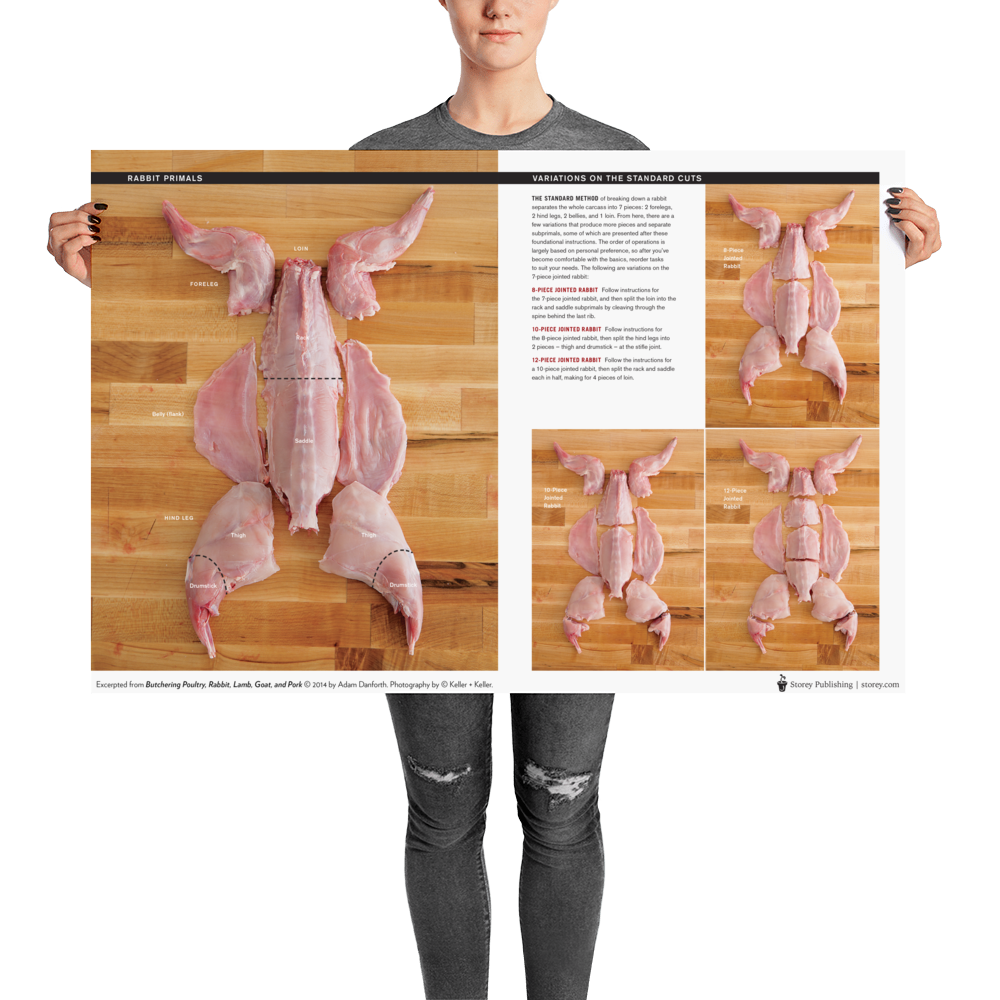
Portioning improves storage and cooking flexibility.
Five-Piece Butchering Method
Standard for home cooks and hunters alike.
-
Hind Legs
– Most meat-rich part.
– Pop the hip joint and cut free.
– Ideal for frying, roasting, or stewing. -
Front Shoulders
– Smaller but flavorful.
– Cut through shoulder joint.
– Best for slow-cooked dishes. -
Saddle (Loin/Backstrap)
– Runs along the spine.
– Split down the middle into two tender strips.
– Accounts for ~90% of recipe-ready meat.
– Great grilled, pan-seared, or wrapped in bacon. -
Ribs and Belly
– Use for stocks, soups, or braises.
– Can be roasted whole for crispy skin. -
Neck and Head
– Often overlooked.
– Boil for rich stock or broth.
Pro Tip: Always cook rabbit on the bone. Deboning leads to significant meat loss and less flavor.
Advanced Cutting Techniques
Backstrap-Only Removal (Hillsdale Method)
- Hang the rabbit.
- Cut down each side of the backbone to remove two long backstraps.
- Avoids opening the gut cavity—reduces contamination risk.
- Leaves the rest of the carcass intact for inspection or stock.
Shear-and-Quarter (bk & Singlebarrel)
- Use game shears to remove head, feet, and tail.
- Clip along the ribs to strip out guts and belly skin.
- Quarter the rabbit into fryer-sized pieces.
- Process up to 20 rabbits in under 30 minutes.
Perfect for group hunts or predator control efforts.
Store or Freeze for Long-Term Use
How you store the meat determines shelf life and quality.
Short-Term Refrigeration
- Keep at 32–36°F.
- Use within 1–2 days.
- Wrap in wax paper or place in a sealed container.
Long-Term Freezing Options
Water Immersion Method (Pa Beaglerhh)
- Cut rabbit into 5 pieces.
- Place in a waxed half-gallon milk carton or quart Ziploc.
- Cover completely with water.
- Freeze upright.
Water creates an airtight seal, preventing freezer burn.
Vacuum Sealing
- Removes air and extends freshness up to 1 year.
- Label with date and type.
Standard Freezer Bags
- Wrap tightly, squeeze out air.
- Double-bag for extra protection.
- Use within 6 months.
Aging Option: Some hunters age rabbits in the fridge (unskinned) for up to 7 days to enhance tenderness. Riskier in warmer temps—only attempt if temperature is consistently below 40°F.
Cook for Best Flavor and Texture
Rabbit meat is lean, mild, and versatile—but easy to overcook.
Best Cooking Methods
- Braising or stewing: Adds moisture; ideal for shoulders and ribs.
- Frying: Crispy results with hind legs or backstraps.
- Roasting: Whole or spatchcocked rabbits cook like chicken.
- Grilling: Best for marinated backstraps or kebabs.
Recipe Ideas
- Cajun rabbit stew with potatoes and peppers
- Coq au vin-style braise with red wine and mushrooms
- Fried rabbit legs with seasoned flour
- Grilled backstraps with garlic butter
- Rabbit stock from bones, neck, and organs (boil 3–4 hours)
Yield: One adult cottontail provides:
– One hearty meal for two
– Two light servings
Due to low fat content, always cook with oil, butter, or bacon to prevent dryness.
Safety and Best Practices
Follow these rules to ensure safe, ethical, and efficient processing.
Critical Safety Rules
- Field dress within minutes of harvest.
- Never puncture the stomach or bladder—bacteria ruin meat.
- Wear gloves when handling entrails.
- Check the liver for white spots (tularemia).
- Keep dogs away from raw organs—tapeworm risk.
- Don’t clean in public areas—dispose of waste responsibly.
Hygiene Must-Dos
- Clean knives, shears, and surfaces with hot, soapy water.
- Use separate cutting boards for game and other foods.
- Wash hands before and after processing.
Efficiency Tips
- Use game shears for faster cuts.
- Set up a dedicated cleaning station (tailgate, post, or garage).
- Practice techniques at home to improve field speed.
Final Note: Cleaning a rabbit after hunting is more than a chore—it’s an act of respect for the animal and responsibility to your health. With sharp tools, immediate action, and careful inspection, you can turn a fresh harvest into a safe, delicious meal. Whether you use the classic belly-cut method or a rapid shear-and-quarter technique, the key is speed, cleanliness, and attention to detail. Master these steps, and you’ll be ready for every rabbit season with confidence.


0 Comments