Deer hunting with a crossbow offers a unique blend of precision, power, and accessibility that bridges traditional archery and modern firearms. Whether you’re new to hunting or transitioning from a vertical bow, selecting the right crossbow is essential for ethical, effective harvests. Today’s models deliver impressive speeds—some exceeding 500 fps—along with advanced safety features, compact designs, and laser-like accuracy. But with so many options on the market, how do you choose a crossbow for deer hunting that fits your needs, strength, and environment?
This guide cuts through the marketing hype to focus on what truly matters: kinetic energy, draw weight, maneuverability, noise control, and legal compliance. You’ll learn how to match your physical ability with the right cocking system, pick bolts and broadheads that fly true, and choose a model that complies with your state’s regulations. By the end, you’ll be equipped to make a confident, informed decision before your next season.
Match Crossbow Type to Your Hunting Style

The type of crossbow you choose directly impacts performance, handling, and maintenance. Three main types dominate deer hunting: recurve, compound, and reverse draw. Each has distinct advantages depending on your setup and terrain.
Recurve Crossbows: Reliable and Quiet
Recurve crossbows use a simple, pulley-free design with curved limbs. They’re ideal for hunters who value simplicity and stealth.
- Best for: Ground blinds, close-range setups, or hunters prioritizing quiet operation.
- Pros:
- Fewer moving parts = lower maintenance.
- Quieter shot due to reduced vibration.
- Durable and often more affordable.
- Cons:
- Harder to cock, especially above 150 lbs.
- Slower bolt speeds (typically under 340 fps).
- Wider when cocked—up to 22″ on models like the Excalibur Micro Mag 340.
Ideal user: Hunters with moderate strength who want a dependable, no-frills option.
Compound Crossbows: Balanced Power and Speed
Compound crossbows use a cam-and-cable system to store energy efficiently, delivering high speeds with less cocking effort.
- Best for: Most deer hunters seeking a balance of speed, accuracy, and ease of use.
- Pros:
- Faster bolt speeds (300–400+ fps).
- Shorter limbs improve maneuverability in tree stands.
- Higher kinetic energy for deeper penetration.
- Cons:
- More complex—requires regular tuning.
- Can be louder without dampening.
- Higher price point.
Top pick: CenterPoint Sniper 370 – 370 fps, 175-lb draw, includes ACUdraw cocking system.
Reverse Draw Crossbows: Compact and High-Performance
Reverse draw (or reverse limb) models position the limbs toward the rear, shifting weight forward for superior balance and stability.
- Best for: Hunters in tight spaces or those demanding top-tier performance.
- Pros:
- Ultra-narrow cocked width (as low as 6″).
- Exceptional balance reduces felt recoil.
- High speeds in a compact frame.
- Cons:
- Premium pricing.
- Limited availability and higher sensitivity to tuning.
Top pick: Ravin R10 – ~400 fps, 6.5″ axle-to-axle, HeliCoil cam tech, pre-tuned for accuracy.
Prioritize Kinetic Energy for Ethical Harvests
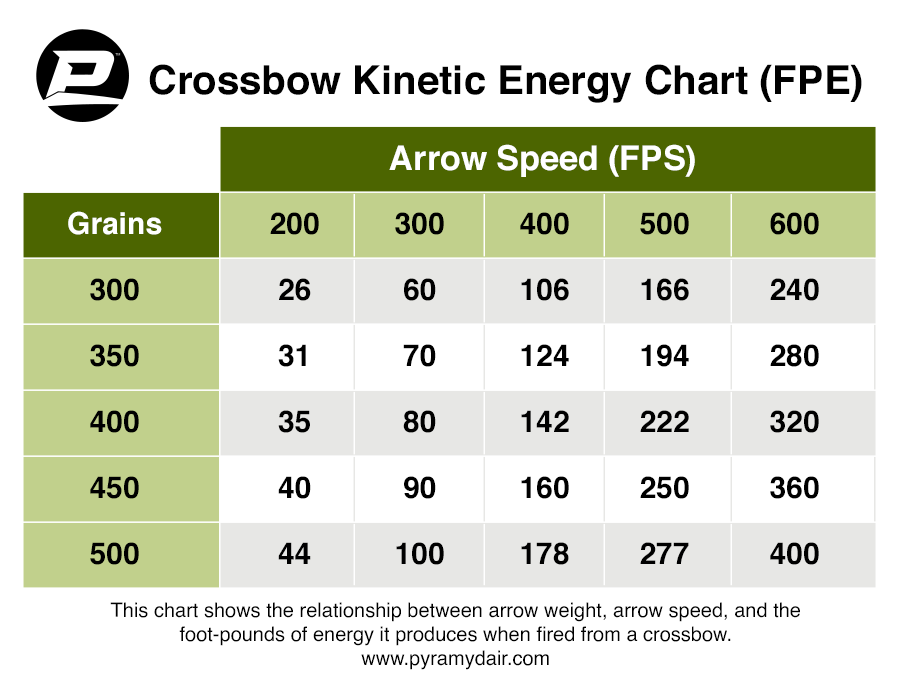
While speed grabs headlines, kinetic energy (KE) determines penetration and humane kills. For deer-sized game, you need at least 50–60 ft-lbs of energy at impact.
Calculate Your Crossbow’s Kinetic Energy
Use this formula:
KE = (grain weight × fps²) ÷ 450,240
- A 400-grain bolt at 300 fps = 79.9 ft-lbs – well above minimum.
- A 350-grain bolt at 350 fps = 95.1 ft-lbs – excellent for deep penetration.
Pro Tip: Heavier bolts carry more energy and resist wind drift, even at slightly lower speeds. Don’t sacrifice stability for raw fps.
Stick to 250–300 FPS for Deer Hunting
While some crossbows exceed 400 fps, 250–300 fps is optimal for deer:
- Ensures sufficient KE without excessive noise.
- Reduces tuning challenges, especially with mechanical broadheads.
- Minimizes wear on strings and components.
Avoid: Chasing extreme speed at the cost of accuracy and bolt flight consistency.
Verify Draw Weight and Legal Requirements
Your crossbow must meet state-specific legal standards to be legal for deer hunting.
Minimum Draw Weight: 125 lbs Is Standard
- Nevada: Requires at least 125 lbs.
- Ohio: Allows up to 200 lbs; others cap at 175 lbs.
- Always confirm your state’s rules before buying.
Why it matters: Lower draw weights lack the energy for reliable penetration on deer.
Check Season Eligibility and Restrictions
- Some states allow crossbows during the entire archery season.
- Others restrict use to disabled hunters or specific crossbow seasons.
- A few ban crossbows for migratory birds (e.g., Oregon).
Action Step: Visit your state’s wildlife agency website or consult Hunter-Ed for up-to-date regulations.
Choose the Right Size and Weight for Your Hunt
A crossbow that’s too heavy fatigues you; one that’s too wide gets caught in brush. Balance size, weight, and handling.
Axle-to-Axle Width: Narrower = Better in Tight Spaces
- Outside-rotating cams: Often >20″ wide—better for open fields.
- Inside-rotating cams: As narrow as 6″ when cocked (e.g., TenPoint TRX 515).
- Recurve models: ~22″ cocked width (e.g., Excalibur Micro Mag 340).
Best for tree stands: Reverse draw or compound models under 7″.
Overall Weight: 6–8 lbs Is Ideal
- Under 7 lbs: Light and easy to carry, but may feel unstable.
- 7–9 lbs: Better recoil absorption and aim steadiness.
- Trade-off: Lighter = easier carry, heavier = more stable shot.
Pro Tip: Test the balance point—ideally, it should feel front-heavy to reduce hand shock.
Pick a Cocking Mechanism You Can Handle
Cocking a crossbow shouldn’t be exhausting. Choose a system that matches your strength.
Rope Cocking Device: 50% Less Effort
- Reduces effective draw weight by half.
- Simple, affordable, widely compatible.
- Use on: Most compound and reverse draw models.
Caution: Always cock evenly to prevent string wear and misalignment.
Crank Cocking System: Effortless for Limited Strength
- Requires only 10–15 lbs of effort.
- Integrated into high-end models (e.g., TenPoint’s CRANK Cocking System).
- Slower but ideal for elderly or injured hunters.
Best for: Those using high-draw-weight models or with physical limitations.
Equip for Accuracy: Scope, Bolts, and Broadheads
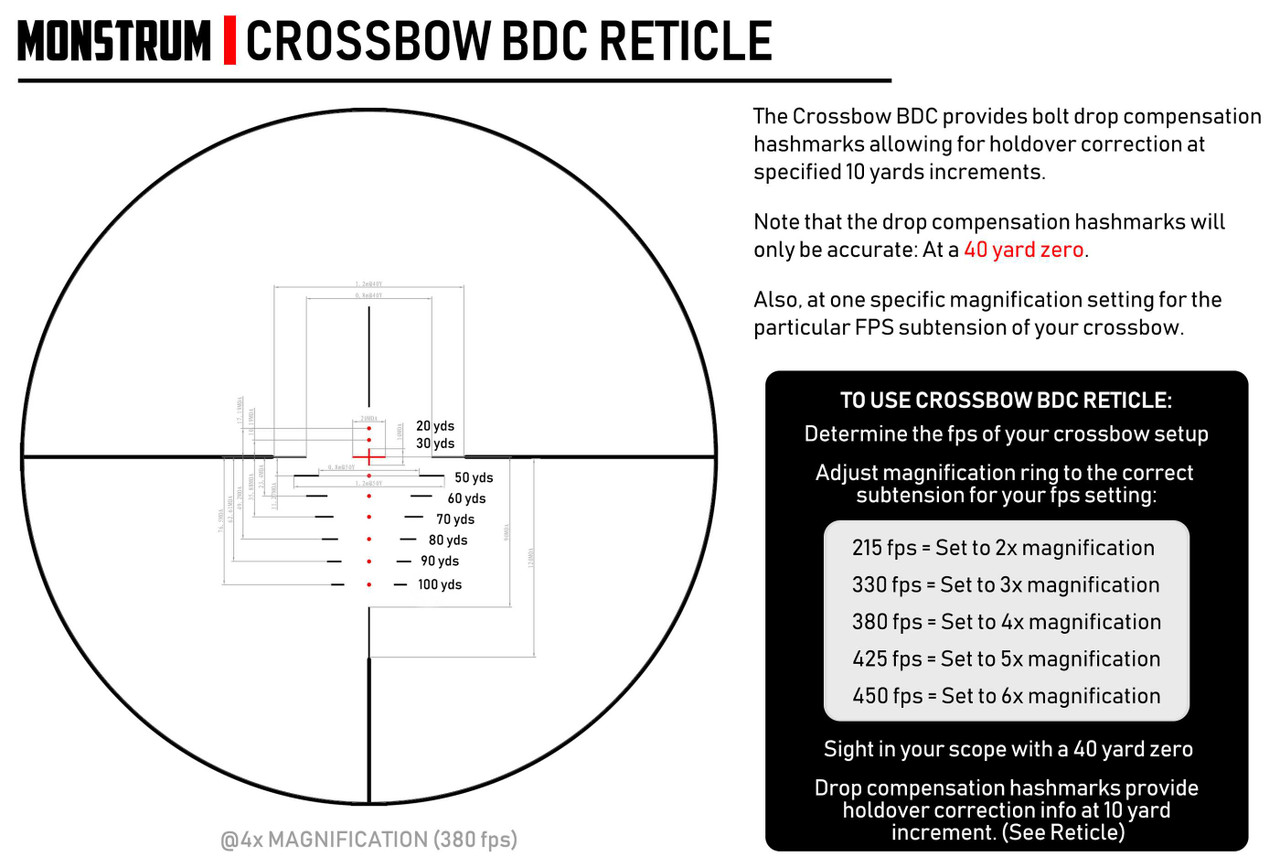
Even the best crossbow fails without proper setup. Accuracy starts with your bolt, broadhead, and sight combo.
Use a BDC Scope with Illuminated Reticle
Ballistic Drop Compensating (BDC) scopes are calibrated for crossbow trajectories.
- Multi-yardage aiming points (20, 30, 40, 50 yards).
- Illuminated reticles help in low light (dawn/dusk).
- Example: Ravin R10 includes a quality illuminated scope.
Critical Step: Sight in with the exact bolts and broadheads you’ll hunt with—flight differs from field points.
Select the Right Bolts
Crossbow bolts are shorter (20–22″) and stiffer than traditional arrows.
- Aluminum: Durable, consistent; great with 125-grain fixed blades.
- Carbon: Lighter, faster; best with 100-grain points.
- Never mix brands or types—use manufacturer-recommended specs.
Pro Tip: Keep bolts straight—inspect after every shot.
Match Broadheads to Your Speed
Choose broadheads based on bolt velocity.
Fixed-Blade Broadheads
- Best for: Speeds under 300 fps.
- Pros: Rugged, consistent flight.
- Cons: Require precise tuning to fly true.
Mechanical (Expandable) Broadheads
- Best for: Speeds over 300 fps.
- Pros: Deploy on impact, create large wound channels.
- Cons: Must align blades to avoid vane contact.
Top Pick: BlackOut Lazer Strike II
– Rated up to 400 fps.
– 1.25″ cutting diameter.
– Trophy Tip® for deep penetration.
– Retention rings ensure closed blades in flight.
Reduce Noise for Better Success
A loud crossbow can spook deer—even if the first shot misses.
Look for Built-In Noise Reduction
- String dampeners: Absorb post-shot vibration.
- Limb silencers: Reduce limb oscillation.
- Rubber shock absorbers: Mounted on stock or limbs.
Quietest designs: Recurve crossbows with parallel limbs.
Pro Tip: Lubricate the flight track with rail oil every 5–10 shots to reduce friction and noise.
Never Skip Safety Features
A crossbow is powerful—safety is non-negotiable.
Essential Built-In Safeties
- Anti-dry fire mechanism: Prevents firing without a bolt (e.g., Excalibur’s Guardian System).
- Manual safety switch: Must be disengaged before firing.
- Smooth, crisp trigger: High-end models use TriggerTech for consistent pull.
Never carry a loaded crossbow while climbing—unload before ascending or descending a stand.
Practice Safe Handling
- Always point in a safe direction.
- Keep finger off trigger until ready to shoot.
- Inspect strings, cables, and limbs regularly for wear.
- Store uncocked and in a dry place.
Recommended: Take a hunter safety course—many states require it for crossbow use.
Invest in Trusted Brands and Models
Stick with reputable brands known for durability, innovation, and support.
Top Brands for Deer Hunting
| Brand | Strengths |
|---|---|
| TenPoint | High-end tech, precision, safety features (e.g., TRX 515) |
| Excalibur | Durable, compact, great for beginners |
| Ravin | Reverse draw leader, ultra-narrow, pre-tuned |
| Barnett | Budget-friendly, reliable performance |
| Wicked Ridge | Mid-tier value, TenPoint engineering |
Best Models for Deer Hunting
| Model | Type | Speed | KE | Key Feature |
|---|---|---|---|---|
| TenPoint TRX 515 | Reverse Draw | 515 fps | 241 ft-lbs | 6″ cocked width, TriggerTech trigger |
| Ravin R10 | Reverse Draw | ~400 fps | High | 6.5″ width, HeliCoil cams |
| Excalibur Micro Mag 340 | Recurve | 340 fps | ~70 ft-lbs | Lightweight, 22″ cocked |
| CenterPoint Sniper 370 | Compound | 370 fps | ~85 ft-lbs | Budget pick, ACUdraw system |
| Barnett Whitetail Hunter II 350 | Compound | 350 fps | ~75 ft-lbs | Affordable, includes scope |
Value Tip: Look for package deals—many include bolts, quiver, scope, and practice points.
Maintain Your Crossbow for Long Life
A well-maintained crossbow lasts years and performs reliably in the field.
Routine Maintenance Checklist
- Lubricate flight track every 5–10 shots.
- Inspect strings and cables for fraying.
- Check limb bolts and hardware for tightness.
- Replace strings every 100–150 shots or annually.
- Store uncocked in a dry, temperature-stable place.
Warranty Tip: Most brands offer limited lifetime warranties on frames and limbs—register your crossbow.
Final Checklist: Choose the Right Crossbow
Use this quick reference when comparing models:
| Factor | Recommendation |
|---|---|
| Type | Compound or reverse draw for power; recurve for simplicity |
| Draw Weight | At least 125 lbs; check state law |
| Speed | 250–300 fps ideal for deer |
| Kinetic Energy | Minimum 50–60 ft-lbs at impact |
| Weight | 6–8 lbs for balance of portability and stability |
| Cocking Aid | Rope or crank, based on strength |
| Sight | BDC scope with illuminated reticle |
| Bolts | Manufacturer-specified length and grain |
| Broadheads | Mechanical for >300 fps; fixed for <300 fps |
| Noise Control | Dampeners, silencers, rail lube |
| Safety | Anti-dry fire, manual safety, crisp trigger |
| Brand | TenPoint, Excalibur, Ravin, Barnett, Wicked Ridge |
| Budget | $600–$1,200 for quality performance and accessories |
A crossbow is more than a tool—it’s an extension of your hunting ethic. The best crossbow for deer hunting isn’t the fastest or flashiest, but the one that you can shoot accurately, safely, and legally in your hunting environment. Prioritize penetration, consistency, and shot placement over raw specs. Practice from realistic positions, know your effective range (max 40 yards), and always respect the animal.
With the right crossbow and preparation, you’re not just hunting—you’re mastering a blend of ancient skill and modern engineering. Now go make your season count.

0 Comments