Crows are not just birds—they’re problem solvers, observers, and survivors. With eyesight as sharp as a hawk’s and social intelligence rivaling primates, crows detect danger before most hunters even realize they’ve been spotted. That’s what makes crow hunting such a thrilling mental and physical challenge. Success doesn’t come from noise or numbers alone—it comes from strategy, patience, and psychological manipulation.
This guide delivers battle-tested crow hunting tips used by elite hunters who’ve taken tens of thousands of birds using proven field tactics. Whether you’re new to the sport or refining your edge, you’ll learn how to exploit crow behavior, deploy decoys like a pro, master calling techniques, and avoid the mistakes that send flocks fleeing. From flyway ambushes to robo-crow lures, every tactic here is designed to beat the brainiest bird in the woods.
Use Flyway Interception to Ambush Morning Flights
Set up along established crow flyways—routes they use daily between roosts and feeding zones. These paths are most active at dawn, when crows travel in large flocks from wooded roosts to open fields.
- Best locations: River-bottom cottonwoods, ridge lines, or field corners near known roosts.
- Timing: Be in position 30 minutes before sunrise.
- Distance: Place decoys and calls 30–50 yards downwind of expected flight lines.
Use natural terrain like timber edges or ditches to hide your blind. Crows scan below constantly—your position must be invisible from above until they’re within 30 yards.
Deploy motion decoys and play fighting or distress calls to trigger curiosity. High-flying birds often circle once they hear conflict—your job is to keep them interested long enough to descend.
Master Run-and-Gun Tactics for Maximum Mobility

Skip Woody, a veteran hunter with nearly 60,000 crows taken, swears by run-and-gun (R&G)—a fast-paced, mobile style that prioritizes adaptability over static setups.
- Core principle: Scout, call, move. If birds ignore you, pack up and shift 100–200 yards.
- Gear: Lightweight decoy bag (6–12 decoys), compact mouth call, camo wrap.
- Success metric: Track your Total Body Count (TBC)—daily kills and average birds per stand.
Even a small change in wind direction or terrain elevation can turn a dead zone into a hotspot. R&G hunters thrive on movement and observation, letting crow behavior dictate the next move.
Pro tip: Let the first bird—a likely scout—pass unless you’re 100% concealed. Shooting it risks alerting the entire flock.
Choose the Right Shotgun, Ammo, and Concealment
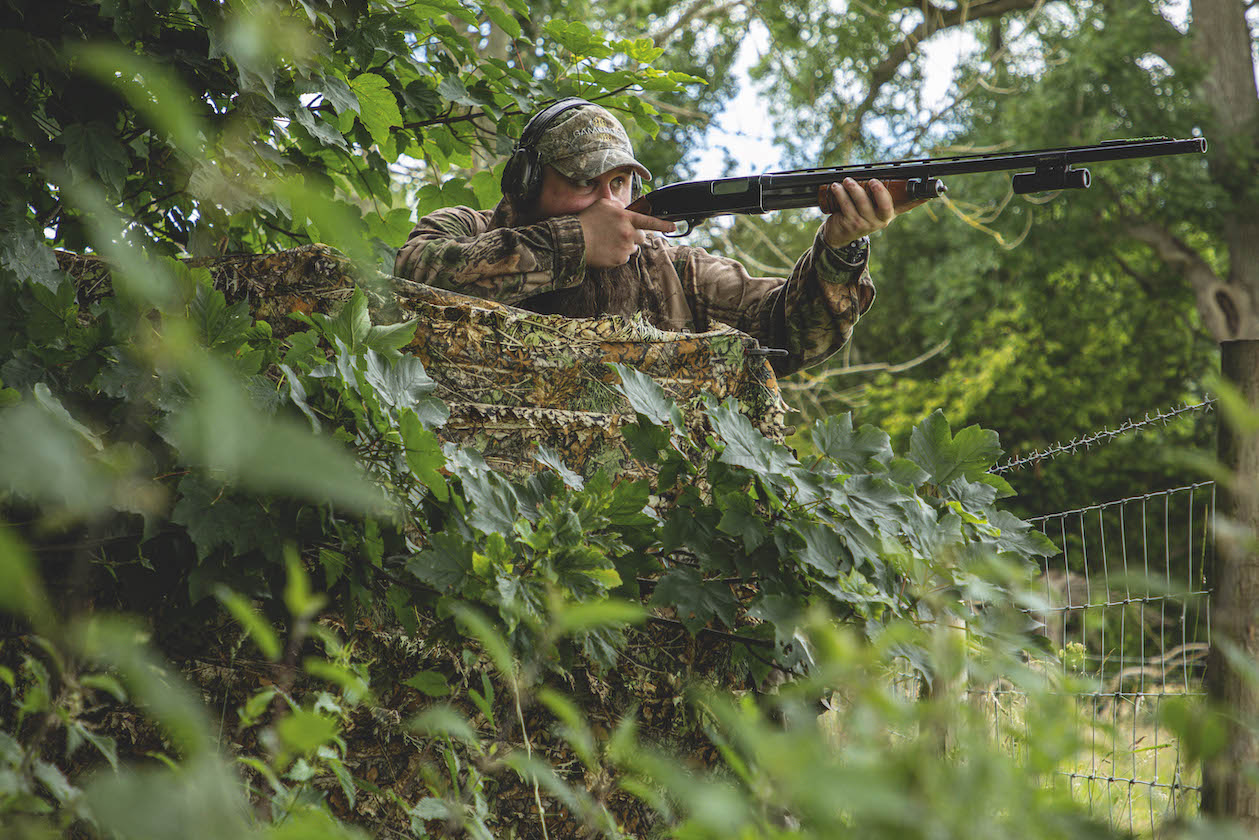
Use a 12-gauge or 20-gauge shotgun with modified or improved-cylinder choke for optimal spread at 30–40 yards.
- Best ammo: #6, #7½, or #8 shot with 1¼ oz load for dense patterns.
- Long-range backup: Carry magnum waterfowl loads with BB or #2 shot to finish cripples.
- Precision tool: Some hunters keep a .22 LR pistol with CB caps for close, quiet shots when crows land near the blind.
Concealment is everything. Crows spot movement and shine instantly.
- Wrap your shotgun in camo tape to eliminate glare.
- Wear full-body camo, including facemask and gloves.
- Avoid brimmed hats—they create motion and block overhead vision.
Combine Electronic and Mouth Calls for Realism
Electronic callers (Fox Pro, Johnny Stewart) let you project sound away from your body, reducing detection.
- Play distress, baby crow, or owl-crow fight sequences.
- Use looping mode during long sits in flyway zones.
But experts agree: a skilled mouth caller beats electronics every time.
- Mouth calls allow real-time adjustments—speed, tone, and intensity.
- Master the “EZ growl”: Say “mmmmm” while blowing into the call for a guttural, aggressive tone.
- Low-cost hack: Blow sideways into the call to mimic a hawk—triggers crow aggression.
Call rule: Use 5-second bursts, then wait 30–60 seconds. Overcalling screams “fake!”
Build Decoy Spreads That Trick Even Smart Crows

Deploy 12–24 decoys in feeding zones. Add fake corn decoys (up to 3 dozen) to simulate foraging.
- Store-bought: Greenhead Gear “lookout” and “caller” crows.
- DIY options: Black trash bags on hangers, spray-painted bottles, or hangers in bags.
Use Mojo spinning wing decoys to create motion—crows can’t resist movement.
Fight Setup With Owl Decoy
Hang an owl decoy in a tree, place a dead crow decoy beneath it, and surround with 6–8 crows facing the owl.
- Play fighting or distress calls.
- Mimics a real predator attack—crows will circle, then dive to investigate.
The Diabolical Decoy Trick
Bolt a flapping crow head to the owl’s talons. Let wind create erratic motion.
- Combine with crow/owl fight audio.
- Increases realism by 70% in field tests.
- Works best in open fields with clear sightlines.
Sentinel Decoys for Flock Trust
Place one decoy high on a branch tip or PVC perch (6–8 ft).
- Acts as a “scout” crow—signals safety.
- Makes the entire spread look active and natural.
Construct an Invisible Blind Using Natural Materials
Build a three-sided box (8×6 ft) using saplings, grapevines, and weathered burlap.
- Front ridgepole tied chest-high between shrubs.
- Top covered with crisscrossed branches and weeds.
- Location: At least 20 yards inside woods—avoid field edges.
Critical: Your blind must be invisible from above until crows are close.
Use cedar or pine trees for natural cover and scent masking.
For elevation, use PVC perches, conduit poles (20 ft), or telescoping fishing poles to hang decoys high.
Sky Bustin’ Tip: Climb into a deer stand in dense timber for better shooting angles.
Scout and Hunt the Right Locations
Target:
– Flyways near roosts in cottonwoods or ridges.
– Feeding zones: Cut corn fields, peanut plots, pecan orchards.
– Staging areas: Muddy flats, open fields, soil-scraped zones.
Avoid tall, old-growth forests—crows fly just above treetops, often out of range.
Ideal tree height: 20–45 feet with canopy gaps for shot access.
Use binoculars at dawn to watch flight patterns. Look for:
– Flocks circling before landing.
– Repeated entry/exit routes.
– Droppings or feathers on the ground.
Mark hot zones with GPS for next morning.
Exploit Crow Psychology With Unconventional Lures
Crows are scavengers—use that against them.
Fake Gut Pile
- Spray expanding foam insulation (pie-plate size) into a field.
- Paint red before it hardens.
- Add 3–4 decoys around it.
Looks like a fresh kill—highly effective in open areas.
Artificial Dirt in Snow
- Spread ¼ bale of straw across snow-covered fields.
- From the air, it looks like scraped earth.
- Hunters report 2–3x more landings using this trick.
Teddy Temptation
- Place a brown stuffed animal in the field.
- Spray red on one side.
- Add two crow decoys.
Mimics a dead animal—especially effective near farms.
Decoy Dog Strategy
- Let your dog run among decoys.
- Crows react aggressively to fox-like movement.
- Combine with alarm calls for maximum effect.
Use Dead Crows as Decoys for Instant Credibility
“Shoot your own decoys” builds unmatched realism.
- Pierce chest with elm twig, run through neck, jab into skull.
- Secure wings with willow shoot and rubber bands.
- Stick into mud every 30 yards.
Instant Decoy (Coat Hanger Method):
– Form “U” from crimped wire.
– Insert into ground, hook dead crow’s neck.
Crow Cradles (Wire Holder):
– 3½ ft of 10–12 gauge wire.
– 5.5” × 4.5” loop with head spike and foot support.
– Tuck wings under for natural pose.
Fresh kills attract more birds than plastic—realism wins.
Avoid These 4 Deadly Mistakes
- Overcalling: Crows know real flocks don’t scream nonstop. Use short bursts, then silence.
- Poor concealment: Even a hand movement gets spotted. Stay still during flyovers.
- Shooting high birds: Don’t “sky bust.” Let them circle—they’ll often descend.
- Missing the first shot: A wounded crow screams an alarm—entire flock bolts.
Pro rule: Shoot to kill, not to scatter. Wait for a broadside or landing shot.
Hunt Legally and Build Landowner Trust
- Check local laws: Crow hunting is legal in most states during specific seasons.
- Some allow year-round take due to crop damage status.
- Electronic calls may be banned in certain zones.
Notify neighbors about early morning shooting. Partner with farmers—they welcome help reducing crop-raiding crows.
Bonus: In Ohio, crow heads are worth 25 cents each—helps offset ammo costs.
Final Pro Tips: Adapt, Experiment, and Win
Crow hunting is addictive. Many say: “If you don’t want to get hooked, don’t even start.”
It’s perfect for:
– Testing new guns, chokes, and camo.
– Preparing for dove or duck season.
– Introducing new hunters—few ethical concerns with pest species.
Last word from Skip Woody: “Get out, experiment, adapt, and keep trying. You don’t need a $500 setup—just a call, some decoys, good positioning, and the will to learn.”
Master these crow hunting tips, and you’ll turn one of nature’s smartest birds into your next trophy.

0 Comments