Spotting a Coues deer buck is like catching a glimpse of a shadow in the rocks—fleeting, silent, and gone before you’re sure what you saw. These elusive deer, often called “poor man’s sheep” for their rugged, alpine-like terrain and ghostly behavior, demand a unique approach. Coues deer hunting isn’t about walking timber or rattling antlers—it’s a precision game of optics, elevation, wind, and patience. If you’re chasing bucks in the 75–100″+ range across Arizona, New Mexico, or northern Mexico, success hinges on strategy, not luck. This guide delivers proven Coues deer hunting tips to help you glass smarter, stalk quieter, shoot truer, and finally fill your tag.
You’ll learn where mature bucks hide, how to beat hunting pressure, what gear makes the difference, and why timing the rut can make or break your hunt. Whether you’re a first-timer in Unit 29 or chasing a 110″ giant in Sonora, these tactics are battle-tested across Sky Islands, borderlands, and high desert rims.
Decode Coues Rut & Movement Patterns
When Coues Bucks Become Vulnerable
The Coues deer rut peaks in January, especially in Arizona and New Mexico. This is your best shot at seeing mature bucks active during daylight. Unlike early season, when bucks are nocturnal and solitary, the rut turns them reckless. They’re chasing does, vocalizing, and bedded for only 15–20 minutes at a time—making traditional “wait-and-bed” strategies obsolete.
In the pre-rut (late December), bucks begin seeking does. Movement increases, but they’re still cautious—pattern them by monitoring doe groups, as bucks follow wherever does go. During peak rut (January), bucks become aggressive, covering large distances and changing direction unpredictably. This is when stalks succeed not by waiting, but by intercepting.
Early season (October–November) is the hardest time to hunt Coues. Bucks feed quietly, often alone or in bachelor groups, and avoid open areas. With hunting pressure rising, they become strictly nocturnal. Many hunters fail here because they expect deer to behave like northern whitetails—moving predictably at dawn and dusk. But Coues don’t play by those rules.
Pro Tip: Pattern doe groups first. Bucks go where does are—especially during rut.
Avoid the Early Season Trap
Many hunters fail in October and November because they treat Coues like northern whitetails. They walk ridgelines, rattle, and expect deer to appear. But Coues are different. In early season:
– They stick to north-facing slopes for shade.
– They bed in rocky outcrops, juniper tangles, and oak draws.
– They move only at dawn and dusk—and often not at all if pressured.
Your best bet? Glass at midday. Yes—when most hunters are back at camp, Coues move to water or reposition with the sun. Stay out all day.
Hunt the Right Habitat Zones
Target Transition Areas
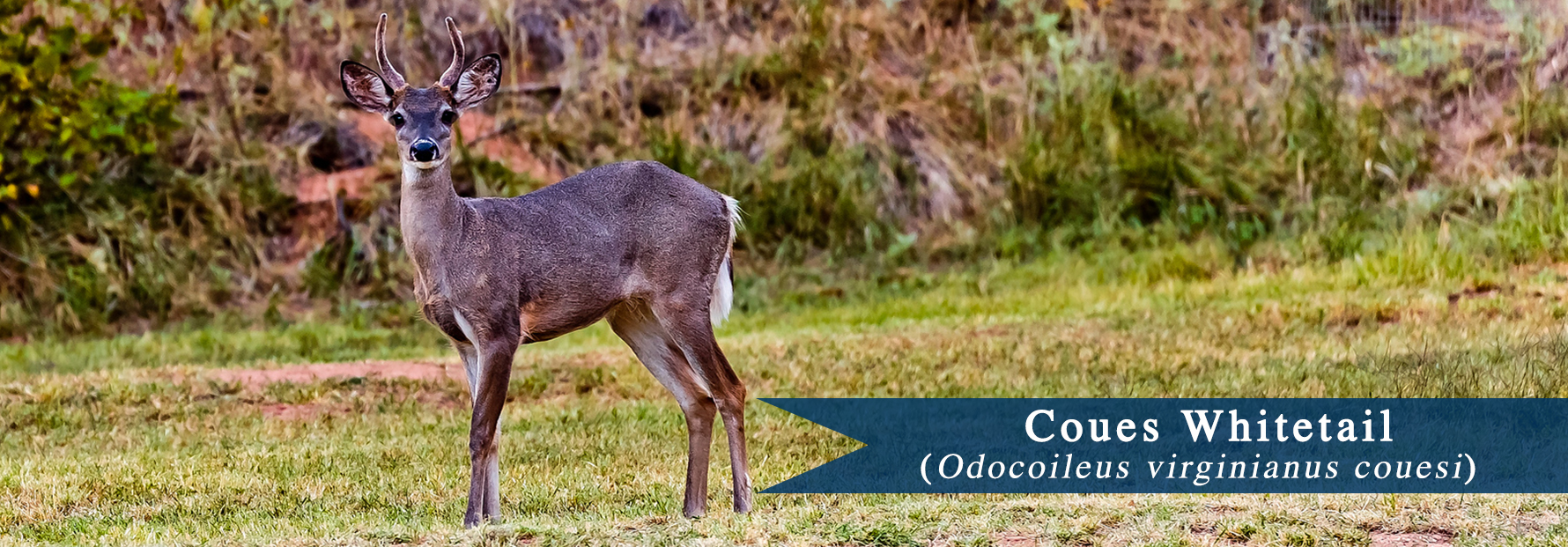
Coues deer are edge-habitat specialists. They thrive where desert meets mountain, brush meets rock, and elevation shifts create microclimates. Focus on these zones:
- Oak-juniper woodlands
- Draw mouths connecting feeding and bedding areas
- Saddles between ridges
- Washes with seasonal water
- North-facing slopes with shade and cover
Key Insight: Most hunters stay near roads. You’ll find better bucks one hour on foot from any trail.
Know the Top Hunting Regions
Sky Islands (Chiricahua, Santa Rita, Rincon)
- Elevation: 1,500–9,000 feet
- Terrain: Steep, rocky, thick with manzanita and oak
- Reward: Highest trophy potential
- Challenge: Brutal hiking, limited visibility
- Strategy: Glass from high vantage points; stalk using draws
Borderland Desert (Southern AZ & Northern Mexico)
- Elevation: 3,000+ feet
- Terrain: Rolling hills, washes, scattered cover
- Access: Easier via truck or side-by-side
- Best For: First-time Coues hunters
Mogollon Rim (Units 21–23, 6A)
- Elevation: 6,000–8,000+ feet
- Environment: Pine/juniper forests, rugged canyons
- Competition: High—often overlaps with elk season
- Tactic: Backpack in and glass remote drainages
Mexico (Sonora & Chihuahua)
- Season: December–February
- Trophy Frequency: 100″+ bucks common
- Cost: $4,000–$6,000 (includes guide, lodging, transport)
- Firearms Note: Many outfitters provide rifles—check logistics
San Carlos Indian Reservation (Arizona)
- Permit Cost: $1,500–$4,000
- Season: Late December to early January (rut-aligned)
- Drawback: Mandatory guide in some zones
- Advantage: Lower cost than Mexico, strong genetics
Scouting Like a Pro: Pre-Season Prep
Use Tech to Find Hidden Zones
Before you step foot in the field:
– Google Earth and OnX Hunt to identify saddles, water sources, and bedding ridges
– Mark glassing points, water holes, and escape routes
– Load waypoints into GPS—cell service is nonexistent
Warning: Don’t over-scout. If you see deer, leave quickly. Educated Coues vanish fast.
Read the Sign—But Don’t Rely on It
Unlike mule deer, Coues leave minimal sign. But look for:
– Small, pointed tracks in soft soil near water
– Shallow beds under juniper or rock overhangs
– Faint rub lines on small trees during rut
– Well-worn trails along ridgelines and draw edges
Still, glassing beats sign. You’ll spot more deer with optics than by tracking.
Glassing: The #1 Coues Hunting Skill
Why Glassing Beats Walking
“If you’re moving, you’re not hunting.” That’s the Coues hunter’s mantra. These deer bed in the thickest, rockiest terrain and vanish behind minimal cover. Walking through brush only spooks them. Instead:
– Hike to a high vantage point before dawn
– Set up on a tripod-mounted 15x binocular
– Scan systematically all day
Fact: Most successful Coues hunts begin with 4+ hours of glassing.
Best Times to Glass
- Dawn to 9 a.m.: Deer feed on southeast-facing slopes
- 10 a.m. to 3 p.m.: Peak water movement; repositioning due to heat
- Late afternoon to dusk: Deer emerge from north-facing beds to feed
Never return to camp midday. Pack a lunch. The 10 a.m. to 2 p.m. window is golden.
Advanced Glassing Techniques
Start in the Thickest Cover
Coues bed where it looks impenetrable—juniper patches, boulder fields, manzanita thickets. Scan these first.
Use Peripheral Vision
Look for ear flicks, tail twitches, or a slight color change—not full deer shapes. Your brain spots movement better than detail.
Scan Into the Sun (Evening)
Deer bed in shade. At dusk, glass into shadows and dark draws.
Scan With the Sun (Morning)
Focus on sunlit slopes where deer feed. Heat waves can reveal movement.
Re-Scan Relentlessly
“If you think you’ve looked everywhere, look five more times.” Deer appear and disappear.
Optics That Work
Binoculars: 15×56 or 15×50
Lower magnification (10x) can’t judge antlers at 800 yards. Top picks:
– Swarovski 15×56 SLC (best clarity)
– Vortex Viper HD 15×50 (best value)
– Zeiss Conquest HD 15×50 (premium sharpness)
– Nikon Monarch 15×50 (solid budget option)
Pro Tip: Carry a 10×42 for quick scans, but use 15x on tripod for detail.
Spotting Scope (Optional but Helpful)
Use to confirm bucks at extreme range. Recommended:
– Vortex Razor HD
– Kowa 883/884
– Leupold Mark 4
Tripod: Non-Negotiable
A shaky hand ruins glassing. Use a sturdy, wind-resistant tripod with a smooth head. Outdoorsmans makes mounts for binoculars.
Accessories
- Glassing pad or stool for long sessions
- Bandana over head/glasses to cut glare
- Extra wool socks (for silent stalking—see below)
Stalking: Move Smart, Not Fast
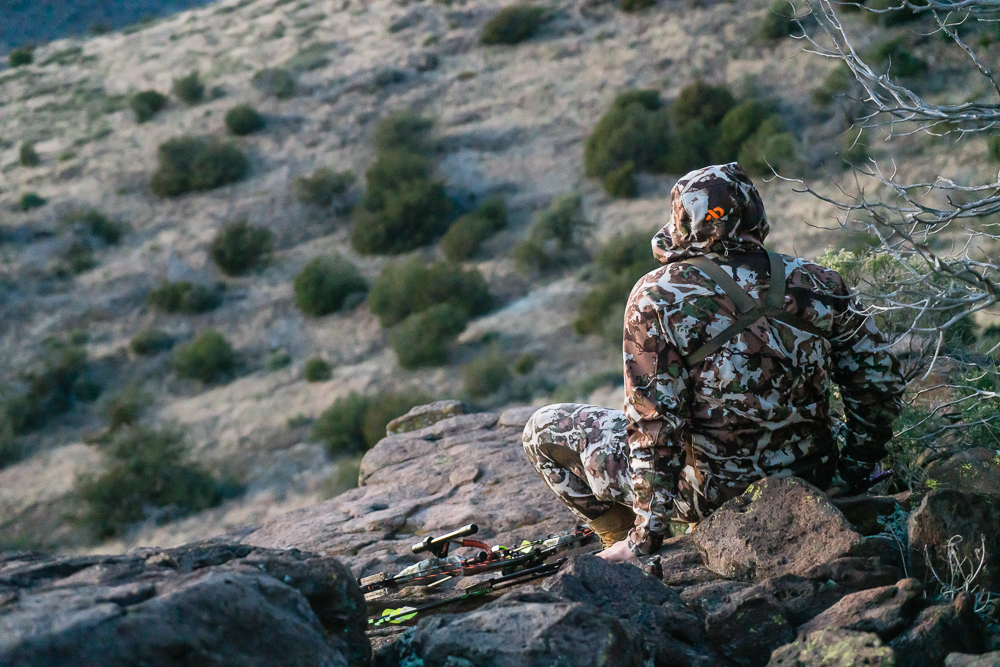
Early Season vs. Rut Tactics
Early Season: Wait for the Bed
- Glass a buck at dawn
- Let him bed
- Stalk during his second bed (often 2–3 hours later)
- Move slowly, use terrain
Rut: Be Aggressive
- Bucks bed for 15–20 minutes max
- Don’t wait—intercept on the move
- Options:
- Cut off travel route
- Get above the herd
- Stalk while feeding
Rut Rule: If you see a buck, assume he’s moving in 20 minutes. Act now.
Use Terrain to Stay Hidden
- Draws: Cut distance by 75%—stay out of sight
- Brush lines: Break up your silhouette
- Ridges and boulders: Block line of sight
- Always keep cover between you and the deer
Move fast when unseen. If they can’t see you, speed up.
Wind: Your #1 Enemy
A Coues buck will smell you before he sees or hears you. Always:
– Check wind with windicator powder or crushed grass
– Watch grass movement and heat waves at distance
– Never assume wind is steady—recheck every 100 yards
Mistake: Hunting downwind of bedding areas. Buck will flare and vanish.
Silent Movement: Lose the Boots
Why Wool Socks Work
In rocky, crunchy terrain, boots are loud. For final 100–200 yards:
– Remove boots
– Wear double-thick wool socks over regular socks
– Tuck pant legs into socks to reduce noise
Warning: Only do this near the end of stalk. You need boots for safety and navigation.
Avoid the Cactus Zone
- Watch hands, knees, and feet around prickly pear, jumping cactus
- One hunter crawled through a dead cactus—spent hours removing thorns
- Move slowly, test every handhold
Shooting: Precision at Distance
Typical Shot Distances
- Rifle: 300–500 yards (up to 650+)
- Bow: 40–80 yards (some beyond 100)
Practice before season. Know your max effective range.
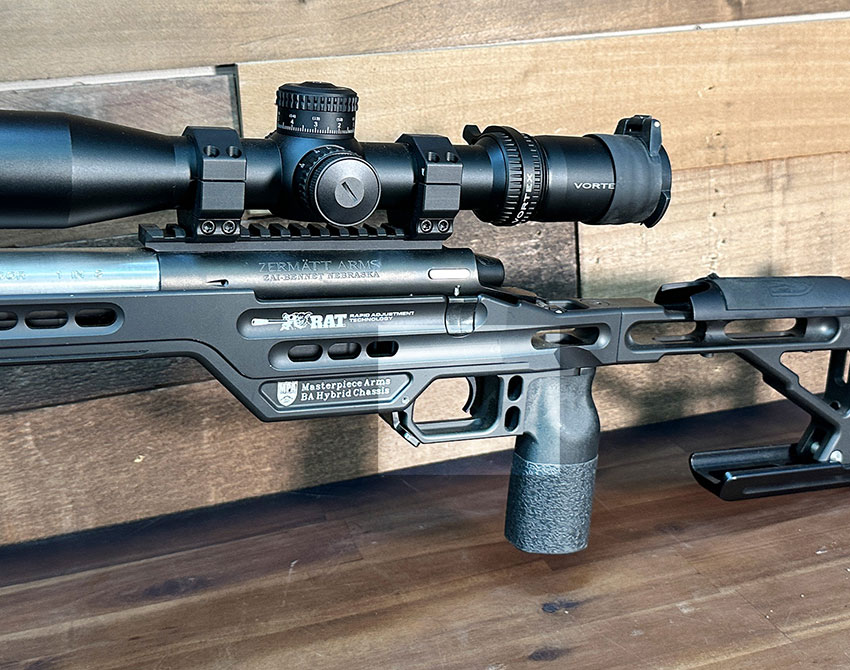
Rifle & Ammo Tips
Best Calibers
- 6.5 Creedmoor (most popular—flat, light recoil)
- .243 Winchester
- 7mm Rem Mag
- .270 Win
- 300 Win Mag
Scope Setup
- 4–16x variable
- Exposed turrets for wind/holdover
- MOA or MRAD reticle
- Recommended: Vortex Viper HS or PST
Ammunition
- Use controlled-expansion bullets:
- Nosler AccuBond
- Barnes TTSX
- Hornady ELD-X
- Avoid FMJ or heavy dangerous-game bullets
- Test for sub-MOA accuracy
Bowhunting: Be Ready for 60+ Yards
- 60-yard shot should feel like a chip shot
- Practice to 120 yards for confidence
- Coues often jump the string—time your draw when head is down
- Stay hidden after draw—use brush, shadows, tree cover
- Have a spotter guide you in during stalk
Recovery: Don’t Lose Your Deer
Watch the Fall
- Keep eyes on deer via spotting scope
- Note exact location of fall
- If alone, mark location and return after field dressing
Pack Out Smart
- Use easiest route, even if different from approach
- Consider quartering and packing in stages
- Bring game bags, gloves, and sharp knife
Avoid These 7 Coues Hunting Mistakes
| Mistake | Fix |
|---|---|
| Hunting near roads | Hike 1+ hour into backcountry |
| Walking instead of glassing | Stay behind optics all day |
| Waiting for rut bucks to bed | Intercept on the move |
| Ignoring wind | Use windicator; check constantly |
| Poor physical prep | Train for 1,000+ ft elevation gains |
| Shooting past limits | Practice and know max range |
| Returning to camp midday | Pack lunch, stay in field |
“On my second hunt, I repeated the first step-by-step… we only found one nonlegal buck. Dejected, I accepted failure and went home with tag soup.” —Seasoned Hunter
Final Tips: Mindset & Gear
Keys to Success
- Glassing is everything—invest in 15x binos and tripod
- Get high and get far—avoid pressure zones
- Be patient but aggressive—adapt to season
- Respect the wind—scent control is non-negotiable
- Prepare physically—this is a mountain hunt
Essential Gear Checklist
- 15×50 or 15×56 binoculars (tripod-mounted)
- Sturdy tripod with smooth head
- Spotting scope (optional)
- Glassing stool or pad
- Rifle accurate to 500+ yards or bow to 60+ yards
- Controlled-expansion ammo or arrows
- GPS with pre-loaded waypoints
- Extra wool socks
- Bandana (reduce glare)
- Lightweight backpack with food, water, first aid
Final Note: Coues deer hunting is as much mental as physical. You’ll be humbled. You’ll glass for hours and see nothing. But when you finally spot that small-bodied buck with tall, delicate tines rising from a rocky spine, it’s worth every step. The rut is here—and it’s not to be missed.

0 Comments