If you’ve ever tracked a giant buck for days only to watch him vanish at the last second, you’re not alone. Most hunters miss their best chances not because they lack skill — but because they’re hunting the wrong places, at the wrong times, or relying on outdated myths. The truth is, mature bucks aren’t ghosts — they follow predictable patterns rooted in biology, terrain, and habit. And with the right buck hunting tips, you can turn those patterns into opportunities.
This guide cuts through the noise and delivers only what works: science-backed strategies, terrain-specific ambush tactics, and seasonal insights proven in the field. Whether you’re hunting public land, dense swamps, or suburban thickets, these 12 battle-tested buck hunting tips will dramatically increase your odds of tagging a trophy — starting this season.
Hunt the 7-Day Rule Window
Mature bucks aren’t random wanderers. They operate on an annual cycle, returning to the same trails, rubs, and feeding zones within a 7-day window each year — often down to the same date, time, and wind direction.
Why Bucks Repeat the Same Path
When conditions stay consistent — wind, food, and low hunting pressure — mature bucks stick to their routines like clockwork. A buck seen on November 5 during a south wind is highly likely to reappear between November 2 and 8 the next year under similar conditions.
Trail camera and GPS data back this up. One 170-inch Ohio buck was photographed on November 14 for three straight years, within 100 yards and a 45-minute time window each time. Another Mississippi non-typical was harvested exactly one year after first being spotted — within 100 yards of the original location.
How to Use the 7-Day Rule
- Mark your calendar: Use dated trail cam photos to lock in a ±3-day hunting window.
- Focus on daylight sightings — they’re the most reliable indicators of repeatable movement.
- Scout and set stands before the window opens — avoid spooking the buck with late-season intrusion.
- Hunt during matching wind and weather patterns to maximize predictability.
Pro Tip: Post-season scouting is your secret weapon. Find rubs, beds, and trails where mature bucks show up in daylight — then return the next year during the 7-day window.
Target November 13: Peak Rut Day
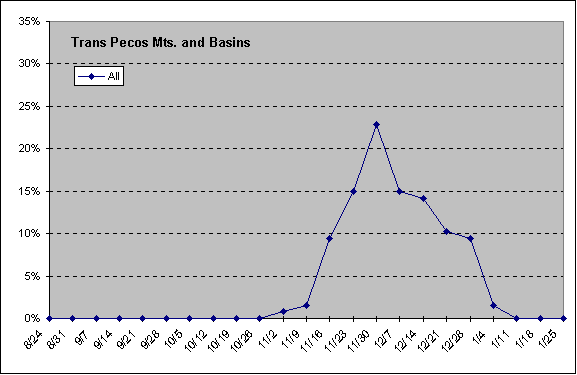
The single most important date for buck hunting is November 13 — the scientifically confirmed peak of the rut across the whitetail range.
Why Photoperiod Rules Rut Timing
Changing day length (photoperiod), not moon phase or weather, triggers doe estrus. Decades of research show that over 50% of does are bred within a 3-day window centered on November 13.
Despite popular myths, lunar cycles affect rut timing by less than 1%. This means rut timing is consistent year after year — and so are buck movements.
Plan Your Hunt Around the Rut
- Pre-Rut (Oct 20–Nov 12): Bucks work scrapes and rubs. Hunt near bedding edges and rub lines.
- Peak Rut (Nov 10–16): Bucks chase does nonstop. Shift focus to does, not buck sign.
- Post-Rut (Nov 17–Dec 10): Bucks recover and feed heavily. Target high-carb food sources.
Fact: Bucks move all day long during the rut. Don’t leave the woods at noon — your best chance could come at 2 p.m.
Follow Rut-Driven Buck Movement
When the rut hits, bucks transform from cautious loners into relentless, wide-ranging machines.
Testosterone Changes Everything
A surge in testosterone turns mature bucks into roaming predators. They:
– Travel miles outside their core range.
– Move throughout the day, not just at dawn or dusk.
– Lose 25–33% of body weight from constant chasing and lack of feeding.
This exhaustion makes them less cautious, opening the door for aggressive tactics.
The 24–36 Hour Doe Rule
Once a buck finds a receptive doe, he stays with her for 24 to 36 hours, often disappearing from trail cameras and showing up in unexpected areas.
This explains why big bucks seem to “vanish” — they’re not gone. They’re locked up with a doe miles away.
How to Intercept Moving Bucks
- Hunt transition zones between doe bedding areas.
- Set up on funnels, saddles, and pinch points where bucks cross between territories.
- Use all-day sits — bucks often move between does during midday lulls.
Expert Note: After a buck loses a doe, he’ll often return to his core area to rest — creating a second opportunity.
Focus on Buck Security Cover
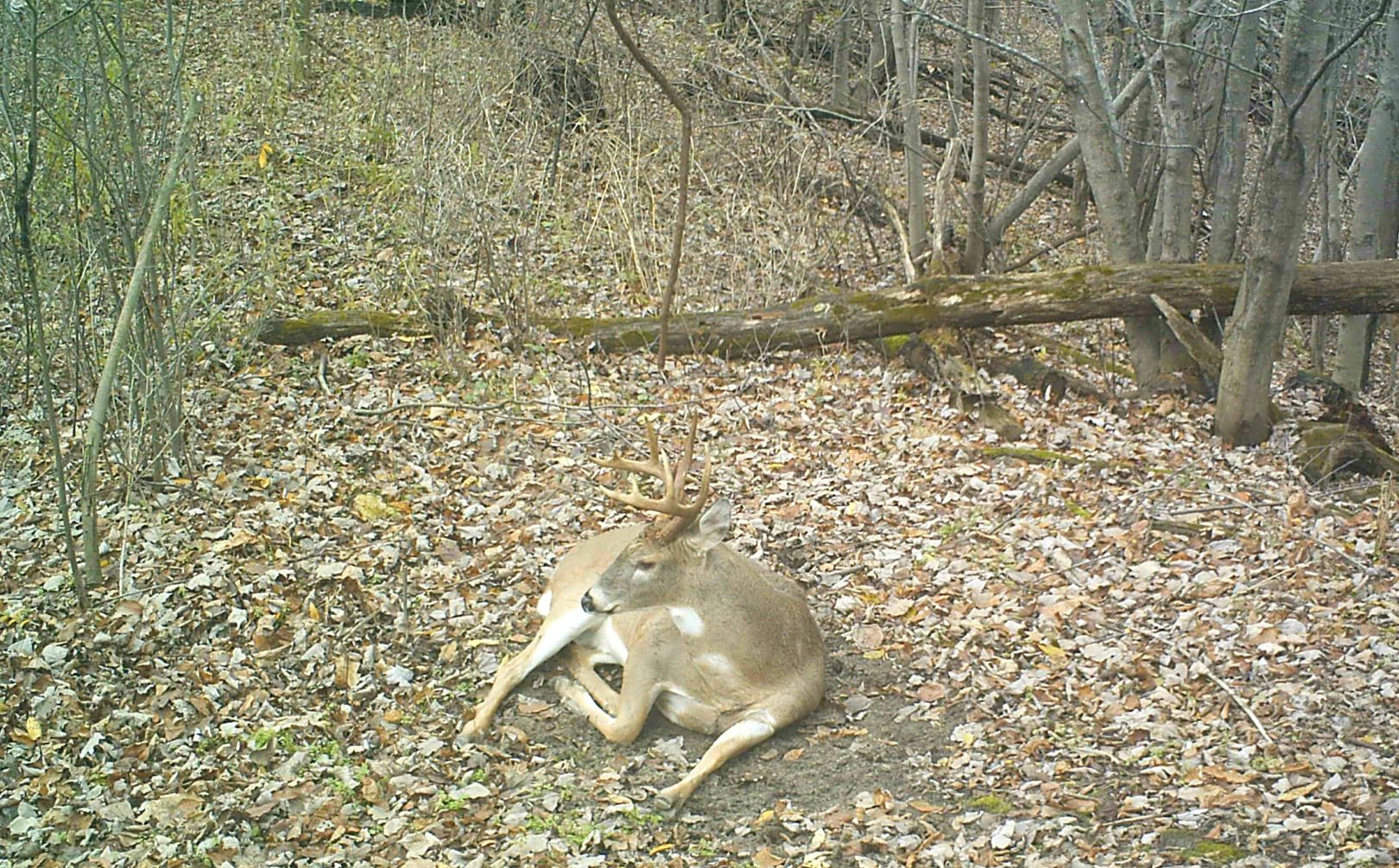
Mature bucks don’t live in open fields. They survive by staying hidden in thick, hard-to-reach terrain.
Best Buck Havens
- Swamps and slashings — wet, tangled, and rarely hunted.
- CRP fields and grassy patches — provide cover and security.
- Steep knobs and rugged ridges — offer vantage points and escape routes.
- Urban thickets and metro swamps — hidden between developments.
Big bucks avoid large hardwood stands and open food plots unless pressured into them.
Why Public Land Bucks Hide in Remote Zones
On public land, mature bucks stick to areas at least 30 minutes from roads. They’ve learned that easily accessible spots get hunted hard.
Your best odds? Hunt where others won’t go — steep hills, dense brush, or flooded timber.
Warning: Don’t waste time in flat, open terrain. Eliminate large marshes, uniform forests, and unbroken fields from your scouting.
Use Terrain to Your Advantage
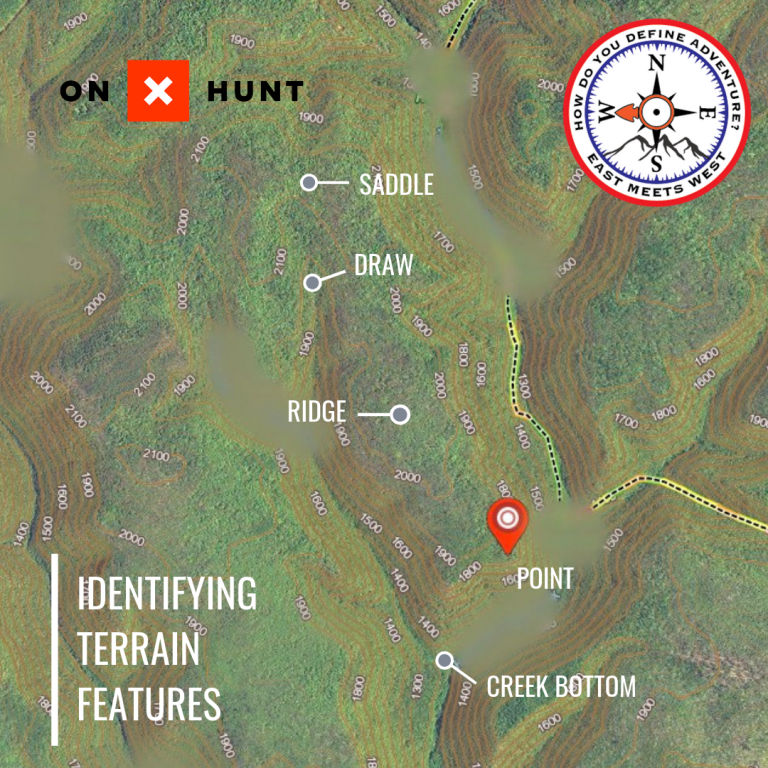
Bucks follow topography like a roadmap. Learn the key features, and you’ll know exactly where to ambush.
Key Terrain Ambush Points
| Feature | Why It Works |
|---|---|
| Saddles | Natural travel corridors between ridges. |
| Funnels | Pinch points that force deer through narrow zones. |
| Ridgelines | Bucks use high ground to see and smell danger. |
| Creek Drainages | Low paths connecting bedding and feeding areas. |
| Beaver Dams | Create predictable crossing points. |
| Benches | Flat resting spots on steep hillsides. |
Hunt the Hill Country Edge
In rugged terrain, you can cheat the wind by hunting from above. Set up downwind on a ridge overlooking a saddle or funnel — bucks won’t expect danger from above.
Urban hunters: narrow wooded strips between highways or subdivisions act as funnels. These are goldmines.
Scout Smarter in 2 Days or Less
You don’t need weeks of scouting. With the right method, you can find buck patterns in 48 hours or less.
Step 1: Remote Recon
- Use topographic and aerial maps to eliminate 90% of the land.
- Focus on remote, thick, hard-to-reach zones.
- Ignore areas within 30 minutes of roads.
Step 2: Ground Truthing
- Look for clusters of rubs on small trees (poplar, willow, alder).
- Find “trashy” rubs within 70 yards of a bed — these mark exit routes.
- Avoid isolated rubs in food plots — they’re often made by younger bucks.
Fact: 10+ rubs in a small area = high odds of daylight buck movement.
Rubs > Scrapes for Finding Bucks
Most hunters overvalue scrapes. The real gold? Rubs — especially clusters near bedding areas.
What Rubs Reveal
- Small rubs ≠ small bucks — even light bark removal can be made by mature deer.
- Bedding-fringe rubs (shaggy, brushy trees) signal a buck’s daily exit.
- Rub clusters are more reliable than large rubs in open areas.
Scrapes: Use Them Early, Not During Rut
- Scrapes peak in pre-rut (October–early November).
- During the rut, bucks ignore scrapes — they’re chasing does.
- Mock scrapes work best in early season — add scent-dipped rope on a licking branch.
Hunt Does During the Rut
Here’s the #1 mistake: hunting buck sign during the rut.
When the rut hits, buck sign stops mattering. Bucks are chasing does — so you should be too.
Where to Hunt in Mid-November
- General doe bedding areas — not specific rubs or scrapes.
- Well-used trails with fresh doe tracks and droppings.
- Terrain funnels between doe groups.
Still-Hunt the Midday Rut Lull
While most hunters are in camp, bucks are moving between does.
- Use still-hunting in low-density areas.
- Move slowly through funnels and saddles.
- Stay alert — bucks may come from any direction.
Pro Tip: Pack a breakfast burrito, protein bars, and cookies — staying in the woods all day doubles your odds.
Stay Put After a Missed Shot
If you blow a shot, do not move.
Mature bucks often circle back to check the area, especially if they didn’t see or smell you.
- Stay in your stand for at least 2 hours.
- Hunt the same spot 2–3 days later — the buck may return at dark.
Fact: Many trophy bucks are killed after a previous missed shot — because the hunter stayed disciplined.
Late-Season: Hunt Food & Survival
After the rut, bucks are starving and vulnerable.
Target High-Carb Food Sources
- Brassicas, corn, dried soybeans, sorghum — especially with snow cover.
- Acorns and browse — when snow is less than 6 inches deep.
- Cereal grains — critical for heat generation in cold weather.
Use Multi-Sensory Deception
Combine tactics to trigger a response:
1. Rattle to simulate a fight.
2. Set a decoy to draw an aggressive approach.
3. Drip doe-in-heat scent downwind to seal the deal.
Warning: Reduce human odor to near-zero — late-season bucks are hyper-alert.
Urban Buck Hunting Tactics
Big bucks thrive in suburbs — but they’re smarter than ever.
Key Urban Strategies
- Scout from your vehicle in summer — no boots on the ground.
- Hunt exactly where the buck is, not where you want him to be.
- Use trail cameras early, then back off — big bucks hate intrusion.
- Hunt weekends — human activity kicks bucks out of beds during daylight.
- Talk to police and neighbors — they see deer at night you’ll never spot.
Rule: Cover is king. Metro swamps and dense thickets beat food plots every time.
Final Principles: Hunt Where Others Won’t
- Find the buck, half the work is done — stop guessing, start observing.
- The rut isn’t luck — it’s preparation, knowledge, and presence.
- Mature bucks are habitual — they leave sign, respond to conditions, and are often closer than you think.
- Hunt thick, remote, hard-to-reach areas — that’s where giants live.
Bottom Line: Use the 7-day rule, target November 13, hunt does during the rut, and stay in the woods all day. These buck hunting tips aren’t theory — they’re field-proven. Now go get yours.


0 Comments