Crossbow hunting combines power, precision, and primal instinct—delivering ancient thrills with modern engineering. But owning a high-speed crossbow isn’t enough. The best crossbow hunting tips aren’t about gear upgrades or trophy bragging rights—they’re about discipline, preparation, and respect for the game. Success comes not from luck, but from mastering fundamentals: shot placement, wind reading, consistent practice, and ethical boundaries. Whether you’re a beginner or a seasoned hunter, this guide delivers actionable strategies to improve accuracy, ensure clean kills, and elevate your fieldcraft. You’ll learn how to train like a pro, avoid fatal mistakes, and make every hunt count—ethically and effectively.
Master Long-Range Practice
Practice Beyond Your Max Hunting Distance
If your ethical limit is 50 yards, you should be consistently hitting targets at 70 or 80 yards. Why? Long-range shooting exposes flaws in form, scope alignment, and trigger control that vanish at shorter distances. When adrenaline spikes in the field, muscle memory kicks in—only if it’s been built through rigorous training. Practicing beyond your max range ensures your 30- and 40-yard shots are rock-solid, giving you confidence when it matters most.
Use Real Hunting Conditions
Never sight in with field points and expect broadheads to fly the same. Mechanical and fixed-blade broadheads have different aerodynamics due to blade deployment, weight distribution, and drag. Always test your full hunting setup: arrows, nocks, lubrication, and broadheads. Even a 20-grain difference in arrow weight can shift your point of impact by several inches at 40 yards. Models like the Rage No-Contact or SEVR 1.5” are known for field-point-like flight—but only after verification through repeated testing.
Simulate Tree Stand Shooting
Your shooting form changes dramatically when elevated. On the ground, your anchor point and rail alignment feel natural. In a tree stand, restricted movement, awkward angles, and harness interference alter everything. Train by shooting from a chair with your elbow on your knee to mimic stand posture. Wear your full hunting gear—clothes, harness, backpack—to identify interference before the moment of truth. This builds critical muscle memory for real-world scenarios.
Build a Target Wall

Frequent broadhead shooting destroys standard targets fast. A target wall setup with multiple blocks—like the SEVR HD, Morrell Big Dice, or Yellow Jacket—protects your bolts and prevents arrow loss. Arrange four targets in a square to catch stray shots. It keeps practice efficient, safe, and effective—especially during long sessions.
Train with 3D Targets
Flat targets don’t teach shot angles. 3D targets replicate real hunting scenarios by allowing you to:
– Judge quartering away, broadside, and head-on angles
– Visualize kill zones and shot trajectories
– Practice elevated stand shots
– Analyze entry/exit wounds by aligning a second arrow with the first
This is the closest you can get to a live hunt—without the pressure.
Know Your Gear Completely
Understand Your Crossbow’s Specs

You must know your crossbow inside and out:
– FPS (feet per second)
– Draw weight
– Trigger pull weight
– Cocking mechanism
– Scope reticle design
Take the TenPoint TX 440 as an example: 440 fps, 28” long, 6.5” wide when cocked, with a crisp 3-pound TriggerTech trigger and built-in decocking system. Knowing these specs allows you to predict bolt behavior, adjust for windage, and react instinctively in high-pressure moments.
Sight In Step by Step
Sighting isn’t guesswork. Follow this process:
1. Start at 10 yards
2. Use your top reticle (usually set for 20 yards)
3. Fire three shots, adjust windage/elevation
4. Confirm zero before moving to 20, 30, 40, then 50 yards
Even a small error at 10 yards becomes a foot off at 50. Always sight in with the same bolts and broadheads you’ll use in the field.
Level Your Reticle
A canted crossbow causes horizontal and vertical misses at distance. Use a reticle leveling tool or an iPhone compass app on top of the scope. Check level on uneven terrain—your body’s sense of balance can be fooled by slopes or leaning trees. Once leveled, lock it down and check monthly.
Inspect Before Every Shot
After climbing or transporting, always inspect:
– Strings and cables for snags
– Flight path for obstructions
– Scope tightness
– Trigger guard integrity
Never place fingers in the bowstring’s path when cocked. Clothing, harness straps, or tree limbs can interfere with limb movement—causing deflection or injury.
Choose High-Performance Broadheads
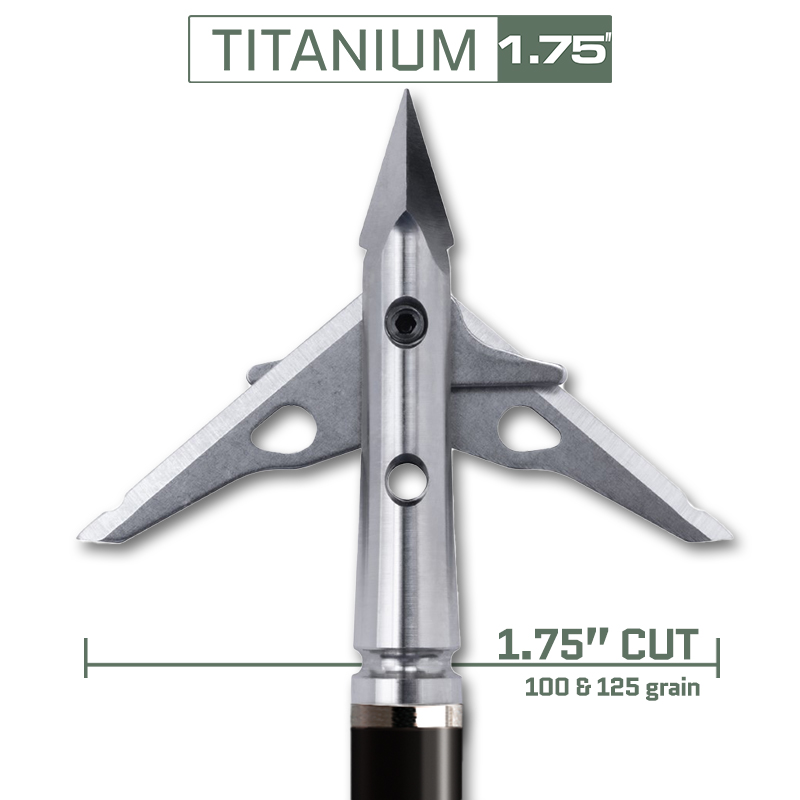
Not all broadheads are equal. SEVR Titanium models (100–150 grains) offer:
– Blade locking screws for practice
– Pivoting blades that steer around bone
– Swept-back edges for stretch cuts
– Bone-shattering ferrules
– Field-point-like flight
They fly true, penetrate deep, and create massive wound channels. Test them rigorously to ensure match-grade consistency.
Stabilize Every Shot
Always Use a Rest
Crossbows are not handguns. Free-hand shooting introduces wobble, especially past 30 yards. Use:
– Shooting sticks
– Bipods
– Tree stand armrests
If your crosshairs dance at 80 yards, you need support. A stable platform turns shaky shots into repeatable hits.
Clear Your Shooting Lane
Crossbow limbs move faster than compound bows—any obstruction in the flight path can deflect the bolt or damage the bow. Before hunting:
– Scan for branches, vines, or stand components
– Trim lanes weeks in advance
– Carry a handheld brush trimmer for last-minute fixes
One hunter missed a buck because the cam hit the stand—entirely preventable with a quick visual check.
Control Adrenaline
When game appears, your heart races, hands shake, and breathing quickens. Use a mental checklist:
1. Remove safety
2. Confirm grip and anchor
3. Clear fingers from arrow path
4. Breathe deeply and focus
A controlled, deliberate shot beats a panicked pull every time.
Squeeze, Don’t Jerk the Trigger
Use the tip of your index finger to slowly squeeze the trigger. Jerking moves the bow before release. High-end triggers like TriggerTech (3-lb break) minimize movement. Practice trigger discipline on the range—your body will remember when the moment matters.
Aim for Ethical Kills
Target Lungs and Heart
The goal is a quick, humane kill. Focus on:
– Lungs (primary)
– Heart
– Major blood vessels
A double-lung pass-through causes rapid blood loss, leading to expiration within 10 seconds. The animal should drop within 30–40 yards if hit cleanly.
Adjust for Elevated Shots
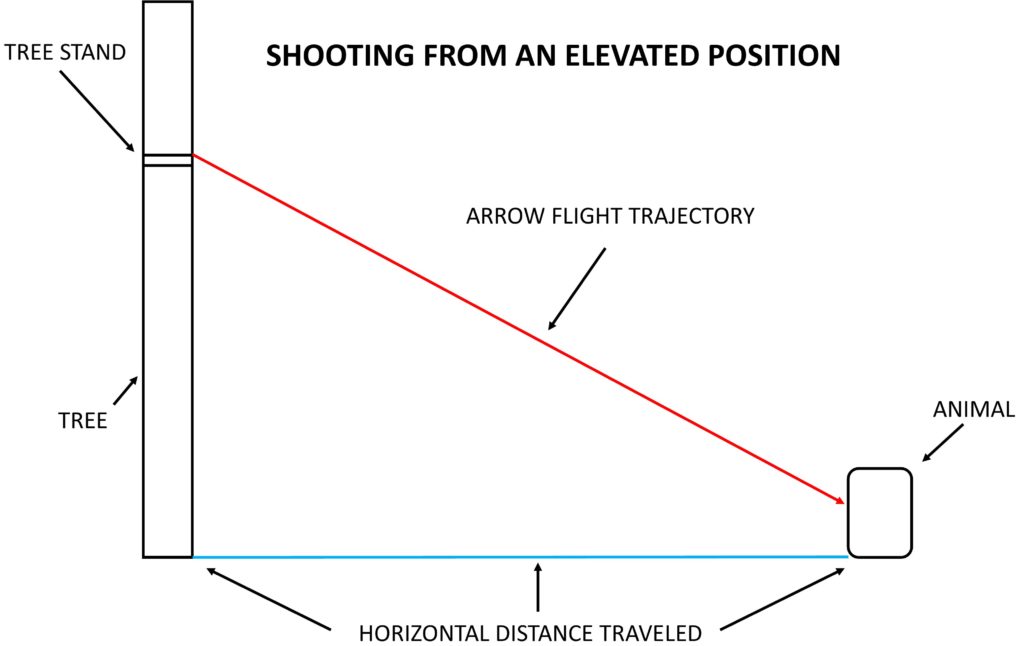
From a tree stand, aim high entry, low exit:
– Hit through the near-side shoulder or neck
– Exit through the opposite lung or heart
Gravity pulls the bolt downward—this ensures both lungs are penetrated.
Account for “Jumping the String”
Deer often flinch before the bolt arrives because crossbows are loud. At 20 yards, they drop ~5 inches; at 37 yards, over 10 inches. Use necropsy analysis to compare aim point vs. wound location. Solution: Aim for the heart at minimum, giving margin for drop.
Know Arrow Drop and Trajectory
Example: A 448-grain bolt at 450 fps drops 69.5 inches at 100 yards. Significant drop starts beyond 50 yards. Know your bolt’s ballistic curve at:
– 20 yds
– 30 yds
– 40 yds
– 50 yds
Use a rangefinder and reticle holdovers accordingly. Underestimating drop leads to high misses.
Set Your Ethical Range
Just because you can shoot 80 yards doesn’t mean you should. Beyond 50–60 yards:
– Bolt energy drops sharply
– Wind drift increases
– Animal movement risk rises
Ethical max hunting range: 50–60 yards. Beyond that, wounding risk skyrockets. As one hunter said: “It’s a gamble that tests ethics and morals.”
Master Field Conditions
Hunt Optimal Weather Windows
Deer move predictably around weather:
– Pre-rut (late Oct–early Nov): Bucks are highly active
– Cold fronts: Trigger feeding and travel
– During storms: Stay off the stand
– Last 30 minutes of rain/snow: Prime movement as weather clears
– Early Sept: Summer feeding patterns expose mature bucks
– Second rut (Dec 7–11 in NY): Secondary spike in activity
Be in the woods when the radar says the storm is ending.
Play the Wind Relentlessly
Mature deer smell you from downwind. Always:
– Check wind direction before climbing
– Use milkweed silk as a natural wind detector (store in a pill bottle)
– Test wind hourly from your stand
– Have multiple stands to rotate based on wind
Residual human scent can ruin a stand site for weeks. Never hunt a bad wind.
Scout and Prep Early
Scout in late winter or early spring to find:
– Buck trails
– Rub lines
– Scrapes
Trim shooting lanes weeks in advance to avoid last-minute noise. Install back cover (pine or oak branches) behind your stand:
– Cut from elsewhere to avoid local scent
– Install over two pre-season trips
– Lasts up to 9 months (oak has no sap)
You can’t move once a deer spots you—cover is non-negotiable.
Track with Discipline
Mark the Deer’s Location
Before shooting, mentally lock in the deer’s position using landmarks:
– Stump
– Leaning tree
– Brush pile
– Trail junction
Watch its escape path. From the ground, terrain looks different—landmarks help you relocate blood quickly.
Wait Before Tracking
Wait at least 30 minutes after a vital hit. Rushing pushes wounded deer further. Use the time to:
– Calm down
– Prepare gear
– Plan your approach
For non-fatal hits, wait longer—up to several hours.
Use Proper Lighting
Carry a high-lumen headlamp or flashlight. Red light mode preserves night vision. Tracking in low light is dangerous and ineffective without quality illumination. One hunter stressed: “After the shot, have proper lighting to track effectively.”
Cultivate the Right Mindset
Be Early, Stay Patient
“Better to be an hour early than a minute late.” Even if you arrive late, go anyway—some of the best hunts happen unexpectedly. Persistence pays: one hunter passed on 156 deer in Year 1, then harvested a 10-pointer in Year 2.
Learn from Every Hunt
Keep a hunting journal. Record:
– Weather
– Wind
– Deer movement
– Missed shots
– Successes
One veteran said: “I’ve kept journals for 15 years—they are my bibles.” Review them to spot patterns and improve.
Set Realistic Goals
Don’t expect Boone & Crockett bucks in areas that produce 120–140 class deer. Know your region’s potential. Success isn’t just antler size—it’s experience, harvest, and ethical execution.
Special Tactics: Turkey Hunting
Scout Roost Sites
Set up within 50 yards of a roost before first light. Use a hen decoy 15 yards out. Call with:
– Soft roost clucks
– Ball cap shake (mimics fly-down sound)
Must be in a blind—turkeys see stillness as unnatural.
Move While Calling
Turkeys expect hens to move. Try this tactic:
1. Call once at first gobble
2. Walk 60 yards away, call again
3. Walk halfway back, call again
Gobblers often come in, expecting a moving hen.
“They know a hen isn’t sitting still—she’s moving around.”
Final Takeaways: 10 Commandments of Crossbow Hunting
- Practice long to master short shots
- Always use a rest—never free-hand
- Test your full hunting setup with broadheads
- Shoot from your tree stand during practice
- Zero your scope and level the reticle
- Clear your shooting lane completely
- Aim for the heart at minimum—account for jump
- Know your ethical max range (50–60 yards)
- Play the wind and eliminate human scent
- Stay calm, breathe, and squeeze the trigger
“An ethical hunt isn’t about the shot—it’s about the kill.”
“Precision, patience, and preparation.”
“You owe it to the animal and yourself.”
Master these best crossbow hunting tips, and you won’t just harvest game—you’ll do it with integrity, skill, and respect.

0 Comments