Ducks don’t just see the world differently—they see more of it. With tetrachromatic vision that detects ultraviolet light and distinguishes colors far beyond human capability, waterfowl can spot a shiny or oddly shaped canoe from hundreds of yards away. That sleek, symmetrical hull? To a duck, it’s a glaring red flag in an otherwise natural landscape. If you’re serious about duck hunting, camouflaging your canoe isn’t optional—it’s essential for success.
A properly concealed canoe doesn’t just blend in; it breaks up its silhouette, eliminates reflections, and mimics the chaotic randomness of marsh vegetation. Whether you’re stashing your boat deep in cattails or hunting from within it as a floating blind, the right camouflage turns your canoe into just another part of the wetland. This guide covers every proven method—from painting to netting to natural vegetation—based on biological science, field-tested techniques, and real hunter feedback. You’ll learn how to choose the best materials, apply durable paint, avoid costly mistakes, and stay invisible to even the most cautious ducks.
Break the Canoe’s Silhouette to Defeat Duck Vision

Disrupt the Outline with 3D Texture
Ducks don’t need to recognize a canoe to know something’s wrong—they detect shape, symmetry, and hard edges long before color. A smooth, curved hull stands out like a buoy in a sea of vertical reeds and swaying grasses.
Your primary goal is silhouette disruption, not perfect color matching. Use 3D elements to break up the boat’s profile and mimic natural randomness:
– Drape leafy camo netting over the gunwales.
– Attach bundled cattails or phragmites along the sides.
– Tie on burlap strips or raffia grass to create movement and texture.
Pro Tip: Cut slits in camo netting and weave in local plants for instant realism. The more jagged and irregular the top line, the better it blends.
Eliminate Shine and UV Reflection
Even a matte-finish canoe can betray you with UV reflectivity. Ducks see this glow as a danger signal—like a flashing beacon in sunlight.
Steps to eliminate shine:
1. Avoid glossy paints or clear coats—they reflect light even at low angles.
2. After painting, apply a matte, non-reflective topcoat.
3. Cover glossy parts—gunwales, seats, metal ribs—with flat paint or fabric.
Critical: One hunter repainted his blue canoe bottom with olive green after ducks consistently avoided the area—blue is highly visible underwater and triggers suspicion.
Choose: Temporary or Permanent Camouflage?

Your hunting style determines the best approach. Will you use the canoe solely for duck hunting, or do you need it for fishing and paddling too?
Temporary Camouflage Methods
Ideal for multi-use canoes or hunters who want flexibility and easy removal.
Use Camo Tarps and Nets
Camo tarps are fast, removable, and effective when fully deployed.
How to apply:
– Use two large camo tarps, cut one down the middle, and wrap around the hull.
– Secure with bungee cords or zip ties at bow, stern, and midship.
– Layer a second tarp over the top when stationary.
Drawback: Tarps trap rainwater inside—flip them into the boat during transport to drain.
Deploy Burlap Covers
Burlap is cheap, easy to customize, and blends well when stained.
DIY burlap cover:
– Buy a 10-yard bolt (~$20 with coupon).
– Cut to fit your canoe’s width (typically 8 ft).
– Spray with brown and green camo paint for depth.
– Store in a mesh swimmer’s bag when dry.
Warning: Burlap absorbs water and becomes heavy when wet or frozen.
Attach Cordura or Rip-Stop Covers
For durability and reusability, Cordura or rip-stop nylon outperforms burlap.
Features to look for:
– Zipper or Velcro closure
– Drawstrings at bow and stern
– Pre-sewn vegetation loops
– Rear access for storage
Recommended: YakGear Ambush Camo Cover (fits 12.5–14.5 ft canoes) with RealTree Max5 pattern.
Permanent Camouflage: Paint the Canoe
Best for dedicated duck hunting boats. A painted canoe offers seamless, long-term concealment.
Prepare the Surface
Paint won’t stick without proper prep—especially on slick plastics or Kevlar.
Steps:
1. Clean thoroughly with soap, water, and scrub brush.
2. Remove dirt, grease, salt (coastal areas), and old decals.
3. Sand lightly to create “tooth” for adhesion.
4. Wipe with ammonia-based cleaner (Krylon-recommended).
5. Dry completely—any moisture causes peeling.
Expert Note: One user reported paint peeling after a week—use primer on low-energy plastics.
Apply Interior Bed Liner
Protect the inside while adding texture and grip.
Use Rust-Oleum Truck Bed Coating:
– Spray on thin, even coats.
– Let dry between layers.
– Mask seats and rails with painter’s tape.
– After drying, touch up railings and smooth with heat gun.
Bonus: Resists UV, wear, and water—costs under $8 per can.
Paint the Exterior in Layers
Start with base, build up pattern, finish with matte sealant.
Apply Olive Green Base Coat
Olive green hides flaws and blends with wetlands.
Options:
– Rust-Oleum Camo Forest Green (popular choice)
– Krylon Light Tan (if following manufacturer instructions)
Rule: Apply thin coats—pooling causes runs and shine.
Stencil Natural Patterns
Avoid uniformity. Nature is chaotic.
Create stencils:
– Cut cattail fronds, sandwich in duct tape.
– Use bottles, lids, sticks for random shapes.
– Buy commercial grass stencils (Rust-Oleum offers them).
Paint order:
1. Tan (lightest) – mimics dried reeds
2. Bright green – living vegetation
3. Brown – shadows and depth
4. Black – reed stems and dark patches
Pro Technique: Spray in light, raggedy bursts, move stencil often, and orient patterns vertically—reeds grow up.
Seal with Matte Clear Coat
Lock in the pattern and block UV fade.
Use:
– Krylon 1311 Matte Clear Coat (user-recommended)
– Apply 3–4 thin coats, drying fully between
Never use glossy varnish—it defeats the entire purpose.
Add 3D Camouflage Elements for Realism
Attach Vegetation Bundles
Real or artificial plants add depth, motion, and realism.
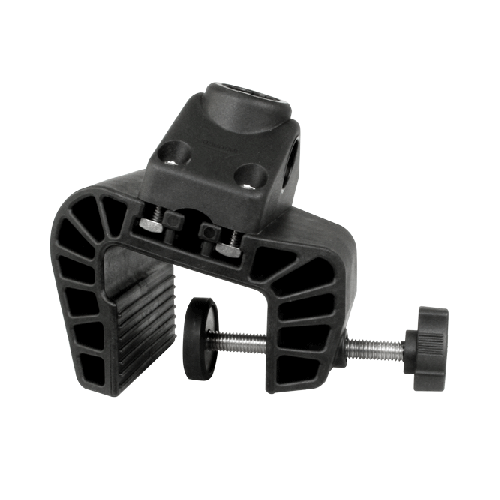
Use Conduit Clamps for Cattails
Steps:
1. Cut cattails into 3–4 ft sections.
2. Bundle with duct tape or twine at base.
3. Screw 1″ conduit clamps into gunwales.
4. Slide bundles into clamps—quick to install and remove.
Result: Hunters report ducks flying directly overhead, unaware of the blind.
Weave Grass into Netting
Boost synthetic covers with local vegetation.
Best plants:
– Phragmites (common in marshes)
– Corn stalks (for agricultural zones)
– Rafia grass (craft stores, doesn’t rot)
Tip: Pre-cut and organize bundles before dark—snagging netting in low light is a common frustration.
Camouflage Accessories and Upgrades
Conceal Pontoons and Motors
Every visible part must be hidden.
Build Removable Pontoons
For stability when setting decoys or retrieving ducks.
Materials:
– Crab trap floats
– PVC pipe frame
– Clevis pins for quick attachment
Bonus: Helps keep bow down when using a 4hp outboard.
Camouflage the Outboard
A shiny motor ruins concealment.
Methods:
– Wrap in grass netting
– Paint housing with camo spray
– Cover with burlap sleeve
Integrate a Layout Blind
Hunt lying down for maximum concealment.
Use a Spray Skirt-Style Cover
Design:
– Custom brown spray skirt over cockpit.
– Attach chicken wire frame with two flaps.
– Open flaps quickly when birds approach.
Advantage: Lets you rise fast for the shot while staying hidden.
Lower the Seat
Reduce profile and improve balance.
Options:
– Lay seat flat or remove entirely.
– Use flexible tent poles to create a low-profile cockpit.
– Replace modern seats with loose, independent benches (like old Sportspal models).
Stash or Hunt: Choose Your Strategy
Hide the Canoe in Reeds
Sometimes the best move is to leave the boat behind.
Slide Deep into Vegetation
How to:
– Paddle into dense cattails or corn zones.
– Cover with netting or burlap.
– Exit and hunt from a marsh seat or layout boat.
Success Story: One hunter used a 17′ Coleman canoe at Harsens Island—left uncovered but hidden deep in corn. Ducks never noticed.
Use the Canoe as a Blind
Stay mobile and hunt from within.
Setup:
– Cover entire boat with camo netting and vegetation.
– Lie flat, guns inside, leaning over gunwales.
– One user hunted for years this way using Army surplus netting.
Psychological Trick: Dress in T-shirts and shorts, talk loudly, paddle casually. Ducks often ignore “tourists.”
Avoid Common Camo Mistakes
Don’t Use Glossy or Blue Paint
- Glossy finishes reflect light—even in low sun.
- Blue is highly visible underwater and in shadows.
Fix: Repaint blue hulls with olive or forest green.
Don’t Forget the Underside
When ducks fly overhead, they see the bottom of your boat.
Solution:
– Paint or cover the hull underside.
– Use dark, non-reflective colors.
Don’t Use Bamboo Fencing
One hunter tried landscaping bamboo—it created massive drag.
Outcome: Abandoned for stashing only.
Maintain and Store Properly
Store Covers Dry
Wet burlap or netting grows mold and sags.
Storage tips:
– Roll up burlap sections under 5 ft.
– Use a mesh swimmer’s bag for ventilation.
– Hang netting to dry before packing.
Reapply Paint as Needed
Inspect annually for peeling or UV damage.
Touch-up routine:
– Lightly sand worn areas.
– Clean with ammonia.
– Spray with matching camo.
– Re-seal with matte clear coat.
Final Checklist: Camo Success in 8 Steps
- Assess usage: Hunt from boat or stash it?
- Choose method: Paint (permanent) or net/burlap (temporary)?
- Clean and prep: Wash, sand, ammonia wipe, dry.
- Paint (if applicable):
– Base: Olive green
– Layers: Tan → Green → Brown → Black (vertical stencils)
– Topcoat: Matte clear (3–4 thin coats) - Add 3D cover: Netting, burlap, or vegetation bundles
- Break the outline: Cover seats, gunwales, ribs
- Eliminate shine: No glossy finishes, no blue paint
- Deploy or stash: Use local plants, stay low, stay quiet
Adapt to Your Environment
No single method works everywhere. Match your approach to:
– Local vegetation (cattails vs. corn vs. phragmites)
– Water depth (shallow = stash far; deep = hunt from boat)
– Hunting pressure (wary birds need better concealment)
– Personal style (paint for permanence, netting for flexibility)
“It’s my canoe. Honestly, I’m quite pleased. I think it’ll work well for duck hunting and fishing.”
— paddledrive, after painting Old Town Discovery
Stay low. Stay quiet. Stay invisible. With the right camouflage, your canoe becomes just another part of the marsh—and the ducks will never know you’re there.


0 Comments