There’s nothing more maddening than watching ducks circle high over your decoy spread, hesitant to commit, while the water lies flat and lifeless around you. On windless mornings, even the most carefully arranged decoys can look suspiciously still—like plastic placeholders in a ghost marsh. That’s where a jerk string for duck hunting becomes your secret weapon. This simple, low-tech tool breathes life into your setup by mimicking the natural movement of feeding, swimming, or alert ducks, turning skeptical flyers into committed landers.
A jerk string isn’t just motion for motion’s sake—it’s strategic realism. By pulling a submerged line connected to one or more decoys, you create ripples that catch the eye of incoming flocks from hundreds of yards away. Unlike spinners that run continuously, a jerk string gives you full control over timing and intensity, letting you react to bird behavior in real time. Whether you’re hunting from a boat blind, layout setup, or walk-in marsh spot, mastering the jerk string can dramatically increase your success on calm days when other hunters struggle. In this guide, you’ll learn how to build, set up, and operate a jerk string system like a pro—using proven techniques, gear tips, and field-tested strategies that actually work.
Build a Jerk String with Proven Components
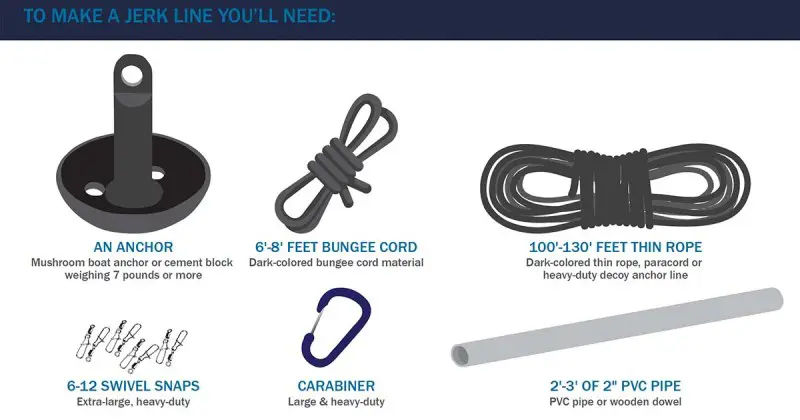
Every successful jerk string starts with the right parts. Using weak lines, visible cordage, or improper anchors leads to tangles, breakage, or educated ducks spotting something’s off. Build smart: use durable, low-profile materials designed for real hunting conditions.
Choose Submerged, Durable Line and Bungee
The main line transmits your pull to the decoys, so it must be strong, abrasion-resistant, and invisible underwater. Top choices include 550 paracord, braided decoy line, or tarred twine (#120)—all proven in field use. For best concealment, paint the line black or dark green to blend with muddy or weedy bottoms. Never let it float; a submerged, camouflaged line is key to avoiding spooked birds.
Pair the main line with a 3–20 ft bungee or shock cord (1/8” diameter) near the anchor. This elastic section absorbs your pull and creates a natural “swim” motion as the decoy rebounds. Avoid attaching bungee directly to decoys—this risks snapping them back too hard. Instead, connect the bungee between the anchor and main line for smooth, lifelike action.
Anchor Based on Depth and Bottom Type
Your anchor keeps the system taut and stable. Choose based on water depth, current, and substrate:
– Shallow mud (<4 ft): Use conduit stakes or Y-sticks driven into the bottom
– Weedy areas: A 1–3 lb grapple anchor prevents sinking and reduces snags
– Hard or rocky bottom: Tie off to a tree, bank, or dog spike
– Deep or current-heavy water: Use mushroom anchors (8 lb) or 20 lb lead weights
Place the anchor on the far side of your spread or in the landing zone to balance tension. Use snap swivels or quick-release clips for fast setup and retrieval. Pro tip: in boat hunts, drop a secondary weight near the blind to keep the line on the bottom and out of your retriever’s path.
Attach Decoys to the Front for Realistic Motion
Always connect the line to the front (nose) of the decoy to simulate natural feeding or swimming behavior. Use one of these reliable methods:
– Noose knot (slip knot): Tightens under pull, easy to remove
– Longline clip: Clips under decoy body, allows quick swaps
– Snap swivel or D-ring: Durable, reduces line twist
Space decoys 2–3 feet apart on a multi-decoy rig to create a ripple chain when pulled. Use buoyant decoys for feeding motion (nose dives, tail rises), or pair with a swivel rod for side-to-side swimming action.
Set Up Your Jerk String in 5 Field-Tested Steps
Deploying a jerk string correctly ensures smooth operation and maximum realism. Follow these steps before first light for a tangle-free, invisible setup.
Step 1: Position the Anchor Inside the Landing Zone
Drop the anchor just inside your landing zone, not on the edge. This makes the motion central and highly visible to approaching ducks. In boat hunts, place it downwind so ripples drift naturally into the decoy field. For walk-in spots, use a conduit stake or Y-stick in shallow mud—lighter and easier to carry than heavy weights.
Step 2: Run and Hide the Main Line
Lay the main line from anchor to blind, keeping it fully submerged. Use these tricks to conceal it:
– Under-boat routing: Thread line beneath the hull and up into the blind
– PVC conduit pole: Push a 2-ft pipe with a hook into the mud; run line through it
– Bottom weight: Clip a small lead weight to the line near the blind to keep it down
– Painted line: Darken with black spray paint to match bottom color
Never let the line float—a visible string is a red flag to wary ducks.
Step 3: Connect Decoys with Proper Spacing
Attach decoys 2–3 feet apart using longline clips or noose knots tied to their front leg hooks. For a feeding effect, use decoys with white-painted bellies—they flash when tipped up. Add orange leg attachments (cut from old Mojo decoys) for extra realism.
For advanced motion, build a dual-decoy swivel rod: mount two decoys on a 16-inch rod with eye bolts and swivels. When pulled, they rotate slightly, mimicking natural swimming.
Step 4: Install Bungee for Natural Recoil
Tie a 5–10 ft bungee cord between the anchor and main line. This stretch zone lets you pull hard without snapping the decoys back rigidly. The bungee absorbs energy and creates a delayed, lifelike return—like a duck paddling forward then gliding.
Keep the bungee near the anchor, not the blind. This protects it from tangles and keeps tension consistent.
Step 5: Add a Floating Handle for Easy Control
Tie the end of the line to a buoyant handle—a black-painted fishing marker buoy, wooden block, or spool. This floats within reach and allows quick release if snagged. Attach a cork or clip near your waist to prevent accidental drops. Use an extension cord keeper to roll up excess line neatly.
This handle is your control center. Keep it dry and ready—when birds show up, you’ll need fast, quiet access.
Match Jerking Technique to Bird Distance

Timing and motion intensity make or break your success. Jerk too hard or too late, and you’ll spook birds. Do it right, and they’ll commit instantly.
Use Aggressive Jerks at 100+ Yards
When ducks are distant, use sharp, frequent pulls to create visible ripples. This simulates feeding or sparring—something curious birds can’t ignore. Hunters report: “I start jerking when they’re just specks. It makes them swing over to check it out.”
Switch to Rhythmic Pulls at 50–100 Yards
As ducks close in, switch to moderate, rhythmic jerks that mimic natural swimming. Vary the rhythm—short bursts, then stillness—to simulate real duck behavior and maintain interest.
Apply Light Wobbles at 25–50 Yards
When ducks start cupping wings, reduce motion. Use light, occasional wobbles—just enough to keep the ripple going. Over-jerking now can break their commitment.
One veteran hunter says: “I soften it up when they’re making passes. A little wobble keeps them interested, but I don’t want to scare them off.”
Stop Completely Under 25 Yards
At close range, stop jerking entirely. Let your static decoys and calling finish the job. Ducks commit to a landing zone that looks natural—constant motion at close range looks suspicious.
Pro Tip: “I’ve had birds circling but not committing—then one pull on the jerk rig, and boom, they cup up and drop in.”
Boost Realism With Visual Enhancements
Movement alone isn’t enough. Add visual details that sell the illusion.
Paint Bellies White for Feeding Flash
Paint the underside of decoys white. When the jerk string tips the decoy forward, the flash mimics real dabbling—especially effective on widgeon and mallards.
Add Orange Legs for Lifelike Detail
Cut orange legs from old Mojo decoys and attach them to jerked decoys. As the decoy moves, the legs dangle and twitch, enhancing realism.
Sync Jerking With Calling
Combine motion with sound:
– Feeder call when tipping the decoy head down
– Loud greeting call during long-range jerks
– Soft quacks during mid-range wobbles
This audio-visual combo is irresistible to wary flocks.
Buy or Build: Jerk Rig Options Compared

Choose Commercial for Convenience
Top options:
– Rig ‘Em Right 3-anchor, 12-decoy rig (~$20 on sale): Compact, includes folding kayak anchors
– Mossy Oak Jerk Rig (Amazon): Likely rebranded Rig ‘Em Right; budget-friendly
– Motion Ducks System: Custom parts, some users upgrade the anchor
Ideal for boat or public land hunting.
Build DIY for Custom Control
If you hunt walk-in spots, build your own:
– Anchor: Tin can filled with concrete + eye bolt
– Line: 75 ft braided decoy line or 550 paracord
– Bungee: 5 ft shock cord
– Clips: Longline clips
– Handle: Repurposed fishing buoy
Store line on an old electrical spool and keep everything in a black pillowcase—ready to deploy.
Troubleshoot Common Problems Fast
Fix these issues in the field:
– Decoys lifting: Use a dog spike to keep line low
– Visible line: Paint it dark, add a bottom weight, or run under boat
– Tangling: Use a spool or conduit pole
– Anchor dragging: Use heavier weight or stake in mud
– Dog entanglement: Run line under boat or add secondary anchor
– Over-movement: Use subtle, rhythmic pulls
Best Practices for Consistent Success
- Keep it simple: Start with one decoy and a bungee
- Prioritize subtlety: Short, erratic jerks > constant pulls
- Use only when needed: Save it for calm, windless days
- Combine with calling and cover
- Test and adapt: Try different decoys, motions, and placements
A properly rigged jerk string adds lifelike motion that flat water can’t provide. By mastering setup, concealment, and timing, you’ll turn hesitant flyers into committed landers—especially when others’ decoys sit motionless. Whether you buy or build, the key is realism: subtle movement, hidden lines, and smart timing. Use it right, and you’ll see more cupped wings and fewer empty skies.

0 Comments