You’ve just returned from the final hunt of the season—your boots are caked in mud, your jacket smells of campfire and rain, and your base layers carry the faint trace of sweat from a long stalk through the timber. Now, before you toss your gear into a corner and forget about it until next fall, take a moment: how you store hunting clothes can make or break your success when the next season opens. Improper storage leads to mold, lingering odors, fabric degradation, and—worst of all—spooked game. Deer, elk, and turkey have an extraordinary sense of smell, capable of detecting human scent long after it’s faded to us. But with the right cleaning, drying, and storage techniques, your hunting apparel can remain scent-free, functional, and field-ready for years. This guide delivers a complete, step-by-step process for storing hunting clothes the right way—so you’re never caught off guard by stinky gear or last-minute scrambling.
Wash with Scent-Free Detergent Before Storage
Never Store Dirty or Unwashed Clothes
Storing hunting clothes without washing them is one of the most common—and costly—mistakes hunters make. Even if your gear doesn’t smell to you, microscopic sweat, blood, and skin cells remain embedded in the fabric. These residues attract bacteria and emit odors that game animals can detect from hundreds of yards away. Always wash your hunting clothes at the end of the season before storing them.
Use only scent-free, UV-brightener-free detergents specifically designed for hunting gear. Brands like ScentLok 4X, Wildlife Research Scent Killer, and Ozonics are engineered to clean without leaving behind artificial fragrances or optical brighteners. Regular laundry detergents contain chemicals that reflect UV light—something invisible to humans but glaringly obvious to deer and turkeys.
Rinse Heavily Soiled Gear First
If your clothes are covered in mud, blood, or debris, rinse them thoroughly with a garden hose before washing. This prevents gunk from spreading in the machine and protects delicate technical fabrics. For blood stains, treat immediately with an enzymatic cleaner that breaks down proteins without adding scent.
Soak Instead of Machine Washing for Maximum Scent Control
For hunters who demand the highest level of odor neutrality, skip the washing machine. Instead, soak clothes in a bathtub filled with cold water and scent-free detergent. This method avoids cross-contamination from household laundry and prevents agitation that can damage moisture-wicking coatings or scent-blocking membranes. Never use hot water—it can shrink synthetic insulation and degrade carbon-activated layers in scent-control garments.
Air Dry Completely—Never Use a Dryer
Avoid Heat at All Costs
Tossing hunting clothes into a dryer is a fast track to ruined gear. High heat damages moisture-wicking finishes, melts insulation, and destroys scent-control technology. It can also transfer odors from previous household laundry loads—rendering your odor-free efforts useless.
Instead, hang clothes to air dry in a clean, well-ventilated room. Choose a space away from kitchen odors, pet areas, and cleaning supplies. Use non-scented clotheslines or drying racks to prevent contamination.
Ensure 100% Dryness Before Storage
Even slight moisture trapped in seams, pockets, or linings can lead to mold and mildew. These not only ruin fabric but emit strong, unnatural odors that will alert game the moment you step into the woods. Check cuffs, collars, and inner layers thoroughly. If needed, stuff garments with newspaper to draw out internal moisture. Only store clothes when they feel completely dry and crisp.
Choose the Right Storage Container for Maximum Protection

Use Airtight Plastic Totes with Rubber Seals
Plastic storage totes with latching lids and rubber gaskets are the gold standard for hunting clothes. They block dust, pests, and outside odors while allowing visibility if clear-sided. Brands like Rubbermaid, Sterilite, and Home Depot offer durable, affordable options.
Label each tote clearly: “Late Season – Big Game,” “Turkey Setup,” or “Base Layers.” This prevents unnecessary rummaging, which can transfer odors and wear down fabric.
Try Vacuum-Sealed Bags for Space Efficiency
Bulky insulated suits take up a lot of room—but compressing them with vacuum-sealed bags saves space without damage, as long as clothes are fully dry. Use extra-large Ziploc bags or vacuum storage sacks, and squeeze out air manually or with a vacuum sealer. For added protection, place sealed bags inside a larger tote to prevent punctures and pest access.
Upgrade to Ozone-Compatible Scent Bags for Elite Odor Control
For hunters who take scent control seriously, ScentLok OZ Rolling Chambers, Scent Crusher totes, or similar ozone-safe bags are ideal. These feature carbon filters and are designed to withstand repeated ozone treatments. Run a 10–15 minute ozone cycle monthly to destroy odor-causing bacteria at the molecular level. Always allow the bag to vent before opening—ozone is harmful to breathe.
Repurpose a Dryer-Free Freezer for Long-Term Storage
A non-working upright freezer makes an excellent odor-neutral storage unit. Drill ¼” ventilation holes at the top and bottom to prevent condensation, line shelves with scent-free material, and store clothes neatly. Add natural scent bags—like dried pine, cedar, or leaves—inside paint strainer sacks to impart a subtle forest aroma. This DIY solution keeps gear isolated from household odors and pests.
Prevent Odors Naturally and Effectively
Add Baking Soda to Absorb Lingering Smells
Sprinkle baking soda on the bottom of storage totes to neutralize odors without adding scent. It’s inexpensive, non-toxic, and highly effective—especially for boots and base layers. Replace every 3–6 months or when clumping occurs.
Use Natural Woodland Scents with Caution
Some hunters add dry pine boughs, cedar cuttings, or fallen leaves to storage bins to mimic forest smells. While this tradition is passed down through generations, only use completely dry material. Wet or damp plant matter breeds mold. Remove natural additives after 2–3 months to prevent moisture buildup.
Insert Scent-Killer Sheets or Earth-Scented Wafers
Place Scent-A-Way dryer sheets or earth-scented wafers (like those from Wildlife Research Co.) in storage containers. These slowly release neutralizing compounds that help mask residual odors. Avoid anything with strong fragrances—your goal is undetectability, not “clean laundry” smell.
Run Monthly Ozone Cycles for Active Odor Destruction
If using ozone-safe bags or chambers, activate your ozone generator every month. The gas penetrates deep into fabric fibers, eliminating bacteria, sweat residues, and organic compounds. Always use in a sealed environment, and never inhale ozone directly.
Store in the Right Location to Protect Your Gear

Choose Climate-Controlled Indoor Spaces
The best storage locations are basements, spare closets, or dedicated gear rooms with stable temperature and low humidity. Avoid garages, sheds, and attics—these areas are prone to moisture, pests, and extreme temperature swings that degrade fabric.
Keep Away from Pets, Kids, and Household Chemicals
Even brief contact with a dog, child, or household cleaner can contaminate your gear. Pet dander, food odors, and chemical fumes soak into fabric and alert game animals. Never store hunting clothes in kids’ rooms or near pet beds.
Organize for Fast, Contamination-Free Access
Sort by Hunting Season
Divide gear into:
– Early Season: Lightweight, breathable layers
– Mid-Season: Windproof jackets, midweight insulation
– Late Season: Heavy parkas, insulated bibs, thermal socks
This makes seasonal rotation seamless.
Group by Camo Pattern
Keep all Mossy Oak, Realtree, Disruption, or Tarn items together. Label bins clearly so you can grab a full outfit quickly.
Designate Species-Specific Kits
Create complete sets for different hunts:
– Deer: Suit, gloves, facemask, scent control
– Turkey: Vest, calls, face net
– Bear: Durable Tarn gear, grizzly-proof accessories
Store each kit in its own tote for instant deployment.
Handle Special Items with Care
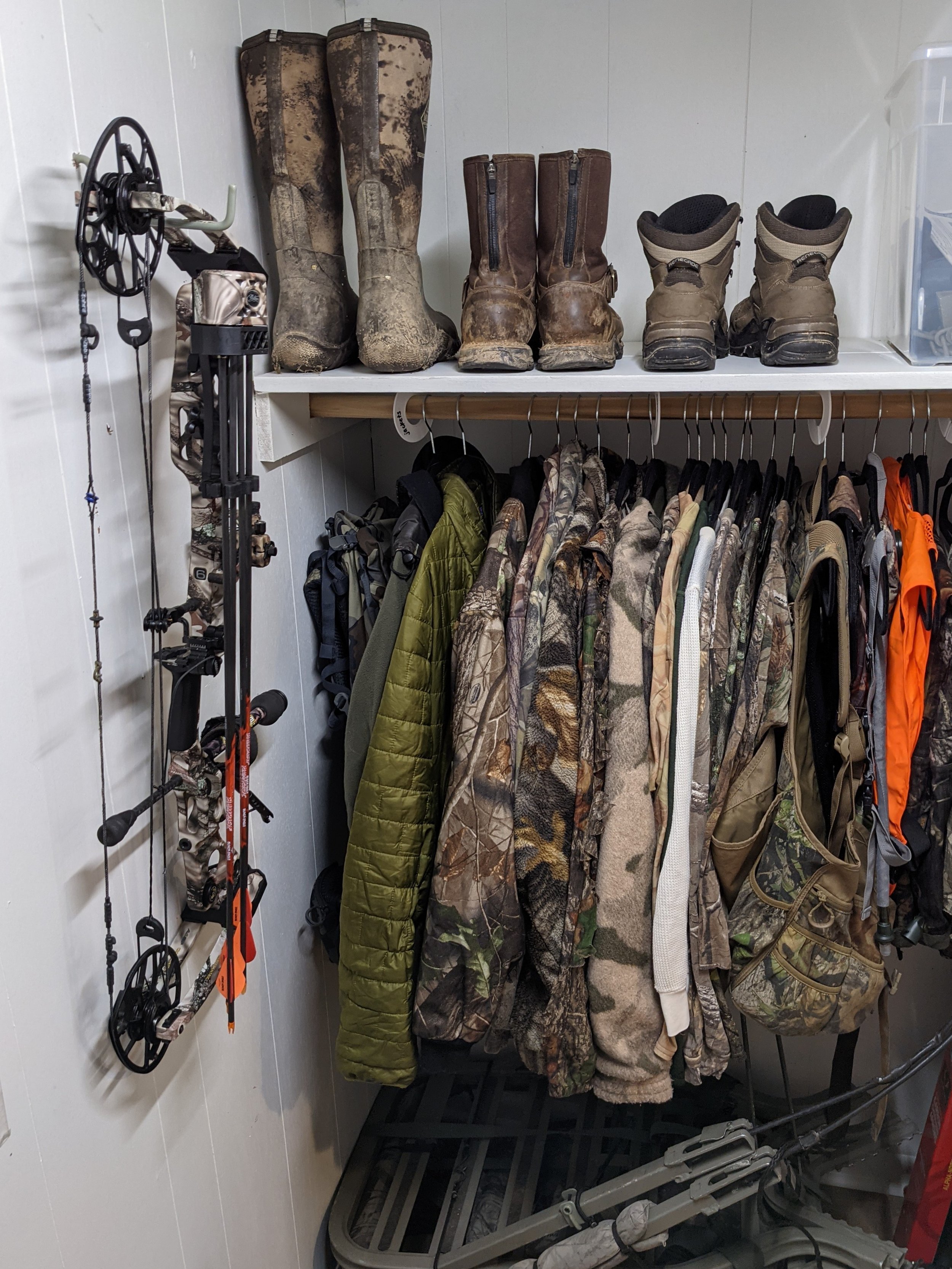
Store Hunting Boots Properly
Clean boots with scent-free soap and water, scrub inside and out, then air dry completely. Stuff with newspaper to absorb moisture. Store upright in a plastic bin with baking soda to prevent odor buildup.
Organize Accessories
Use a three-drawer cart:
– Top: Hats
– Middle: Gloves
– Bottom: Socks, gaiters
Or use small labeled bins inside larger totes.
Hang Tree Stands and Climbing Gear
After cleaning and inspecting for rust or fraying, apply light oil to metal parts. Hang stands and saddles off the ground on wall hooks. Store ropes and harnesses in dry, ventilated areas.
Avoid Common Storage Mistakes
- Never store wet clothes—mold is inevitable.
- Skip regular detergents and dryer sheets—they leave detectable residues.
- Don’t overpack containers—airflow prevents moisture buildup.
- Replace natural additives regularly—cedar and pine can turn moldy.
- Always label bins—unmarked totes lead to contamination and frustration.
Properly storing hunting clothes isn’t optional—it’s a critical part of hunting success. By following these steps, you’ll protect your investment, preserve scent control, and be ready when next season calls.

0 Comments