Coyote hunting with calls is far more than pulling a trigger after making noise—it’s about speaking the language of the wild. The most consistent hunters don’t rely on luck; they use coyote hunting calling tips rooted in animal behavior, wind strategy, sound science, and field discipline. When executed correctly, a well-timed call can pull a sharp-eyed, wind-wary coyote into gun range—even in heavily hunted areas.
Coyotes (Canis latrans) are intelligent, adaptive predators driven by hunger, territorial instincts, and social curiosity. They don’t respond to random squeals or howls—they react to specific stimuli that trigger survival behaviors: the cry of injured prey, the challenge of a rival, or the distress of pups. Your job is to mimic those triggers convincingly—and remain undetected while doing it.
This guide delivers actionable coyote hunting calling tips backed by expert field data, seasonal patterns, gear insights, and proven setup strategies. You’ll learn how to choose the right call for the season, position yourself downwind, use decoys effectively, and avoid common mistakes that educate coyotes. Whether you’re new to predator calling or refining your edge, these techniques will increase your success rate—starting today.
Match Your Call to Coyote Behavior by Season

Coyote responses shift dramatically throughout the year. Using the wrong sound at the wrong time is one of the biggest mistakes hunters make. Align your calling strategy with seasonal biology for maximum effectiveness.
Winter: Trigger Hunger with Prey Distress
In cold months, coyotes burn energy just staying warm. Their primary drive is caloric intake, making them highly responsive to food-based calls.
- Best sounds: Dying rabbit, fawn bleat, calf bawl, woodpecker distress
- Why it works: Simulates easy prey when natural food is scarce
- Top performers:
- Dying rabbit: Classic and effective, especially in open terrain
- Calf bawl: Attracts large, dominant coyotes that ignore rabbit calls
- Fawn bleat: Less overused than rabbit; cuts through calling pressure
Pro Tip: In areas where rabbit distress is overplayed, switch to calf or goat distress—educated coyotes may ignore the usual sounds.
Use aggressive sequences like food competition or dueling predators to escalate urgency. Pair with a decoy for visual reinforcement.
Spring: Exploit Territorial Instincts
As breeding season winds down (March–April), territorial disputes rise. Coyotes respond strongly to social challenges.
- Best sounds:
- Lone howl (simulates intruder)
- Challenge call (male)
- KiYi alarm bark (signals danger)
-
Dueling coyotes (triggers aggression)
-
Why it works: Adult males defend territory aggressively after breeding
- Effective combo: Start with a lone howl, then switch to fight sounds after 5 minutes
Expert Note: A lone howl can draw in curious coyotes from over a mile away—especially dominant males testing the intruder.
Avoid prey distress unless targeting younger animals. Focus on coyote vocalizations to trigger territorial responses.
Summer: Call to Parental Instincts
With pups in the den (May–July), adult coyotes are tuned to pup distress. Responses are often cautious, so patience is key.
- Best sounds:
- Puppy yips and whines
- Maternal calls
-
Soft fight sounds between juveniles
-
Why it works: Adults respond to protect or retrieve young
- Best time: Early morning or late evening when adults leave den to hunt
Use softer, shorter sequences to avoid spooking cautious parents. Keep volume moderate and calls intermittent.
Pro Tip: If you’ve killed a coyote in spring, return in summer with puppy distress—remaining adults may still be guarding the area.
Fall: Target Young, Uneducated Coyotes
August to November brings juvenile dispersal. Young coyotes leave the pack, travel alone, and make mistakes.
- Best sounds:
- Puppy distress
- Young coyote challenge calls
-
Canine fight sounds
-
Why it works: Juveniles are curious, hungry, and socially isolated
- Response pattern: Often aggressive, fast-moving, and less cautious
Hunt near known den sites or travel corridors. These young animals haven’t been exposed to calling pressure—yet.
Key Insight: “Young coyotes make mistakes. That will tip the odds in your favor.”
Choose the Right Call Type: Prey vs. Coyote Sounds
Your sound selection determines whether you trigger a feeding response or a social reaction. Know when to use each.
Prey Distress: Trigger the Predator
Prey calls simulate vulnerability. They work best when coyotes are hungry or when food competition is high.
Top Prey Distress Calls
- Dying rabbit: Universal favorite, effective in winter
- Fawn bleat: Ideal in pressured areas where rabbit calls are overused
- Calf bawl: Draws big, mature coyotes—especially in cattle country
- Woodpecker or shorebird: High-pitched, erratic sounds spark aggression
- Squirrel distress: Natural in forested or mixed terrain
“A $10 mouth call can work great in the right situation.”
When to use:
– Winter and early spring
– Open terrain with good sound carry
– Low-pressure areas with naive coyotes
Pro Tip: Cycle through 2–3 prey sounds in one stand if no response—e.g., rabbit → fawn → calf.
Coyote Vocalizations: Trigger Social Response
These calls mimic other coyotes and exploit territorial or social instincts.
Most Effective Coyote Sounds
- Lone howl: Draws curious or dominant coyotes
- Challenge call: Provokes confrontation from territorial males
- Dueling coyotes: Simulates conflict—highly aggressive response
- KiYi series: Alarm barks that signal danger or intrusion
- Puppy screams: Triggers parental or protective behavior
“If I could only have two predator sounds, it would be Dueling Jacks and KiYi.”
When to use:
– Spring (territorial disputes)
– Fall (young coyotes seeking pack)
– Pressured areas where prey calls fail
Best Sequence: Start with a lone howl, then escalate to fight sounds if no movement.
Optimize Calling Duration and Timing
How long you call—and when—can make or break a setup. Many hunters quit too soon or call too little.
Ideal Calling Length by Condition
| Condition | Duration | Pattern |
|---|---|---|
| Calm, open terrain | 30–45 minutes | 10 sec on, 30 sec off |
| Windy or snowy | 15–25 minutes | 30 sec on, 10–15 sec off |
| Dense forest | 15–25 minutes | Short bursts, lower volume |
“We call most coyotes in no more than 10 minutes.”
If no coyote shows by 20 minutes, pack up and move. Staying longer rarely pays off.
Structured Calling Sequence (Example: Early Spring)
- 0–3 min: Prey distress (rabbit or fawn)
- 5–6 min: Lone howl (2–3 sequences)
- 7–10 min+: Fight sounds or food competition
- If coyote stalls: Cycle through howls, yips, barks to trigger movement
“Cycle through different calls if a coyote stalls out of range.”
Use continuous playback in windy conditions to maintain stimulus. In calm weather, use intermittent calling to mimic natural behavior.
Electronic vs. Mouth Calls: Which Wins?
While both have value, electronic calls (e-calls) dominate in modern coyote hunting.
Why E-Calls Outperform
- Hundreds of sounds at your fingertips
- Remote control lets you switch without moving
- High-quality speakers deliver realistic audio
- Can be placed 50–100 yards away—drawing focus from your position
- Weather-resistant models work in snow, rain, dust
“I prefer an electronic call—advantages far outweigh mouth calls.”
Top E-Call Features to Prioritize:
– Speaker quality (FoxPro, MOJO®)
– Large sound library
– Long battery life (8+ hours)
– Durability and portability
When to Use Mouth or Hand Calls
- Backup when e-call fails
- Mobile hunting (spot-and-stalk)
- Subtle, organic variation in tone
- Situations requiring stealth
Always carry a diaphragm or hand call as insurance.
“The tactile feedback of a hand call can sometimes be more effective.”
Master Wind and Scent Control
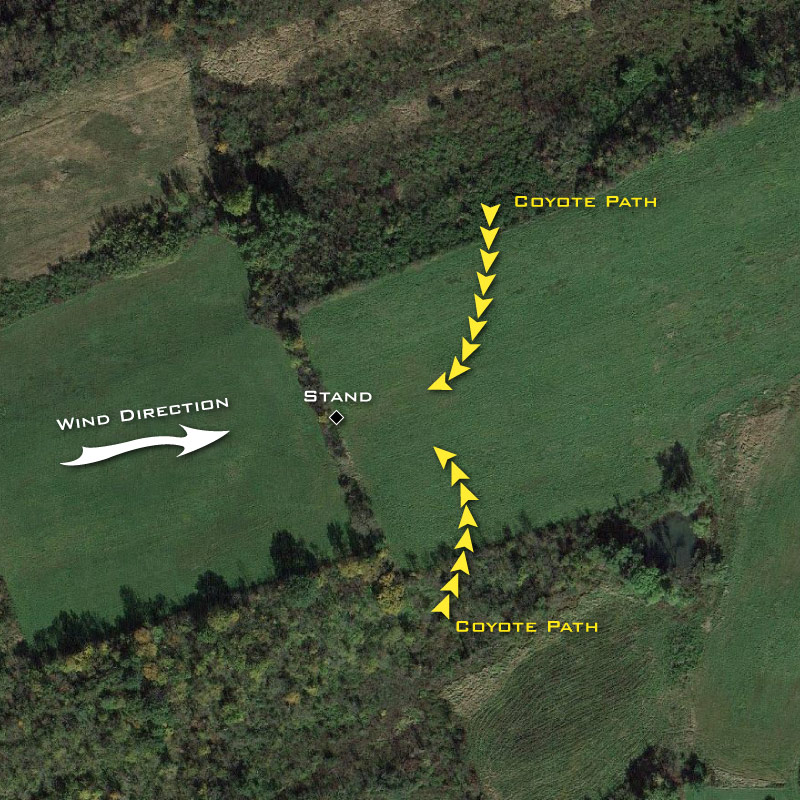
Wind is the #1 reason hunts fail. If a coyote smells you, it’s gone—often before you see it.
The Golden Rule of Wind
You must be able to kill the coyote before it enters your scent cone.
Coyotes circle downwind to check for threats. If they catch human scent, they vanish—sometimes from 400+ yards away.
How to Set Up Right
- Approach downwind of expected coyote location
- Place e-caller 30–60 yards upwind of your hide
- Position yourself so you can see the downwind side of the caller
- Use natural funnels (draws, ridges) to predict approach paths
“Set up on the edge of the brush downwind of where you suspect coyotes to be.”
Scent Cone Management
- Human scent spreads in a cone-shaped plume
- Use wind dust (e.g., Windicator) to test drift
- Contaminate the smallest “pie wedge” possible
- Avoid crossing your own trail
“Contaminate the smallest portion of the pie as possible.”
Wind Checking Protocol
Check wind at least 4–5 times per stand:
1. Leaving vehicle
2. Midway to stand
3. Before final approach
4. After setup, before calling
5. During stand (if wind shifts)
Never hunt if wind shifts toward likely approach zone.
“If the wind isn’t right, don’t hunt it.”
Hunt the Best Times and Light Conditions
Timing isn’t just about the clock—it’s about light, temperature, and coyote activity.
Best Times to Call
- Morning (first light): Highest success rate
- Evening (last light): Secondary peak
- Night: Increasingly effective with thermal/NV gear
- Midday: Possible if coyotes are active or bedded nearby
“I’d always choose mornings over evenings.”
Use Sun Position to Your Advantage
- Set up with sun at your back
- Silhouettes coyotes
- Hides your outline
- Use natural shadows (hills, tree lines) for concealment
- Avoid being backlit at sunrise/sunset
“We positioned ourselves on the west side of a hill just before sunrise, with the sun rising directly behind us.”
In open terrain, place yourself above the caller so you’re in shade while decoy is in sunlight.
Essential Gear for Success
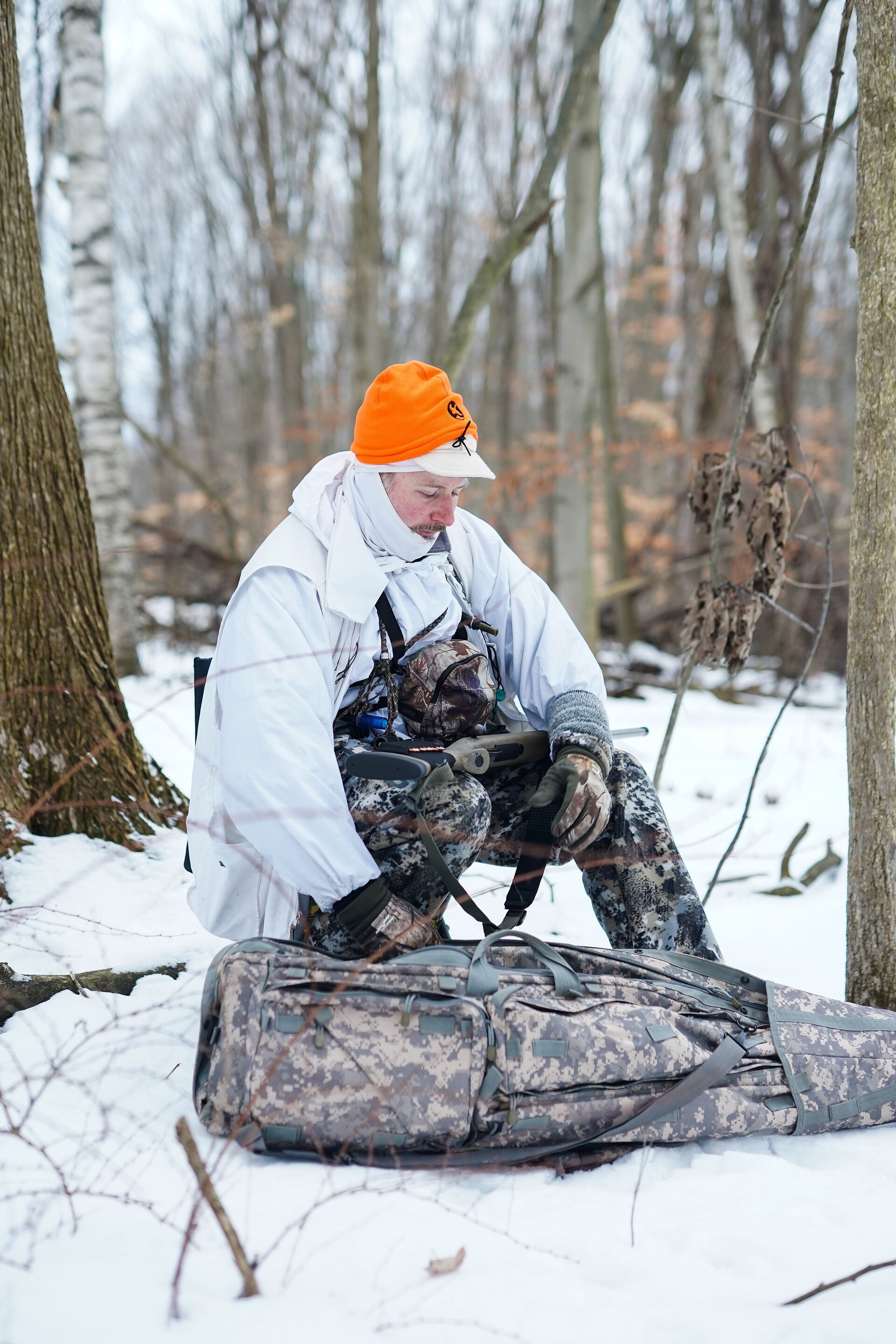
The right gear makes the difference between a missed opportunity and a clean harvest.
Must-Have Equipment
| Item | Purpose |
|---|---|
| E-call (FoxPro, MOJO®) | Primary sound source |
| Hand call (backup) | Insurance if e-call fails |
| Decoy (MOJO spinning tail) | Visual trigger |
| Tripod rest (Bog-Pod) | Steady shot |
| Rangefinder (Leupold, Vortex) | Accurate distance |
| Wind checker (powder) | Real-time wind detection |
| Thermal scope (Pulsar, ATN) | Night hunting |
| Suppressor | Enables multiple kills |
“I always have a tripod as a rest so I can make a steady shot.”
Ammunition and Firearm Tips
- Best round: Hornady 62-grain ELD-Varmint (.223)
- Velocity: ~3,465 fps
- Flat trajectory, minimal fur damage
- Use suppressor with supersonic ammo
- Subsonic ammo has poor ballistics
- Suppressor reduces noise enough to prevent spooking others
Shot placement: Neck or chest for immediate drop. No exit wound? Perfect hit.
“I feel this often allows me to call in multiple dogs without moving.”
Use Decoys and Scent Strategically
Sight and smell amplify sound. A decoy can turn a curious coyote into a committed one.
Decoy Placement Tips
- Place 50–100 yards downwind of your position
- Use spinning tail models (MOJO) for high visibility
- Position so coyote approaches broadside or quartering
- Combine with coyote or rabbit urine on decoy or caller
“I usually incorporate a decoy, so if a wary old dog shows up, I can fool both his ears and his eyes.”
Reapply scent every few hours or after rain.
Move Smart Between Setups
Overlapping sound circles educate coyotes and reduce future success.
Ideal Distance Between Stands
- Minimum: ½ mile
- Best: 1 mile
“Sound from one setup should not be heard by predators in the next.”
This prevents:
– Coyotes hearing multiple calls in one day
– Educating animals that don’t respond
– Creating “no-go” zones around your hunting area
Keep Calling After a Kill
One kill isn’t always the end of the stand.
Why Stay and Call?
- Coyotes often travel in pairs or loose family groups
- A kill may trigger curiosity in nearby animals
- Multiple responses possible within minutes
“Stay still. Stay ready. And keep calling.”
Do NOT:
– Celebrate loudly
– Move immediately
– Exit the same way you came
Stay hidden, keep the call running, and be ready for a second opportunity.
Track Results and Adapt
The best hunters keep records to refine their strategy.
What to Log After Each Hunt
- Location and time
- Wind direction and weather
- Call type used
- Response (or no response)
- Kill (yes/no)
“I keep track of what sound I use in an area. Next time, I use a different sound.”
This prevents overusing the same call in a zone and helps identify patterns.
Realistic Success Rates
Manage expectations based on terrain and pressure.
| Region | Average Success |
|---|---|
| Western U.S. | 1 coyote per 3 sets |
| Eastern Forests | 1 coyote per 6 sets |
Some days yield multiple coyotes. Others yield nothing. Consistency beats luck.
“Sometimes it seems easy. Other times, you can go days without seeing hide or hair.”
Final Note: Coyote calling is not luck—it’s a science of prediction, preparation, and precision. Master wind, match calls to season, use decoys and e-calls wisely, and keep detailed records. When all elements align, you don’t just harvest a coyote—you master the moment.

0 Comments