Shivering in a freezing hunting blind doesn’t just make the hours drag—it compromises your control, alertness, and stealth. When temperatures plummet below zero, staying warm becomes as critical as having the right rifle or optics. The question of how to heat a hunting blind safely and effectively separates those who endure from those who dominate late-season hunts.
Whether you’re tucked into a pop-up ground blind or a permanent timber shanty, the right heating strategy lets you stay motionless, scent-controlled, and ready when that trophy buck steps into range. This guide delivers battle-tested methods—from the trusted Mr. Heater Buddy to DIY fire cans and custom wood stoves—backed by real hunter experiences, performance data, and non-negotiable safety rules. You’ll learn how to avoid deadly carbon monoxide risks, eliminate fogged windows, and choose between propane, wood, electric, or no heater at all—without sacrificing stealth.
Choose the Right Heater Type
Propane Heaters: Top Pick for Most Hunters
Propane heaters are the go-to for cold-weather hunters because they offer powerful, portable heat with minimal setup. Among them, the Mr. Heater Buddy series stands out as the most widely used and trusted option across hunting and ice fishing communities.
The Portable Buddy (MB Series) delivers 4,000–9,000 BTUs—perfect for small to mid-sized pop-up blinds. For larger shelters or brutal cold, the Big Buddy doubles the output to 18,000 BTUs, warming a space in minutes. Hunters report shedding layers and staying comfortable even in single-digit temperatures. One angler noted he was fishing in a t-shirt within 25 minutes using a Big Buddy in his shanty.
The Hunting Buddy model features a camo finish and rugged build for outdoor durability, while the FLEX Series adds versatility—use it to heat your blind or cook a meal.
Pro Tip: Ditch the 1-lb disposable propane bottles. Use a 20-pound refillable tank with an adapter hose—it’s cheaper, lasts longer, and reduces trips to resupply.
Despite their popularity, propane heaters produce moisture during combustion, which can fog up windows. Proper ventilation is essential to prevent condensation and deadly carbon monoxide buildup.
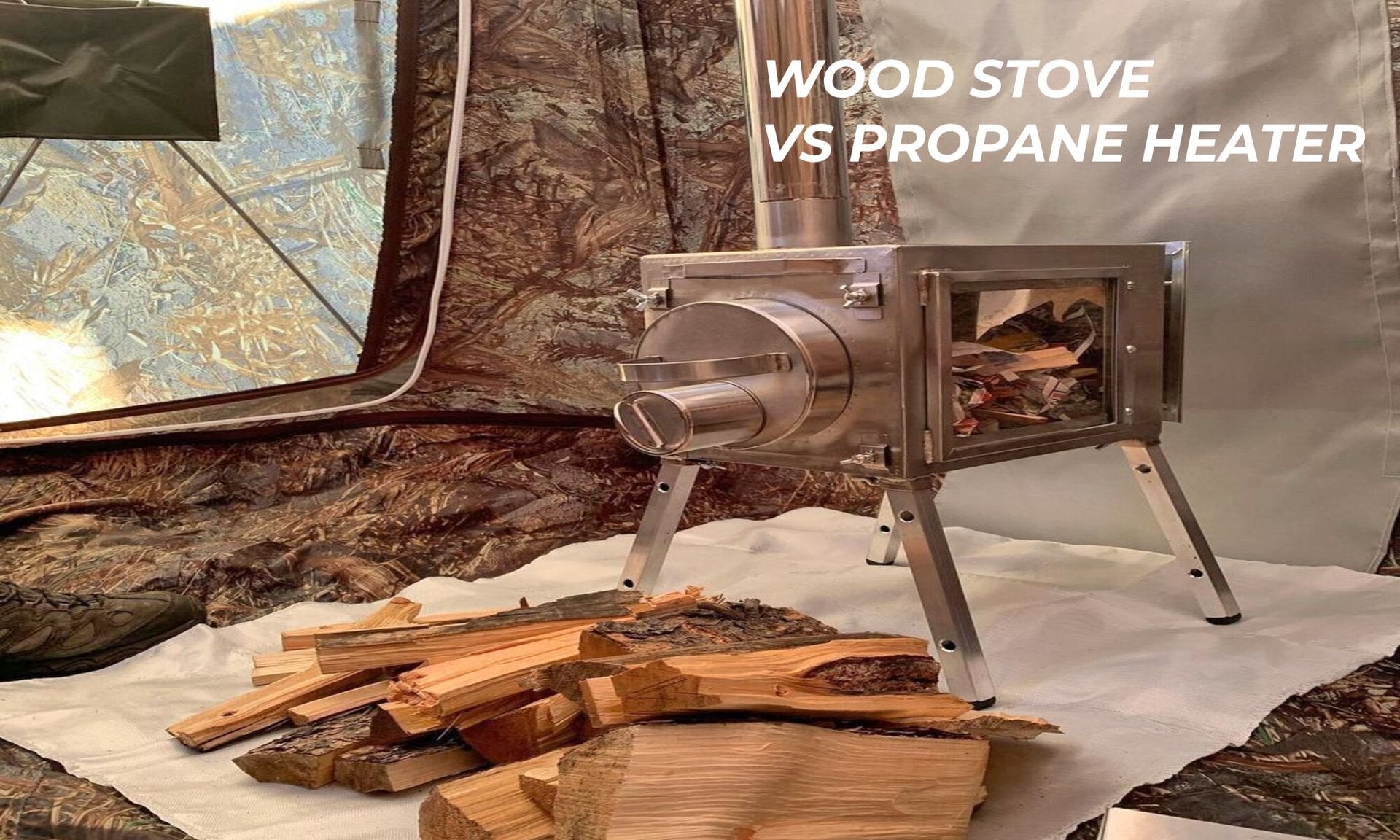
Wood Stoves: Best for Scent Control & Dry Heat
If you’re serious about staying undetected, a custom wood stove may be your ultimate solution. Unlike propane, wood produces dry heat, eliminating the fogging problem on cold windows.
More importantly, a properly installed wood stove creates negative pressure. Air is drawn into the blind from floor level, pulled through the firebox, and vented up the chimney—effectively burning off human scent before it escapes. This natural airflow system gives you a massive edge in scent control.
One West Michigan hunter summed it up: “The ritual of feeding the fire keeps you engaged, and the dry, clean warmth makes every hunt more comfortable.”
You don’t need a high-end unit. A compact 8×9-inch stove, built by a local welder, paired with split hardwood, provides steady heat. Many hunters use the stove top to warm coffee or breakfast sandwiches—adding comfort without noise.
Electric & Battery Heaters: Silent but Limited
For blinds near vehicles or with access to power, electric heaters offer silent, fume-free warmth. Infrared models powered by lithium power banks or 12V batteries are gaining traction.
Advantages:
– Zero noise—won’t spook game
– No ventilation required
– No carbon monoxide risk
But limitations exist. Most battery-powered units deliver only 100–300 watts, insufficient for sub-zero conditions unless paired with heated clothing. Runtime is also constrained by battery life.
User Insight: “It’s quiet—no noise to spook deer.” — User3
Best used as supplemental heat alongside chemical warmers or layered clothing, not as a primary heat source in extreme cold.
Install a Propane Heater Safely

Connect to a 20-Pound Tank
Using a 20-pound propane tank instead of 1-lb bottles is smarter, safer, and more cost-effective.
Steps:
1. Buy a Mr. Heater hose adapter (sold separately).
2. Drill a 1.5-inch hole through the blind wall near the front.
3. Feed the hose through and connect to the heater inside.
4. Seal around the hose with expanding foam or high-temp silicone to block cold air.
5. Place the tank on a flat, stable surface (e.g., bricks) outside.
6. Use a camo propane cover to conceal the tank and protect it from weather.
Warning: Some Costco models include a filter; others require an inline filter—check specs before connecting.
Prevent Fog & Improve Heat Flow
Propane combustion releases water vapor, leading to foggy windows—a major drawback in cold weather.
Fix it with:
– Cross-ventilation: Crack two windows 1–2 inches to allow airflow.
– Strategic placement: Mount the heater near the front so warm air rises and circulates.
– Power Fan attachment: Fits the Portable Buddy and distributes heat without batteries.
Pro Tip: Keep windows open “most all the way” when heating food to avoid condensation buildup.
Build a Wood Stove Setup
Design a Compact, Efficient Stove
A well-built wood stove doesn’t need to be fancy. An 8–9 inch square base, built by a local metalworker, with a secondary combustion chamber (baffle plate), ensures a hotter, cleaner burn.
Use 2-inch galvanized pipe for the chimney (not stove-rated, but functional), and burn 4–5 inch split hardwood for steady, long-lasting heat.
User Experience: “Get’s so warm and comfy in my buddy’s blind I hate to leave!”
Install the Chimney Properly
Chimney height and sealing are critical.
Steps:
1. Drill a 2-inch hole through the roof with a hole saw.
2. Insert the pipe and seal gaps with high-temp silicone and stove cord.
3. Extend the pipe above tree line for strong draft.
4. Support with buried steel channel + wire for stability.
5. Add aluminum-lined insulation behind the stove to reflect heat forward.
Rule of Thumb: Taller chimney = better draft = less smoke and odor.
Avoid Dangerous DIY Heaters
Alcohol & Toilet Paper in Coffee Can
A metal coffee can with denatured alcohol-soaked toilet paper burns slowly and produces minimal scent. The lid regulates flame, and it can last all day.
“Burned all day with no problems.” — tstu2
Safety Note: Never use in a sealed space. Open flame risk remains.
Charcoal in a Can: Extremely Risky
Never use charcoal in a hunting blind.
Why:
– Produces deadly carbon monoxide even with ventilation.
– Incomplete combustion = heavy smoke and odor.
– CO enters bloodstream rapidly—no warning signs.
“That idea… can be deadly unless there is a lot of ventilation.” — Whit1
⚠️ Hard Rule: Avoid charcoal entirely.
Maximize Warmth Without a Heater
Layer Smart: Dress for the Sit
Many top hunters skip heaters, relying on advanced layering.
Three-Layer System:
1. Base: Moisture-wicking (merino wool or synthetic)
2. Mid: Insulating (fleece, down, synthetic)
3. Outer: Wind- and water-resistant shell
Top Combo:
Tank top → thermal shirt → heated vest → sweatshirt → hunting coat
Wear heated vest over mid-layer for better heat retention
Bottom Combo:
Thermal leggings → loose knit pants → snow pants → camo archery pants
Feet:
Regular sock + thick boot sock + toe warmers or heated insoles
Recommended boots: Kamik, Cabela’s pre-2010, 2000GR
Critical Warning: Avoid cotton—it holds moisture and increases hypothermia risk.
Use Heated Clothing & Chemical Warmers
Supplement layers with active heating.
Top Picks:
– Heated vest (motorcycle-grade): Rechargeable, worn under outerwear
– Rechargeable gloves (e.g., Hotshot): Use disposable warmers inside for backup
– Heated boot insoles: App-controlled, called a “gamechanger”
– Heated socks: Adjustable temps, USB rechargeable
Chemical Warmers:
– Hand/toe warmers: Place in boots, pockets, or duct-taped to spine, kidneys
– Adhesive-backed toe warmers: Stick to inner coat lining
Pro Tip: Warm food and drinks raise core temperature—bring a thermos of soup or coffee.
Follow Critical Safety Rules
Prevent Carbon Monoxide Poisoning
CO is silent, invisible, and deadly.
Must-dos:
– Use a battery-powered CO detector—non-negotiable.
– Never use in sealed blind—cross-ventilation required.
– Even heaters with oxygen depletion sensor (ODS) can fail.
– Never sleep in blind with heater running.
⚠️ “Alot of nimrods have died that way!!” — slayer
Ventilate Every Combustion Heater
All flame-based heaters need airflow.
How:
– Open two windows slightly (1–2 inches) for cross-flow.
– Position heater away from walls and flammable materials.
– For wood stoves: Ensure chimney draft is strong—no backdraft.
Fire Safety: Prevent Burns & Blazes
- Keep fire extinguisher (aerosol type, $10) inside blind.
- Install steel floor plate under wood stoves.
- Never leave unattended.
- Keep fuel sources away from heat.
Expert Note: A small extinguisher is better than none.
Compare Heater Performance

| Method | Heat Output | Noise | Moisture Risk | Scent Risk | Safety | Cost Efficiency |
|---|---|---|---|---|---|---|
| Mr. Heater Buddy | High | Very Low | Moderate | Low | Medium | High |
| Wood Stove | High | None | None | Negative pressure = scent control | High | Very High |
| Electric Heater | Low–Med | Silent | None | None | Very High | Low |
| DIY Alcohol Can | Low | None | Low | Low | Medium | Very High |
| Charcoal Can | Medium | None | High | High | Extremely Low | High |
Bottom Line: Wood stoves win for scent and comfort. Propane wins for ease and power.
Best Practices for Long Hunts
- Combine methods: Heater + heated vest + chemical warmers + thermal seat cushion
- Insulate your blind: Use foam panels, rugs, thermal curtains
- Check regulations: Some areas ban open flames or propane
- Dress for the sit, not the hike: Remove layers during approach
“A comfortable hunter can stay a long time…” — IR john
Final Note: The best way to heat a hunting blind depends on your setup, location, and risk tolerance. For most, the Mr. Heater Buddy with a 20-pound tank is the safest, most effective option. For serious scent control and dry heat, a custom wood stove is unmatched. Avoid charcoal at all costs. Combine heat with smart layering, and you’ll stay in the blind longer, sharper, and ready when the big one steps into range.

0 Comments