Feral hogs are one of the most destructive invasive species in the United States, with Texas alone reporting over 3 million. These animals cause millions in agricultural damage annually, disrupt native ecosystems, and carry dangerous diseases. But beyond their environmental impact, wild boars are fast, intelligent, and aggressive—capable of charging at 25 mph with razor-sharp tusks. That’s why effective boar hunting tips go far beyond gear and shooting: they’re about survival, ethics, and precision. Whether you’re a first-time hunter or refining your tactics, success depends on understanding boar behavior, using the right equipment, and prioritizing safety at every step. This guide delivers proven, field-tested boar hunting tips to help you stay safe, make clean kills, and contribute to population control.
Track Boars by Their Signs
You won’t find boars by luck—you find them by reading the land. These animals leave behind unmistakable clues that reveal their presence, movement patterns, and activity levels.
Identify Fresh Tracks and Rooting
Boar tracks are cloven hooves, typically 2 to 3 inches long. Mature boars leave deep, wide prints, while sounders (family groups) leave clusters of smaller tracks. Look for them in soft soil near water sources, field edges, or logging roads. Fresh tracks have sharp edges and moisture; older ones appear cracked or weathered.
Rooting is one of the clearest signs of boar activity. Using their tough snouts and tusks, boars tear up soil searching for roots, grubs, and insects. The result? Fan-shaped patches of disturbed earth, often in crop fields or moist ground. If the soil is loose and recently overturned, boars likely passed through within hours.
Find Wallows, Droppings, and Rub Marks
Wallows—muddy depressions near creeks, swamps, or shaded areas—are where boars cool off and deter parasites. Active wallows are wet, show hoof prints, and may have hog hair stuck along the edges. Avoid stepping in them—your scent could alert nearby boars.
Droppings appear as dark, coiled pellets, usually grouped together. Fresh scat is moist and dark; dry, crumbly droppings mean the area hasn’t seen recent activity.
Rub marks on trees, fence posts, or power poles signal territorial behavior. Look for bark scraped off 2 to 4 feet high, often with hair caught in the grooves. These marks are common near trails or bedding areas and indicate a boar’s regular route.
Hunt at the Right Time
Timing is everything. Boars are crepuscular—most active at dawn and dusk—but quickly adapt to human pressure, becoming nocturnal in heavily hunted areas.
Dawn, Dusk, or Full Night?
Plan your hunt around low-light windows:
– 30 minutes before sunrise to 90 minutes after
– 90 minutes before sunset to 30 minutes after
– Full night hunts in areas where legal
Night hunting has advantages: less human noise, cooler temperatures, and peak feeding activity. Boars feel safer moving after dark, giving you higher encounter rates.
Use Thermal and Night Vision Tools

To hunt effectively at night, invest in thermal scopes or night vision optics. Thermal detects heat signatures through total darkness, fog, or light brush—ideal for spotting hogs at 100+ yards. Night vision amplifies ambient light but struggles in heavy cover.
Pair your optics with a red or infrared light, like the Game Alert® Hog Hunting Light, mounted on a feeder or tripod. These lights illuminate without spooking animals, triggering only when hogs approach.
Check your state’s laws: Texas and Louisiana allow night hunting with artificial light on private land; others require permits or restrict it entirely.
Use the Right Firearm and Ammo
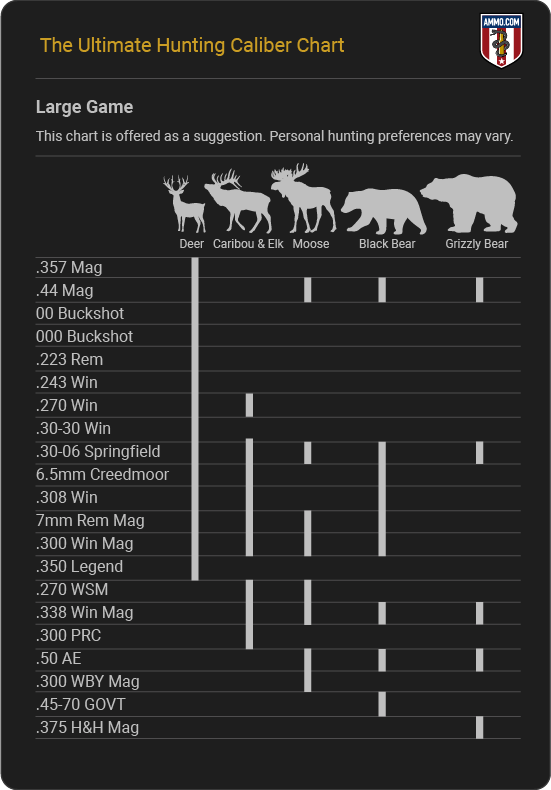
A wounded boar is a dangerous boar. Your firearm must deliver deep penetration and stopping power to ensure a quick, ethical kill.
Choose High-Powered Rifles
Stick to calibers like:
– .308 Winchester
– .30-06 Springfield
– .350 Legend or larger
These rounds have the velocity and bullet weight to punch through thick hide, muscle, and bone. Use 150–180 grain expanding bullets for maximum tissue damage and controlled penetration.
Avoid underpowered rounds like the .223 unless you’re an expert at close range. Handguns are risky and should only be used as backups.
Scope for Precision
Mount a high-quality optic with 3–9x magnification for low-light accuracy. Illuminated reticles help in dawn, dusk, or moonlit conditions.
For bowhunters: use a 60+ lb draw weight and mechanical broadheads with a 1.5-inch cutting diameter. Broadheads must penetrate deeply—boars have thick chest muscles and heavy bone structure.
Master Lethal Shot Placement
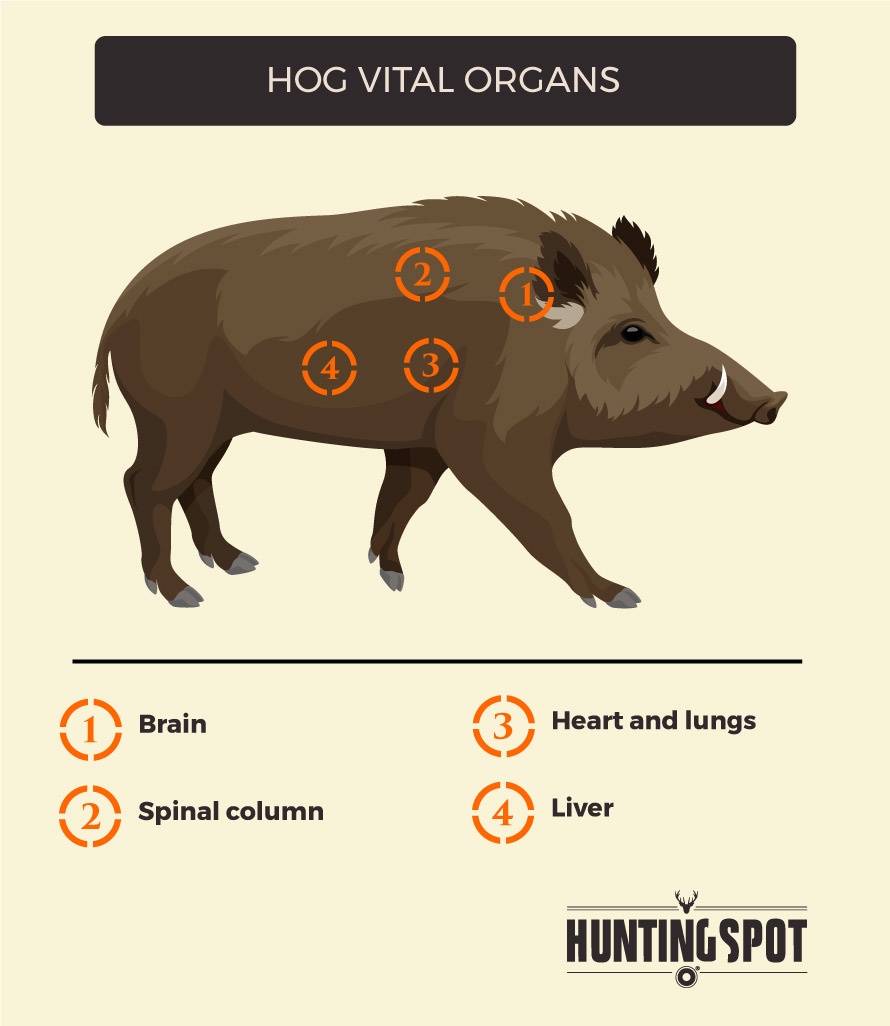
A clean kill is the most ethical and safest outcome. Poor shot placement risks wounding and triggering a charge.
Aim for the Heart-Lung Zone
The heart sits low in the chest, aligned with the elbow. The lungs fill the chest cavity behind the front shoulder.
Best shot angles:
– Broadside: Clear path to both lungs and heart
– Quartering-away: Bullet enters behind shoulder, angles into vital organs
Avoid frontal shots—the shoulder bones block most rounds. Never shoot through heavy brush; ricochets are common due to dense bone and hide.
Avoid Head Shots
Boar skulls are thick and angled. Even high-powered rifles may deflect unless using armor-piercing ammo (often illegal). If you must head-shoot, aim for the ear-to-ear line or just behind the jaw where bone is thinner.
Apply Proven Hunting Techniques
Different situations demand different strategies. Choose the method that fits your skill, terrain, and gear.
Set Up Stand Hunting with Bait
Stand hunting from a ground blind or tree stand near a bait site is one of the most effective methods.
Steps:
1. Place corn, molasses-soaked grain, or apples in a feeder near cover
2. Use trail cameras to confirm visits and pattern movement
3. Position your blind downwind, within 50–100 yards
4. Hunt during peak activity times
Pro tip: Rotate bait types to prevent habituation. Boars learn to avoid sites after repeated disturbances.
Try Spot-and-Stalk with Stealth
Use binoculars or spotting scopes to locate hogs from a distance. Then stalk quietly, using terrain and wind to stay undetected.
Key rules:
– Stay downwind at all times
– Move slowly during feeding activity
– Use natural cover (gullies, trees, brush)
Boars have poor eyesight but excellent hearing and smell. Wear scent-control clothing and avoid noisy gear.
Consider Dog Hunting with Caution
Bay dogs (e.g., Catahoulas) track and bark to hold hogs at bay. Catch dogs (e.g., American Bulldogs) physically grip and immobilize them.
Risks:
– Boars can kill dogs with a single tusk strike
– Legal restrictions in many states (e.g., California bans catch dogs)
– Requires experienced handlers
Only attempt dog hunting with trained animals, radios, and a clear plan. Always have a weapon ready when approaching a cornered boar.
Use Calls and Decoys Wisely
Predator calls (coyote, bobcat) in short bursts can provoke a defensive reaction. Play piglet distress calls to draw protective sows.
Tips:
– Call from downwind, hidden in cover
– Use 3–5 second bursts, wait 10–15 minutes
– Overuse alerts boars—limit to 2–3 sessions per hunt
Add a 3D boar decoy to boost effectiveness. Place it 30–50 yards downrange to draw attention while you stay concealed.
Dress and Gear Up Properly
Your clothing and equipment can mean the difference between success and danger.
Wear Camo and Scent-Control Gear
Boars detect human scent from over 300 yards away. Wear activated carbon clothing or odor-neutralizing sprays. Avoid scented soaps, deodorants, or laundry detergents.
Choose natural-tone or swamp camo depending on terrain. Avoid bright colors or noisy fabrics.
Pack Essential Hunting Gear
Carry a lightweight backpack with:
– Water and high-energy snacks
– First-aid kit (include trauma gauze and tourniquet)
– Multitool and GPS
– Extra ammo and batteries
– Headlamp with red-light mode
– Sturdy hunting knife for field dressing
Wear waterproof, ankle-supporting boots—you’ll walk through mud, thorns, and uneven ground.
Follow Critical Safety Protocols
Boar hunting is inherently dangerous. One mistake can lead to serious injury.
Always Have an Escape Route
Never corner a boar. Always position yourself with a clear retreat path—toward a vehicle, elevated platform, or climbable tree.
If charged:
– Stand your ground
– Aim for the chest
– Fire rapidly until the animal stops
Running triggers pursuit.
Keep Your Gun Loaded and Ready
When tracking a wounded hog, assume it’s dangerous and aggressive. Keep your rifle loaded, safety off, and pointed in the direction of movement.
Use a slung rifle for quick access. Never put your firearm down—even for a moment.
Use Hunting Insurance and Radios
Boar hunting insurance covers medical bills, dog injuries, and property damage. It’s affordable and vital for group or guided hunts.
Carry GMRS radios or satellite messengers (e.g., Garmin inReach) in remote areas. Check in with a contact before and after each hunt.
Know the Legal Landscape
Laws vary by state—ignorance can lead to fines or criminal charges.
Focus on High-Density States
Top states for boar hunting:
– Texas: Year-round, no bag limit, night hunting allowed on private land
– Louisiana: No season, no limit, public and private access
– Mississippi: Unrestricted on private land
– Florida: Year-round; permits needed for public land
– California: Regulated zones; check regional rules
Always get landowner permission on private property. Many welcome hunters to reduce crop damage.
Practice Ethical and Responsible Hunting
Hunters are stewards of the land. Act with integrity.
Harvest Humanely and Use the Meat
Aim for quick kills. Field dress immediately using gloves to avoid disease exposure.
Common diseases:
– Swine brucellosis (from blood contact)
– Leptospirosis
– Trichinosis
Cook meat to 160°F internal temperature. Many hunters smoke or sausage the meat—it’s lean and flavorful.
Leave No Trace
Pack out all trash, spent casings, and gear. Avoid polluting water sources. Respect wildlife and private property.
Build Skills Through Guided Hunts
Even experienced hunters benefit from mentorship.
Start with a Professional Outfitter
Guided hunts at ranches like Independence Ranch offer:
– Experienced guides
– Managed hog populations
– Safety training and equipment support
– Accommodations and logistics
You’ll learn tracking, calling, shot placement, and emergency response in a controlled environment.
Train Year-Round
Practice at the range under stress conditions—moving targets, low light, timed shots. Simulate stalking drills in local woods. Join online forums or hunting clubs to exchange tips.
Success comes from patience, repetition, and respect for the animal.
Final Note: Boar hunting is not just sport—it’s a necessary tool for ecological balance. With the right boar hunting tips, you can stay safe, make ethical kills, and contribute to conservation. Prioritize preparation, use proven tactics, and never stop learning. The wild hog won’t wait—and neither should you.

0 Comments