Barbary sheep—also known as aoudad—are not your average big game animal. These rugged, goat-like rams blend the agility of mountain climbers with the resilience of desert survivors, making them one of the most challenging and rewarding trophies in North America. Native to North Africa but now thriving in the harsh canyons of New Mexico and West Texas, aoudad demand more than just a rifle and a tag. They test your fitness, patience, optics, and mental grit.
If you’re chasing a trophy ram with horns measuring 30 inches or more—or even just a management ram on an over-the-counter tag—your success hinges on preparation. This guide delivers barbary sheep hunting tips forged in the field, from glassing tactics and shot placement to pack-out logistics and terrain mastery. Whether you’re planning a DIY public land grind or a high-dollar guided hunt, these strategies will help you avoid the most common pitfalls and increase your odds in the steep, sun-baked cliffs where aoudad reign supreme.
October–November: Maximize Rut Activity for Better Ram Movement
The fall rut, running from October to November, is when mature rams become slightly less cautious and more predictable. While full-on head clashes are rare, rams engage in dominance displays like hooking, shoulder pushing, and side butting—behaviors that reveal their location and hierarchy.
During this window, rams travel more freely between bedding and feeding zones, often descending from high cliffs to patrol for receptive ewes. This increased movement makes them easier to spot during early morning and late afternoon glassing sessions.
Key Insight: Focus on transitional zones—the rugged edges where rimrock meets flatter terrain. These corridors are where rams move between high-elevation beds and lower-elevation feeding areas.
You may also hear vocalizations like grunts and snorts, especially at dawn. Though not as dramatic as elk bugles, these sounds can help pinpoint bachelor groups or solitary rams on the prowl.
January–March: Hunt Winter Herd Consolidation
After the rut, aoudad form more stable groups from January to March, making winter the most popular time for hunters—especially on public land.
With vegetation thinned and temperatures dropping, sheep concentrate near:
– Grassy draws
– South-facing slopes with sun exposure
– Reliable water sources (though they drink infrequently)
This consolidation improves glassing success. Larger groups are easier to spot, and trophy rams often rejoin bachelor herds by January, increasing your chances of a quality sighting.
Pro Tip: Early December can be a hidden sweet spot in Far West Texas, where post-rut movement continues but before deep winter patterns lock in.
Target Canyon Systems with Multiple Bench Levels
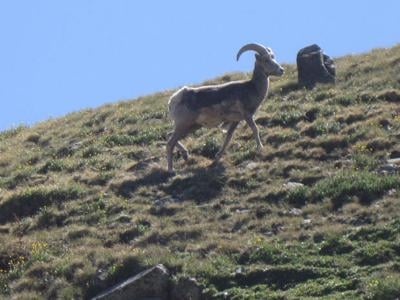
Aoudad thrive in steep, broken terrain that offers escape routes and security. Look for canyon systems with:
– 2–3 tiers of benches
– Rimrock or caprock ledges
– North-facing slopes for shade
They bed high—often on narrow ledges out of sight—but descend at dawn and dusk to feed on grassy knolls, mesquite flats, and shaded draws.
Visual Clue: Watch for worn trails on rock faces. These are telltale signs of regular sheep traffic.
Avoid flat, open country. Aoudad only cross it briefly during feeding cycles and will bolt at the first sign of movement.
Scout Near Key Food Sources—Not Just Water
Aoudad are adaptable browsers, surviving on sparse forage. Focus your scouting near areas rich in:
– Mountain Mahogany
– Morman Tea
– Javelina Bush
– Mesquite pods and leaves
– Common grasses
They’ll eat juniper and yucca when better options are scarce, but these are last-resort foods.
Critical Note: Don’t waste time ambushing water sources. Aoudad need little water and may go days without drinking—unlike mule deer or elk.
New Mexico: Best for DIY Public Land Hunts
New Mexico offers the best public-land access for barbary sheep, especially in the southeast.
Top GMUs include:
– 29 & 30: Guadalupe Mountains, high success rates for trophy rams
– 32, 36, 37: Rocky, cactus-strewn terrain with strong ram genetics
– 34: OTC option with access to Dog Canyon State Park
– 42 & 47: Remote areas near Sabinoso Wilderness
Warning: Non-resident draw odds are only ~7%, meaning it could take 14+ years to draw a limited tag without preference points. Apply early and consistently.
Texas: Trophy Capital—But Private Land Only
Texas produces the largest rams in the world, particularly in the Big Bend region. But access is nearly impossible without deep pockets.
Hunting here requires:
– Outfitter bookings
– Trespass fees
– $3,500–$8,000+ depending on ram class
Best for first-timers or those seeking a guaranteed shot at a 30″+ ram.
Glassing Wins Hunts—Master the Art of Long-Range Scanning
70% of your hunt is glassing. Success starts with patience, optics, and positioning.
Set up at low-elevation vantage points facing east or north. Avoid glassing from above sheep elevation—this blocks views into shaded draws.
Use 18x binoculars or a 25–60x spotting scope with a sunshade. Scan systematically, looking for:
– Horn movement against rock
– Shadows along cliff edges
– Khaki-colored forms blending into terrain
Pro Insight: One hunter covered 120 miles and 14 days before spotting a single ram over 25 inches. Patience pays.
Stalk Smart: Use Cover, Wind, and Terrain to Your Advantage
Even though aoudad rely more on vision than scent, wind discipline is crucial during final approaches.
Move behind ridges, boulders, and vegetation. Avoid skylining—never walk along a ridge crest where you’re visible from above.
Expect brutal climbs: 900+ feet of elevation gain in under half a mile is common. Train for it.
Fitness Benchmark: You should be able to hike 10–20 miles per day with a loaded pack.
Use natural funnels—narrow washes, rocky chutes, saddles—to ambush moving herds within 300–400 yards.
Shoot Low: Precision Shot Placement Saves the Harvest

Aoudad are incredibly durable. A poorly placed shot means a long track or a lost animal.
Rifle Shot Tips:
- Aim at the lower third of the chest, just behind the front shoulder.
- The heart sits lower than in deer—shooting center-body often misses vitals.
- Avoid high shoulder and straight-on shots.
Bowhunting?
- Aim tight to the shoulder, slightly lower than whitetail shots.
- Quartering-away offers best organ alignment.
Golden Moment: Aoudad often stop and look back after being hit—use this for a clean follow-up.
Bring the Right Gear: Optics, Footwear, and Fitness
Essential gear includes:
– 10x–18x binoculars
– 15x–60x spotting scope on a tripod
– 1,000+ yard rangefinder
– Dialable rifle scope
– 50–70L backpack
– 3L hydration bladder
– Trekking poles and knee pads
Footwear must be stiff-soled, ankle-supporting mountain boots with scree gaiters. Avoid synthetics—cactus spines will shred them.
Train Like a Hunter—Not a Hiker
This isn’t a weekend backpacking trip. One hunter logged 62 miles in 5 days. Another packed 150 lbs of meat over 3 miles.
Train with:
– Long hikes (4+ hours) 3x/week
– Weighted vest on uneven terrain
– Squats, lunges, core work
– Shooting drills post-climb
Final Test: Can you shoot accurately at 500 yards after a 900-foot climb? If not, train harder.
Pack Out Like a Pro: Gutless Field Dressing and Spike Camps
In extreme terrain, quartering in place is often necessary.
Use the gutless method to preserve meat in heat. Remove musk glands to improve flavor. Cache meat under a lightweight tarp and make multiple trips.
Real-World Example: One team hiked over 16 miles in a single day to recover a ram and gear.
Trophy Evaluation: 30 Inches and Beyond
- 28–30″: Mature ram
- 30–33″: Trophy
- 34″+: World-class
Rams are typically 9–13 years old when they reach trophy size. It takes 100–200+ ewes to produce one annually.
Avoid These 6 Costly Mistakes
- Shooting too high → Misses heart
- Rushing the stalk → Spooks sheep at 700+ yards
- Underestimating terrain → Leads to exhaustion
- Poor wind management → Gets you winded
- Mid-day movement without glassing → Wastes energy
- Not bringing enough water → Dehydration kills hunts
Rule: Drink before you’re thirsty. Carry 3+ liters.
DIY vs Guided: Know Your Goals
| Factor | DIY | Guided |
|---|---|---|
| Cost | $500–$1,500 | $3,500–$8,000+ |
| Access | Public land | Private ranches |
| Success Rate | Lower | Higher |
| Best For | Adventure, budget | Trophy, time-limited |
DIY offers authenticity. Guided offers efficiency.
Final Mindset: Hunt Hard, Stay Patient
Bring a committed partner. Share the load. Boost morale.
Stay patient—success often comes on day 10 or later.
Mantra: “I took vacation to do this—I deserve every mile.”
Barbary sheep hunting is more than a hunt. It’s a test of endurance, skill, and resolve. Hunt smart. Hunt hard. And when that golden ram rises above the rimrock, make it count.

0 Comments