Duck hunting isn’t won at the moment the trigger is pulled—it’s won in the quiet hours before dawn, when you’re setting up smarter than the ducks. The difference between a limit and an empty bag often comes down to one thing: your setup. If you’ve ever watched ducks flare past your decoys or vanish into the fog, the problem wasn’t your shotgun—it was your positioning, concealment, or decoy strategy.
This guide breaks down exactly how to set up for duck hunting like a pro, using real-world tactics, habitat-specific strategies, and proven field techniques. You’ll learn how to pick the right spot, deploy decoys like a biologist, position your blind for maximum concealment, and call only when it counts. Whether you’re stalking quiet beaver ponds or running massive spreads on the Great Lakes, these steps will get ducks to commit—and stay committed—to your setup.
Scout the Right Hunting Location Before Sunrise
Target Active Waterfowl Zones, Not Just Water
Success starts long before first light. Scout at least 24 hours in advance using onX Maps or similar GPS tools to identify water sources, property lines, and access points. Focus on areas where ducks are actively feeding or loafing, not just flying over. Look for concentrations of birds in sheltered coves, flooded timber, or backwater sloughs.
Avoid high-pressure public hunting zones. Instead, target 10–25 acre wetlands that are overlooked or hard to reach. These low-disturbance areas attract ducks looking for safety. In tide-driven regions like coastal Maine, check tide tables—low tide at dawn pushes birds into shallow marshes, making them prime targets. In Montana spring creeks, focus on open water surrounded by ice, where mallards congregate after feeding.
Match Habitat to Target Species
Different ducks prefer different environments—so your setup must adapt. Here’s how:
- Puddle ducks (mallards, wigeon): Hunt in flooded fields, shallow ponds, and green timber. These birds feed on waste grain and aquatic plants.
- Divers (canvasbacks, bluebills): Favor deep water like Great Lakes marshes or river channels. They dive for submerged vegetation and invertebrates.
- Wood ducks and black ducks: Rule beaver ponds and wooded swamps. They prefer tight cover and quiet water.
In North Dakota grainfields, expect large flocks of mallards and pintails. In Arkansas green timber, flooded forests with natural openings are duck magnets. Your habitat determines decoy count, blind type, and calling strategy—so choose wisely.
Position with Wind and Sun for Maximum Advantage
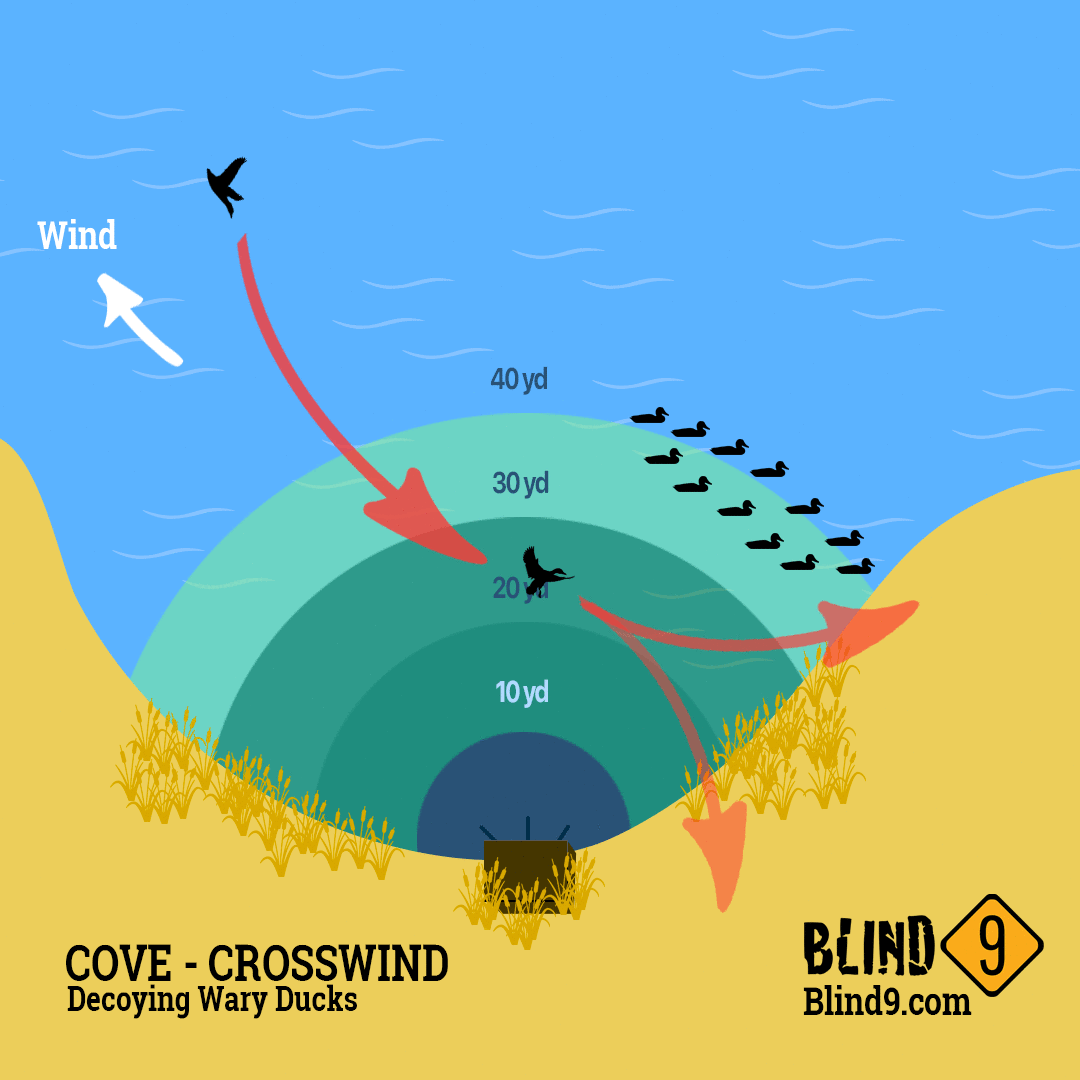
Set Up with the Wind at Your Back
Ducks land into the wind—every time. Position your blind so the wind blows directly toward you. This forces incoming birds to approach head-on, giving you clean shot opportunities. Ideal wind speeds are 5–15 mph. Calm days mean less duck movement; strong winds make ducks fly lower and more predictably.
Never set up downwind of your decoys—ducks will swing wide and land behind you. If the wind shifts during the hunt, be ready to reposition. Mobility is key, especially in run-and-gun scenarios.
Keep the Sun Behind You
Just as with wind, sun position is critical for concealment. Set up so the rising sun is at your back, shining into the ducks’ eyes. This creates a silhouette effect, making your blind invisible while improving your visibility.
The best mornings combine east-facing setups with a north or west wind. The ducks fly into the wind and are backlit by the sun, giving you the perfect angle. If hunting west-facing marshes, plan for evening flights when the sun sets behind you.
Deploy Decoys Like a Pro: Patterns That Work
Choose the Right Decoy Type and Count
Use floating decoys for open water, full-body decoys in dry fields, and flocked decoys for added realism. Motion decoys like pulsators or spinners can trigger interest—but use them carefully, especially late in the season.
Here’s a quick reference:
| Habitat | Decoy Count | Best Pattern |
|---|---|---|
| Beaver Pond | 12–18 | Scattered pairs |
| Grainfield (ND) | ~200 | J-hook or two-line |
| Spring Creek (MT) | 24–36 | Two groups, open hole |
| Great Lakes | 150–200 | Mixed species, upwind divers |
| Green Timber (AR) | ~72 | V-formation, flocked heads |
Use Proven Decoy Patterns That Attract Ducks
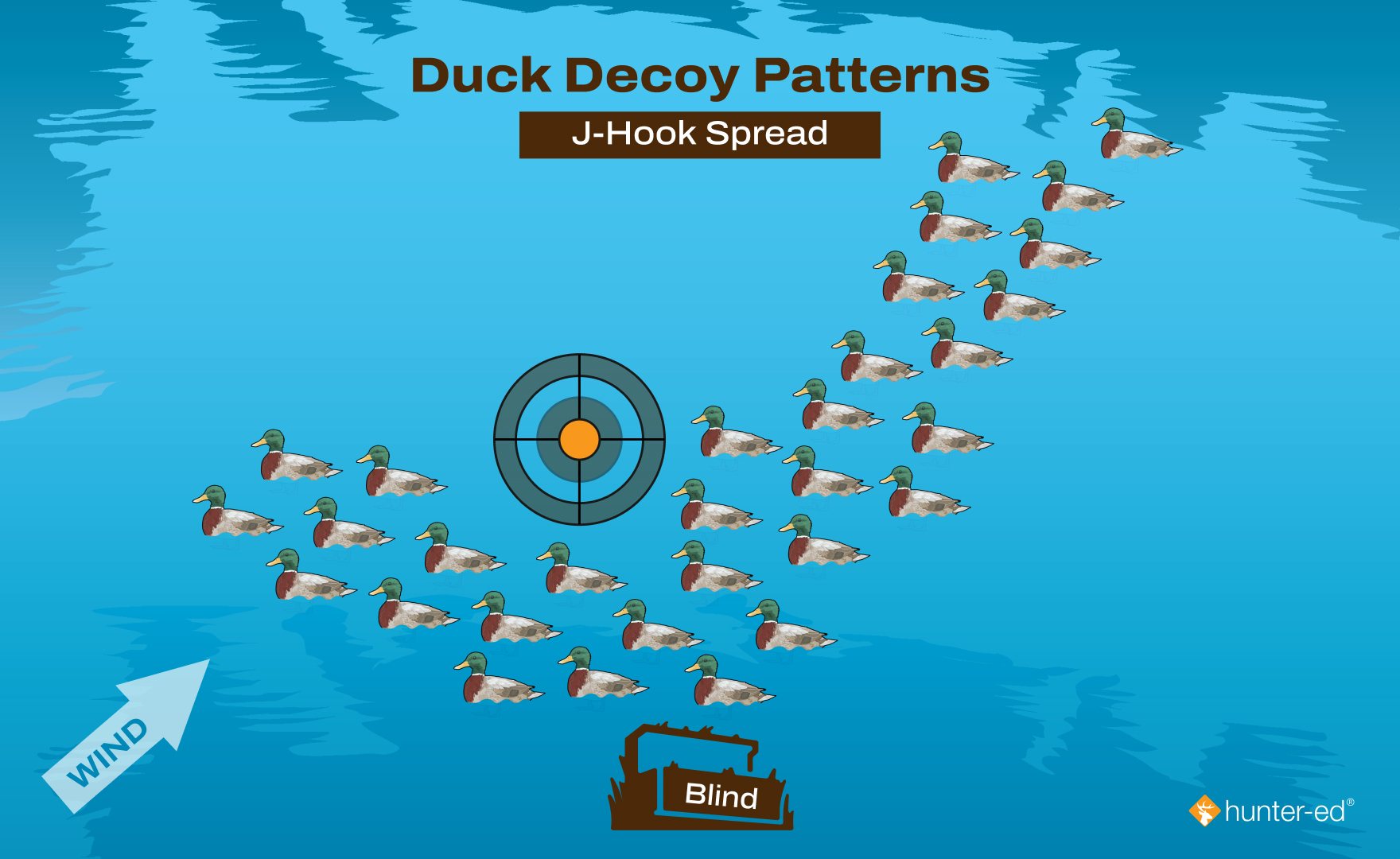
- J-pattern: Best for open water. The long shank runs downwind, with the curl forming a landing hole in front of the blind. Place a spinning-wing decoy in the curl to square up flocks.
- V-formation: Ideal for green timber. The open center acts as a landing zone. Use flocked decoys for realism.
- Two-line setup: Perfect for grainfields. Ducks “jump to the front,” moving up the lines into your kill zone.
- Scattered pairs: Works on small beaver ponds. Mimics natural loafing—don’t over-decoy.
Always leave a landing hole 15–20 yards in front of the blind. Ducks won’t land in a tight cluster. If birds are high or hesitant, add magnum goose decoys upwind to draw attention.
Adjust for Late-Season Wariness
As the season progresses, ducks become decoy-shy. Combat this by:
- Pulling decoys into the woods to mimic landed birds
- Using no decoys at all and relying on calling or water movement (e.g., kicking water with a boot)
- Turning off spinning-wing decoys if birds flare
- Switching to pulsator-style motion decoys, which create subtle ripples
In freezing conditions, clear snow from decoys and place them near open water. Use goose floaters on ice edges to attract attention.
Build or Position Your Blind to Disappear
Use Natural Cover to Break Your Outline
The best blind is one ducks never see. Use cattails, reeds, willows, or grass to mask your position. Cut local vegetation with a folding saw and stake it around your blind. Avoid trampling the area before setup—disturbed ground draws suspicion.
For wooded swamps, a ghillie jacket lets you become the blind. Practice shooting from it—entanglement is a real risk. In open fields, use layout blinds or panel blinds. In extreme cold (below 20°F), consider a heated box blind.
Test Your Concealment from a Duck’s Eye View
Ducks see from 100 feet up. Get a bird’s-eye view using a drone or elevated vantage point. Look for straight lines, shiny gear, or unnatural shapes. Even a glint off a scope can spook birds.
Ensure your head, hands, and gun barrel stay hidden. Use camouflage netting or natural cover. If hunting with a partner, establish clear shoot lines to avoid crossfire.
Pack the Right Gear for Any Hunt
Choose the Correct Firearm and Ammo

A 12-gauge shotgun is the standard. It handles steel or premium loads reliably. If recoil is an issue, a 20-gauge works well for close-range timber hunts.
Federal law requires non-toxic shot—no lead. Choose based on range:
- Steel shot: Affordable, effective under 40 yards
- Bismuth or tungsten: Superior for longer shots or dense-feathered birds like canvasbacks
Ensure your shotgun is water-resistant and functions in wet, cold conditions.
Dress for Stealth and Comfort
You’ll sit still for hours. Comfort and concealment are critical.
- Waders: Use insulated in cold water, uninsulated earth-toned waders for hiking
- Layering system:
- Base: Moisture-wicking
- Mid: Fleece or synthetic
- Outer: Waterproof camo shell
- Boots: LaCrosse Boots are durable in mud and ice
- Camouflage: Match your surroundings—grassland, wooded, or cache pattern
Wear neck gaiters, gloves, and insulated hats—exposed skin stands out.
Call Smart, Not Loud
Master the Three Essential Duck Calls
- Feeding call: Soft, rapid quacks—sounds like “dinner is served”
- Comeback call: High-pitched, urgent quacks to turn passing birds
- Hail call: Loud, rolling quacks to attract distant flocks
Use calls sparingly. Start with 3–4 feeding calls every 30 seconds. If ducks respond, go quiet. If they hesitate, try a comeback call.
Match Calls to Duck Behavior
If ducks cup their wings and begin descending, stop calling—they’re committed. If they veer off, use a few loud hail calls. In late season, use whisper-soft feeding calls—overcalling spooks wary birds.
Pro tip: Place one decoy near your blind to suggest the call is coming from a duck already on the water.
Follow the Ultimate Duck Hunt Checklist
Pre-Hunt: Plan and Prepare
- ✅ Check weather: Wind 5–15 mph ideal
- ✅ Arrive 30–60 minutes before sunrise
- ✅ Scout the spot—don’t assume birds are there
- ✅ Verify license and Federal Duck Stamp
- ✅ Pack gear: shotgun, ammo, calls, hand warmers, thermos
Field Setup: Position for Success
- ✅ Wind at back, sun behind
- ✅ Deploy decoys in correct pattern
- ✅ Create landing hole in front of blind
- ✅ Conceal with local vegetation
- ✅ Test camouflage from above
- ✅ Set shoot lines and safety zones
During the Hunt: Stay Ready and Still
- ✅ Call only when needed
- ✅ Minimize movement
- ✅ Keep gun ready
- ✅ Retrieve all downed ducks
Post-Hunt: Learn and Maintain
- ✅ Retrieve all decoys and gear
- ✅ Clean waders, shotgun, and calls
- ✅ Reflect: What worked? What didn’t?
- ✅ Rotate decoy spreads to avoid pattern recognition
Think Like a Duck, Hunt Like a Pro
Duck hunting isn’t about gear arms races or 150-decoy spreads. It’s about being where the ducks want to be—and looking like you belong there. A three-bird day in solitude is often more rewarding than a limit in a crowded marsh.
Stay mobile. Adapt to conditions. Hunt small waters others ignore. Walk in if you have to. The effort pays off in clean shots, committed ducks, and memories that last.
Now you know how to set up for duck hunting the right way—wind at your back, sun at your back, decoys in position, and a blind that disappears. Get out there, stay patient, and let the ducks come to you.

0 Comments