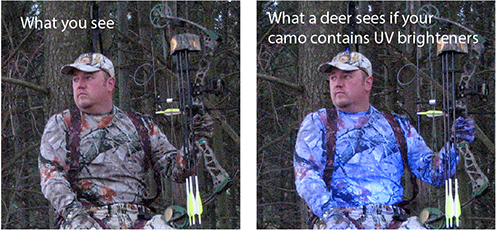
You’ve spent hundreds on high-tech camo, perfected your scent control routine, and practiced sitting motionless for hours—yet animals still seem to spot you before you get a shot. The problem might not be what you see… but what you can’t see. UV brighteners in your hunting clothes could be giving you away.
These invisible chemicals, commonly found in laundry detergents and factory-treated fabrics, cause clothing to reflect ultraviolet light—a glow that’s invisible to humans but highly visible to deer, turkeys, and waterfowl. Even if your gear looks perfectly camouflaged in daylight, under UV light it may be screaming “hunter here!” The solution? Remove or neutralize UV brighteners using proven methods that serious hunters rely on. This guide walks you through every step—from choosing the right detergent to applying UV-killing sprays, testing results, and maintaining long-term invisibility in the field.
Wash Hunting Clothes in UV-Free Detergents
The easiest and most effective way to avoid UV reflectivity is to never introduce brighteners in the first place. Most mainstream detergents like Tide, Cheer, and Gain contain optical brighteners that make whites appear “brighter” by reflecting UV light. When these chemicals bind to fabric, they create a glow that game animals can detect.
Switch to Proven UV-Free Laundry Detergents
Use only detergents confirmed to be free of dyes, fragrances, and UV brighteners:
-
ATSKO Sport-Wash:
The gold standard for hunting gear. It removes factory residues, oils, and old detergent buildup without leaving behind any UV-reflective residue. It rinses completely clean and is safe for all fabrics, including carbon suits and blaze orange. -
Dead Down Wind Detergent:
A cost-effective option available at outdoor retailers. Free of UV agents and designed to work with scent-elimination systems. -
Hypoallergenic Grocery Store Detergents (e.g., All Free & Clear):
Affordable and widely available. These are formulated without dyes or fragrances—typically meaning no UV brighteners. -
US Military-Approved Soaps:
All soaps on the official military list are guaranteed UV-free. Ideal for hunters who want no-nonsense, clean-rinsing performance.
Try Natural Alternatives for Budget-Friendly Cleaning
Some hunters opt for low-cost, chemical-free options:
-
Baking Soda (1 box per load):
A natural cleaner that removes odors and light soil without leaving residue. Safe on all fabrics and won’t attract animal scents. -
Borax:
Acts as a degreaser and preservative. Use cautiously—some formulations may leave traces. Always test first.
Pro Tip: Before washing your hunting clothes, run 1–2 loads of non-hunting laundry using your chosen UV-free detergent. This clears UV brighteners from your washer drum, hoses, and seals.
Apply U-V-Killer Spray to Neutralize Existing UV Brighteners
If your clothes already glow under UV light, washing alone won’t fix the issue. You need a chemical neutralizer like ATSKO U-V-Killer, which bonds with fabric to absorb UV light instead of reflecting it.
Prepare Your Gear for Treatment
Never skip this step—residue blocks bonding.
- Wash all garments in ATSKO Sport-Wash.
- Remove factory sizing, oils, and old detergent.
- Dry completely before spraying.
Apply U-V-Killer Correctly for Full Coverage
Follow these steps to ensure complete treatment:
- Spray on dry clothes until the surface is evenly wet—like a light coat of paint.
- Use a small stiff brush to work the solution into seams, cuffs, and creases.
- For fleeced or insulated layers, apply only a thin, invisible layer.
– Lightly brush to raise froth—keeps UV absorber on outer fibers.
– Avoid soaking, which wastes product and stiffens fabric. - Flip garments inside out and spray lapels, pockets, and inner cuffs—commonly missed spots.
Visual Cue: Under a black light, treated areas change from glowing blue to dull gray.
Cure for 72 Hours to Lock in Protection
After application:
– Air dry completely.
– Let garments ventilate for 72 hours before use.
– Do not wash, apply scents, or spray waterproofing during this time.
– This allows the chemical bond to fully form and any residual odor to dissipate.
Handle Problem Fabrics with Advanced Techniques
Not all fabrics respond the same to UV treatment. Some repel sprays or trap brighteners deep in fibers.
Strip Water-Repellent Coatings That Block Treatment
Factory-treated jackets (e.g., DWR-coated) resist U-V-Killer due to silicone or fluoropolymer finishes.
Solutions:
- Wash 2–3 times in Sport-Wash to strip silicone.
- Add 1 tsp Sport-Wash or rubbing alcohol to U-V-Killer to improve wetting.
- Apply while garment is damp (right after spin cycle)—enhances adhesion.
- Use a veggie brush or cloth to work spray into tight weaves.
Treat Mixed Fibers Like Polyester-Cotton Blends
Brighteners bind to synthetic fibers, while U-V-Killer soaks into cotton—leaving polyester untreated.
Result: Partial glow remains.
Fix:
– Pre-wash multiple times in Sport-Wash.
– Apply U-V-Killer, then retest under black light.
– Repeat if needed, focusing on synthetic zones.
Use Presoak and Heat Methods for Stubborn Gear
When spray beads up or disappears into fabric:
Presoak Method:
- Spray while garment is still wet (after final spin).
- Pre-filled fibers retain more UV killer on the surface.
- Slight dilution occurs, but retention improves.
Heat Application:
- Immediately after spraying, use a hair dryer or dryer on high heat.
- Prevents solution from “creeping” away before drying.
- Especially effective on heavy jackets and rain gear.
Test First: Try technique on one sleeve or pant leg before full application.
Test for UV Brighteners Using a Black Light

You can’t manage what you can’t measure. Always verify results with a proper UV detection tool.
Get the Right Black Light
Use a BLB-type (Black Light Blue) bulb:
– Appears dark violet when off.
– Blocks visible light, making UV glow easier to see.
– Examples: GE “BL”, Sylvania “Black Light 350”, ATSKO pocket light.
Avoid “party” black lights—they emit too much visible light.
Test Your Clothes Step by Step
- Wash gear in suspected detergent.
- Dry completely.
- Turn off room lights.
- Scan every inch under BLB light.
- Look for blue or violet glow—indicates UV brighteners.
Common Test Results by Fabric
| Fabric Type | UV Reaction |
|---|---|
| Synthetics (e.g., Under Armour) | Often glow strongly |
| Merino Wool Blends | Absorb brighteners easily |
| Polyester | May resist absorption—less glow even after brightener wash |
| Cotton-Poly Mix | Variable—partial glow common |
Expert Move: Test a white paper towel sprayed with U-V-Killer. It should darken dramatically—proving the product works.
Debunk Myths About UV Visibility in Game Animals
Some hunters question whether UV control matters. Here’s what science and field reports show.
Can Deer See UV Light?
- Yes, deer have UV-sensitive cones in their eyes.
- They are more sensitive to blue and violet light—the exact spectrum brighteners emit.
- While movement and scent are primary alerts, UV glow may trigger suspicion at long range.
What About Waterfowl?
- Ducks and geese definitely see UV light.
- Many bird feathers reflect UV for signaling—so they’re highly attuned to it.
- UV control is essential for waterfowl hunters.
Bottom Line: Even if the benefit is subtle, eliminating UV risk costs little and could prevent detection. As one hunter says: “Why not?”
Maintain UV-Free Gear Long Term
Once clean, keep your clothes UV-safe with proper care.
Re-Wash Only in UV-Free Detergents
- Never use Tide, Cheer, or “Color Safe” bleach—these redeposit brighteners.
- Fabric softeners and dryer sheets contain UV agents—avoid completely.
- Always wash non-hunting clothes first in Sport-Wash to purge washer.
Add Waterproofing Without Compromising UV Protection
You can add water resistance—but only with UV-free repellents:
- Silicone Water-Guard
- ATSKO Permanent Water-Guard (fluoropolymer-based)
Application Order:
- Apply U-V-Killer
- Wait 72 hours
- Spray waterproofing
Test First: Spray repellent on cloth, check under black light. If it glows, choose another brand.
Store Gear Properly
- Keep in sealed plastic bins or Scent Lok bags.
- Prevents exposure to urban odors (gas, smoke, food).
- Avoid storing near laundry detergents or cleaning supplies.
Know When UV Killer Won’t Work
No solution is perfect. Be aware of limitations.
Fabrics That Resist Treatment
- Merino wool blends: Absorb brighteners deeply—hard to fully neutralize.
- Tightly woven synthetics: Resist spray penetration.
- Factory-finished outerwear: DWR coatings block bonding.
Result: Glow may persist despite multiple treatments.
Signs of Failure
- Glow returns after drying → Treatment relocated; try presoak + heat method.
- Stiff, starchy feel → Over-application; tumble dry (no heat) for 15 minutes.
- Uneven coverage → Missed spots; use brush and black light during reapplication.
Reality Check: Some gear can’t be fully UV-neutralized. Consider replacing with factory-UV-free hunting apparel.
Follow the Expert 7-Step UV Elimination Plan

Here’s the complete system used by professional hunters.
1. Test New Gear First
- Use BLB black light on every item before first wash.
- Check labels, pockets, and trims.
2. Wash in Sport-Wash
- Removes factory finishes and hidden brighteners.
- Clean washer with 1–2 non-hunting loads first.
3. Apply U-V-Killer
- Spray dry clothes evenly.
- Brush into seams and hidden areas.
- Treat inside of flaps and pockets.
4. Cure for 72 Hours
- Air dry, then ventilate.
- No washing, scents, or waterproofing during cure.
5. Waterproof (If Needed)
- Use UV-free repellent after 72 hours.
- Test product under black light first.
6. Store in Sealed Containers
- Protect from odors and contamination.
- Use Scent Lok bags or airtight bins.
7. Re-Wash Only in UV-Free Detergent
- Make it a habit—no exceptions.
- Keep Sport-Wash or baking soda dedicated to hunting gear.
Save Money Without Sacrificing Performance
You don’t need expensive gear to win the UV war.
Cost-Effective Swaps
- Baking soda instead of commercial detergent: Works well and costs pennies.
- Grocery store hypoallergenic detergents: Just as effective as hunting-branded ones.
- Skip over-treating: Focus on prevention—less spray, longer-lasting results.
Avoid Waste
- Don’t soak base layers—thin fabrics don’t need heavy application.
- Use a small spray bottle for targeted touch-ups on high-wear areas (knees, elbows).
Final Verdict: Does UV Control Work?
Yes—With Conditions
- U-V-Killer works when applied correctly on compatible fabrics.
- Cotton, camo, and blaze orange respond best.
- Synthetics and merino blends are harder to treat—may require multiple attempts.
It’s Part of a System
UV control isn’t magic. It’s one layer of concealment:
– Scent control hides your smell.
– Movement discipline hides your shape.
– UV elimination hides your glow.
Final Advice: “You never know!” — LifeNRA
Even if UV detection is debated, the cost of eliminating it is low. The risk of ignoring it? A spooked buck or circling duck.
Stay hidden. Stay silent. Stay smart.
Eliminate UV brighteners from your hunting clothes today—and take one more variable out of the hunt.

0 Comments