Few partnerships in the animal kingdom are as finely tuned as the bond between a hunter and their dog. For thousands of years, humans have relied on types of hunting dogs to locate, chase, flush, retrieve, and even capture game across forests, fields, and wetlands. These aren’t just pets—they’re precision tools bred for specific roles. Whether you’re chasing pheasants in tall grass or tracking a wounded deer through snow, there’s a dog designed for the job.
This guide breaks down every major category of hunting dog—gun dogs, hounds, curs, terriers, catch dogs, water dogs, tollers, blood trackers, and northern spitz—with breed examples, key traits, and real-world applications. You’ll learn which dog excels at what task, how they work in the field, and what to consider before choosing your next hunting partner.
Gun Dogs: Bird Hunters by Design
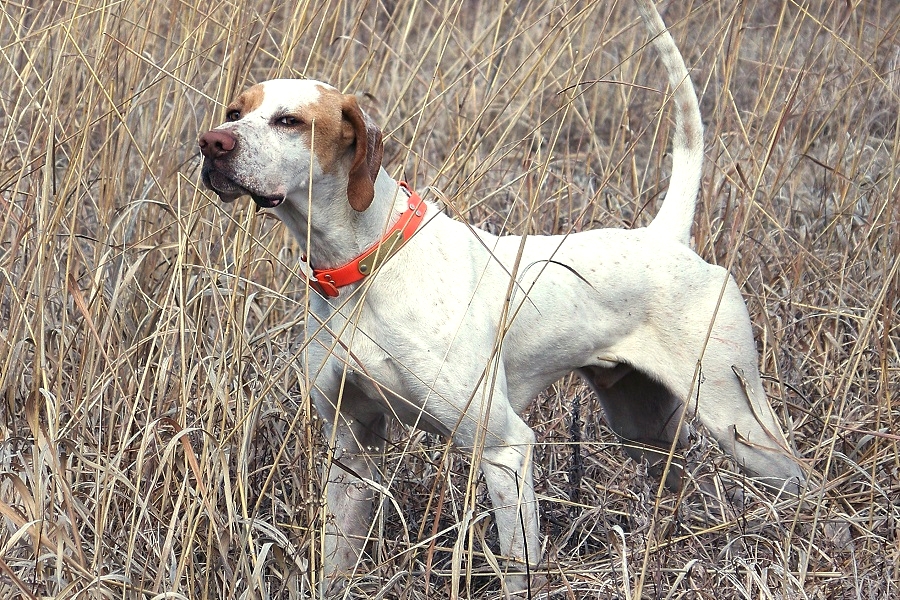
Gun dogs, also known as sporting dogs, are trained to work with firearms. They locate game birds, signal their position, flush them into flight, or retrieve shot birds—often from water. These breeds are divided into four functional groups: pointers, setters, flushers, and retrievers.
Pointers: Freeze to Find Game
Pointers use scent to locate upland birds like quail, pheasant, and grouse, then freeze in a rigid stance—front leg lifted, body taut—pinpointing the bird’s location.
Top Breeds:
- German Shorthaired Pointer (GSP): The ultimate all-rounder—points, flushes, retrieves, swims.
- English Pointer: Fast, wide-ranging, built for stamina.
- Vizsla: Lean, reddish-gold, affectionate; thrives with active owners.
- Weimaraner: “Silver ghost” with high drive and intelligence.
- Brittany: Compact, agile, excels in dense cover.
- Bracco Italiano: Ancient Italian pointer with gentle temperament.
- Braque du Bourbonnais: Rare French pointer revived after near extinction.
Pro Tip: Field-bred lines are more energetic and driven than show lines—ideal for serious hunters.
Setters: Elegant and Methodical
Setters were once trained to “set” (crouch low) when finding birds so hunters could throw nets. Today, they point and flush on command, covering ground with grace.
Key Breeds:
- English Setter: Known as the “aristocrat of dogs,” with feathered coat and calm demeanor.
- Irish Setter: Glamorous red coat hides a rugged, tireless hunter.
- Gordon Setter: Black and tan, heavier build, better suited to cold weather and thick cover.
- Irish Red & White Setter: Softer temperament, less intense than the Irish Setter.
Visual Cue: Watch for the “belly crawl”—a setter slowly lowering itself as it closes in on scent.
Flushers: Stir Birds into Flight
Flushers dive into brush to startle birds into the air, bringing them within shotgun range. They work close to the hunter—typically 30–60 feet.
Best Flushers:
- English Springer Spaniel: High-energy, barks to signal bird location (“springing” the game).
- American Water Spaniel: Wisconsin’s state dog—compact, webbed feet, loves water.
- Boykin Spaniel: South Carolina’s state dog—perfect for duck blinds and swamps.
- Clumber Spaniel: Slow, deliberate, built for older hunters or small properties.
Common Mistake: Confusing spaniels with retrievers. Most spaniels flush first, retrieve second.
Retrievers: Masters of the Mark
Retrievers are trained to find and gently return shot game, often over long distances and through water. They have soft mouths, water-resistant coats, and exceptional memory.
Top Retrievers:
- Labrador Retriever: Most popular breed in the U.S.—reliable, trainable, loves water.
- Golden Retriever: Friendly and intelligent; best with field-bred lines for hunting.
- Chesapeake Bay Retriever: Oily coat protects against icy water—ideal for late-season ducks.
- Flat-Coated Retriever: Eternally playful, known as the “Peter Pan” of retrievers.
- Curly-Coated Retriever: One of the oldest retriever breeds—tough, independent, excellent swimmer.
- Nova Scotia Duck Tolling Retriever (Toller): Fox-like red coat, uses play to lure ducks.
Retriever Traits:
– Marking: Remembers fall locations of multiple birds.
– Soft mouth: Can carry a raw egg without cracking it.
– Whistle-trained: Responds to hand signals and commands at a distance.
Hounds: Scent vs. Sight Hunters

Hounds are split by primary sense used: scent or sight. They track, chase, tree, and sometimes hold game—working solo or in packs.
Scent Hounds: Follow the Trail
Scent hounds use their powerful noses to follow ground trails for miles. They bark (or “bay”) to signal their progress—making them ideal for tracking over long distances.
Key Breeds:
- Beagle: Small but tough; used for rabbits and hares.
- American Foxhound: Fast, vocal, works in packs.
- Black and Tan Coonhound: Deep bark, excels at treeing raccoons.
- Redbone Coonhound: Sleek red coat, fearless in swamps.
- Bluetick Coonhound: Distinctive mottled coat, strong prey drive.
- Plott Hound: Only coonhound breed not descended from English stock—used for bears and boars.
- Bloodhound: Most powerful nose of any dog—can track scents up to 130 miles.
- Dachshund: Short legs, long body—built for underground hunting.
Subtypes of Scent Hounds:
Bay Dogs: Hold Game at Bay
- Bark relentlessly to corner dangerous animals like boars or cougars.
- Examples: American Foxhound, Blackmouth Cur, Katahula Leopard Dog.
Treeing Hounds: Chase Climbers Up Trees
- Chase raccoons, bears, or pumas up trees, then bark to alert the hunter.
- Origin of the phrase: “Barking up the wrong tree.”
- Top breeds: Treeing Walker Coonhound, Plott Hound, Bluetick.
Blood Tracking Hounds: Recover Wounded Game
- Follow faint trails of blood, tissue, or gland secretions—hours after the shot.
- Required by law in many European countries for ethical hunting.
- Breeds: Bavarian Mountain Hound, Hanoverian Hound, Wirehaired Dachshund.
Pro Tip: Long ears help sweep scent toward the nose—don’t underestimate their function.
Sight Hounds: Speed Over Scent
Sight hounds hunt by vision and speed, spotting prey and chasing it down in silent pursuit.
Top Sight Hounds:
- Greyhound: Reaches 45 mph—built for hare coursing.
- Whippet: Smaller, faster version for enclosed rabbit hunts.
- Saluki: Ancient Middle Eastern breed—used to chase gazelles.
- Borzoi: Russian wolfhound with long, silky coat.
- Afghan Hound: Thick coat for cold mountain terrain.
- Irish Wolfhound: Largest dog breed—historically hunted wolves and elk.
- Scottish Deerhound: Built for open moors, chases deer with endurance.
Temperament: Calm indoors, sleeping up to 18 hours a day. But never off-leash—prey drive is too strong.
Curs: American All-Terrain Hunters
Curs are rugged, versatile dogs developed in the American South and Appalachia. They tree raccoons, track feral hogs, and hunt bears and cougars.
Key Breeds:
- Catahoula Leopard Dog: Striking coat patterns, intense focus, Louisiana’s state dog.
- Mountain Cur: “All-American Pioneer Dog”—believed to have been used by Daniel Boone.
- Blackmouth Cur: Fearless, loyal, excels in both treeing and bay work.
How They Work:
– Work independently or in packs.
– Bark to signal location and hold game.
– Often paired with catch dogs for dangerous game.
Caution: Not for novice owners—highly independent and strong-willed.
Terriers: Underground Specialists
Terriers were bred to go after small game in burrows—foxes, badgers, rats, rabbits. The name comes from terra, Latin for “earth.”
Key Breeds:
- Airedale Terrier: Largest terrier—used for otters, foxes, and even WWI message runs.
- Border Terrier: Compact, wiry coat, built for endurance.
- Cairn Terrier: Hardy, fearless, climbs rocks and digs dens.
- Lakeland Terrier: From England’s Lake District—tough and agile.
- Dachshund: Technically a hound, but functions like a terrier—hunts above and below ground.
Hunting Methods:
– Go-to-ground terriers: Enter dens to flush or kill prey.
– Flushers: Wait at the entrance and bark or grab exiting animals.
Note: In Europe, dachshunds are used to track injured animals after car accidents.
Catch Dogs: Hold Dangerous Game
Catch dogs physically seize and hold large, dangerous animals—boars, bears, cougars—until the hunter arrives.
Top Catch Dogs:
- Dogo Argentino: Bred to take down pumas—strong, fearless, up to 99 lbs.
- American Bulldog: Working lines are powerful and agile.
- Bullmastiff: “50% lion, 50% Saint Bernard”—used to hold game without killing.
- Pitbull-type breeds: Often banned but highly effective and affectionate at home.
How the Hunt Works:
1. Bay dog locates and corners the animal.
2. Catch dog is released to bite and hold (usually by ear or snout).
3. Hunter approaches from behind for a safe kill.
Safety Note: These dogs wear protective vests and collars—essential for survival.
Water Dogs & Tollers: Marsh Masters
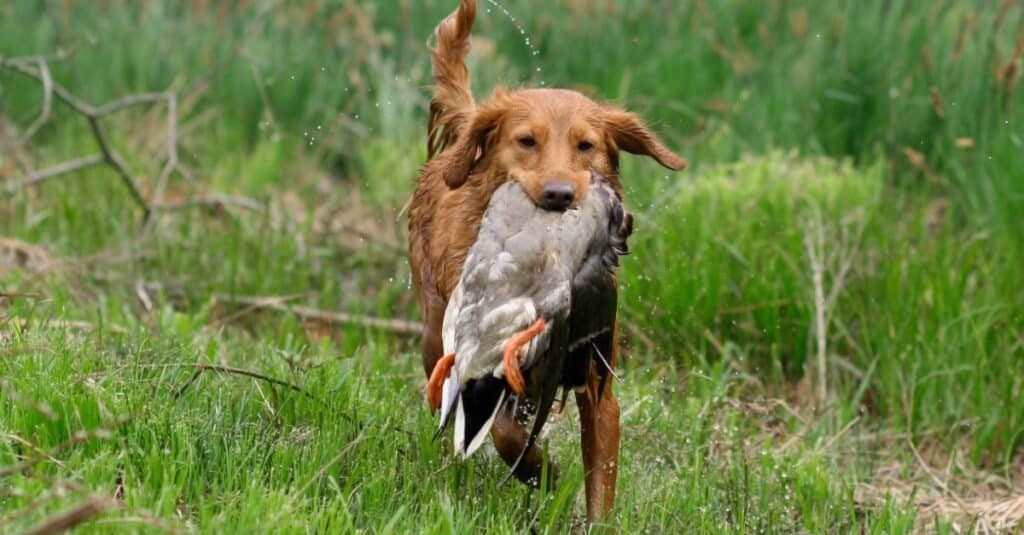
These dogs retrieve waterfowl or lure ducks into range using playful behavior.
Water Dogs: Built for the Bog
Water dogs have water-resistant coats, webbed paws, and fearless temperaments.
Key Breeds:
- Portuguese Water Dog: Curly coat, strong swimmer—used by fishermen and hunters.
- Barbet: French water dog with thick, woolly coat—ancestor of the Poodle.
- Irish Water Spaniel: “Rat tail” and dense curls—ideal for Irish marshes.
- American Water Spaniel: Dual-purpose—flushes and retrieves.
- Standard Poodle: Yes, a hunting dog! Originally a water retriever—highly intelligent.
Fact: The Standard Poodle ranks among the smartest dog breeds—trainable for complex tasks.
Tolling Dogs: The Decoy Experts
Tollers use playful movement to lure curious ducks within shooting range.
Only Two Breeds:
- Nova Scotia Duck Tolling Retriever (Toller): Red coat, white markings, fox-like.
- Kooikerhondje: Dutch breed—used to lure ducks into traps.
How Trolling Works:
1. Toller plays along the shore—running, jumping, flicking tail.
2. Ducks swim closer out of curiosity.
3. Hunter rises, shoots, and sends Toller to retrieve.
Unique Trait: The Toller’s high-pitched “scream” signals excitement—can be startling to new owners.
Blood Tracking Dogs: Ethical Recovery
These dogs specialize in recovering wounded game, following faint scent trails long after the shot. They are essential for ethical hunting.
Top Breeds:
- Bloodhound: Unmatched scent memory—can track 24+ hours old.
- Bavarian Mountain Hound: Agile, works in alpine terrain.
- Hanoverian Hound: German breed with strong tracking instinct.
- Wirehaired Dachshund: Follows blood trails in dense brush.
- Beagle: Small but effective for rabbits and hares.
- Bassador: Beagle-Basset mix—excellent for beginners.
Legal Note: In Germany, Austria, and France, tracking wounded game with a dog is mandatory for big game hunters.
Northern Hunting Spitz & Laikas: Forest Barkers

Originating in Russia and Scandinavia, these primitive breeds use barking and harassment to locate and distract game in dense forests.
Key Breeds:
- West/East Siberian Laika: Independent, tree small game, bark at moose.
- Finnish Spitz: “Barking bird dog”—trees squirrels and grouse.
- Karelian Bear Dog: Used to confront bears and wolves—protects reindeer herds.
- Norwegian Elkhound: National dog of Norway—hunts moose and lynx.
- Russian European Laika: Versatile—trees, tracks, and retrieves.
Traits:
– Thick double coats for cold climates.
– Very vocal—barks act as GPS in snow or fog.
– Not ideal for urban living—can be dog-aggressive.
Versatile Hunting Dogs (HPR): One Dog, All Jobs
HPR stands for Hunt, Point, Retrieve. These dogs do it all—track, point, flush, retrieve, and track wounded game.
Recognized by NAVHDA (North American Versatile Hunting Dog Association), top HPR breeds include:
– German Shorthaired Pointer
– German Wirehaired Pointer
– Vizsla
– Wirehaired Pointing Griffon
– Pudelpointer
– Bracco Italiano
– Cesky Fousek
– Drentse Patrijshond
Best For: Hunters who pursue multiple game types—upland birds, waterfowl, and small game.
Time Commitment: High. These dogs need daily exercise and mental stimulation.
Choose the Right Dog by Game Type
| Game | Best Dog Types |
|---|---|
| Upland Birds | Pointers, setters, spaniels (GSP, Brittany, Springer) |
| Waterfowl | Retrievers (Lab, Chessie), Toller, American Water Spaniel |
| Rabbits & Hares | Beagle, Whippet, Basset, Dachshund |
| Raccoons | Coonhounds, Mountain Cur, Feist |
| Wild Boar | Catch dogs (Dogo Argentino), Bay dogs (Plott Hound) |
| Wounded Deer | Bloodhounds, Bavarian Mountain Hound, Wirehaired Dachshund |
| Pest Control | Terriers, Dachshunds |
| Moose/Bear | Karelian Bear Dog, Norwegian Elkhound, Laikas |
Lifestyle Match: Is the Dog Right for You?
| Type | Best For | Challenges |
|---|---|---|
| Scent Hounds | Long tracking, pack hunting | Very vocal; escape artists |
| Sight Hounds | Open terrain, speed chases | Not safe off-leash; cold-sensitive |
| Gun Dogs | Active families, multi-role hunting | High energy; needs training |
| Terriers | Burrow hunting, small pests | Stubborn; may chase small pets |
| Northern Spitz | Remote, forested areas | Loud, sheds heavily, not apartment-friendly |
| Catch Dogs | Dangerous game hunting | Requires training, space, legal awareness |
| Blood Trackers | Ethical recovery, big game | Calm at home, focused when working |
Specialist vs. Versatile: What’s Best?
- Specialist Dogs: Excel at one job—e.g., Beagle for rabbits, Lab for ducks.
- Versatile Dogs: Do multiple jobs—e.g., GSP, Vizsla, Brittany—ideal for mixed-game hunters.
Pro Tip: If you hunt birds in the morning and track wounded deer in the afternoon, go versatile.
Final Note: The right hunting dog isn’t just about breed—it’s about purpose, personality, and partnership. Whether you need a silent sprinter, a baying tracker, or a loyal retriever, there’s a dog bred for your hunt. Match the dog to your game, your terrain, and your lifestyle—and you’ll gain more than a hunter’s tool. You’ll gain a true companion.

0 Comments