Choosing the right hunting rifle isn’t about picking the flashiest model or the one with the loudest reputation—it’s about finding the perfect match between you, your game, and the terrain you hunt. Whether you’re a first-time hunter buying your first centerfire or a seasoned outdoorsman upgrading for a backcountry elk hunt, the right rifle can mean the difference between a clean, ethical harvest and a missed opportunity.
With so many calibers, actions, stocks, and optics on the market, the process can feel overwhelming. But when you break it down into key decision points—fit, action type, caliber, recoil, and budget—you can cut through the noise and make a confident, informed choice. This guide walks you through every critical factor in selecting a hunting rifle, helping you build a complete system that’s reliable, accurate, and tailored to your needs.
Match the Rifle to the Shooter
Fit Matters More Than Firepower
A rifle that doesn’t fit its shooter will never shoot accurately—no matter how powerful the caliber or how advanced the scope. The first step in choosing a hunting rifle is identifying who will use it: an adult, youth, small-framed, or left-handed hunter.
Youth and petite shooters often struggle with standard rifles. The length of pull (LOP) on most adult rifles is around 13.75 inches, but youth models typically come in at 12.5 inches. That 1.25-inch difference drastically affects control. If the stock is too long, the shooter can’t reach the trigger properly; if it’s too short, recoil becomes harsher due to poor shoulder contact and increased muzzle rise.
Synthetic stocks with adjustable LOP inserts, like those from Savage and Mossberg, let you fine-tune the fit as a young hunter grows. While wooden stocks can be shortened by a gunsmith and later restored, synthetic ones are harder to modify—so plan ahead.
Left-Handed? Get a True Southpaw Rifle
Left-handed shooters need more than just a reversed stock—they need true left-ejecting bolt actions. Standard right-ejecting rifles vent hot gases and spent brass to the right, which puts a left-handed shooter’s face directly in the danger zone during a case failure.
Look for purpose-built models like the Savage 110 Left-Handed, Tikka T3x Lefty, or Ruger Hawkeye Left-Handed, which feature mirror-image bolt design and safe left-side ejection. Avoid “ambidextrous” solutions that compromise safety or reliability. For lefties, a properly designed rifle isn’t just about comfort—it’s about preventing injury.
Pick the Right Action Type for Your Hunting Style
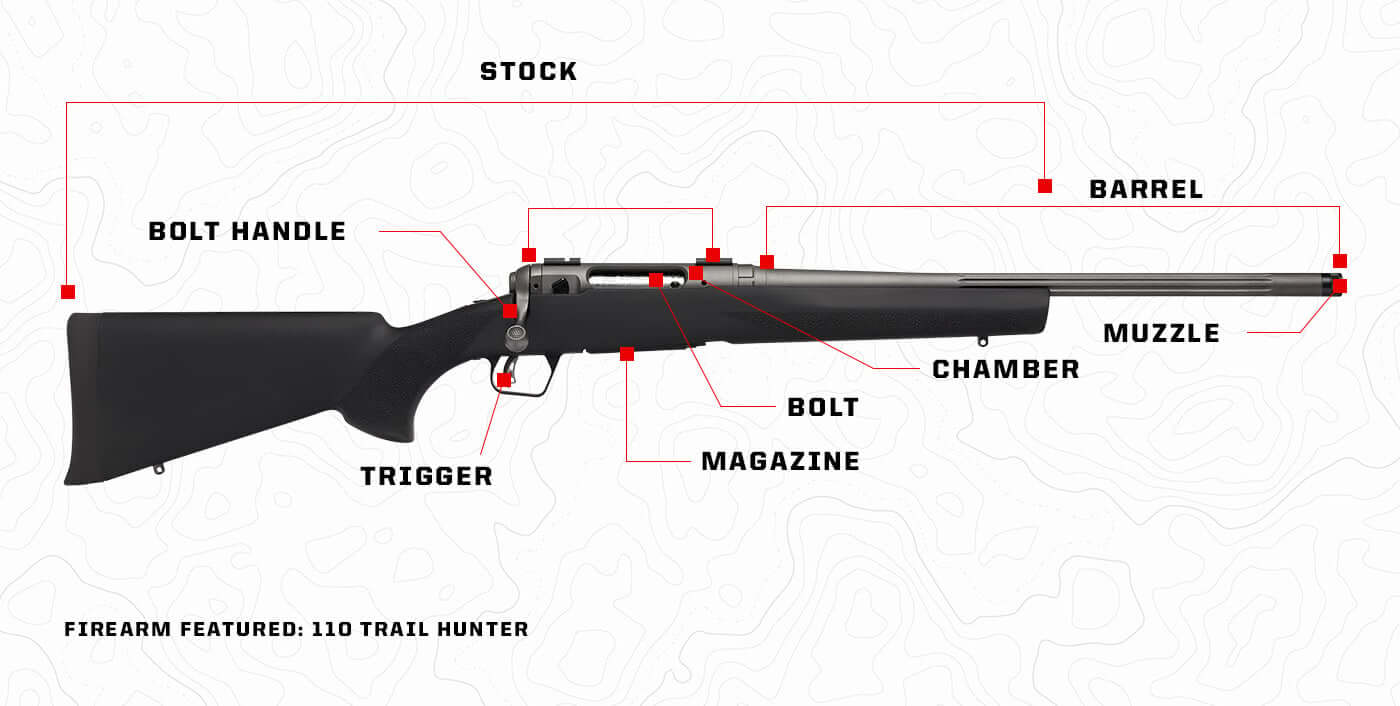
Bolt-Action: The Gold Standard for Accuracy
Bolt-action rifles dominate modern hunting for good reason: reliability, precision, and simplicity. With fewer moving parts, they hold up in rain, snow, and mud better than any other action. Bolt guns also let you visually confirm if the chamber is loaded and allow safe bolt removal for storage.
Popular models like the Ruger American, Savage 110, and Tikka T3x deliver sub-MOA accuracy straight from the factory—even at entry price points. They’re ideal for long-range shots, open-country hunting, and beginners learning precision shooting.
Lever-Action: Fast Follow-Ups in Thick Cover
Lever-actions shine in close-range, fast-paced environments—think dense timber or hog-filled brush. The Marlin 336 or Winchester 94 lets you cycle rounds quickly without losing sight picture, enabling follow-up shots.
But there’s a catch: many states restrict lever-actions to straight-wall cartridges like the .30-30 Winchester or .450 Bushmaster. Bottlenecked rounds may be illegal in certain zones (e.g., Ohio, Indiana, Michigan). Always check local regulations before buying.
Semi-Automatic: Speed and Capacity
Semi-autos offer the fastest rate of fire, making them ideal for predators or fast-moving game. Modern AR-15 platforms chambered in .350 Legend, 7.62x39mm, or 6.8mm SPC are legal for deer in many states and offer low recoil with high magazine capacity.
However, semi-autos are heavier, less inherently accurate than bolt guns, and more complex to maintain. They also face legal restrictions in some areas. Best suited for flat terrain and ethical shots within 200 yards.
Single-Shot: Simplicity and Reliability
Single-shot rifles are lightweight, affordable, and mechanically simple—perfect for teaching new hunters or hunting in areas with magazine limits. Models like the Ruger No. 1 are accurate and elegant but require perfect shot placement since there’s no second round ready.
Ideal for controlled environments or hunters who prioritize discipline over firepower.
Choose the Right Caliber for Your Game
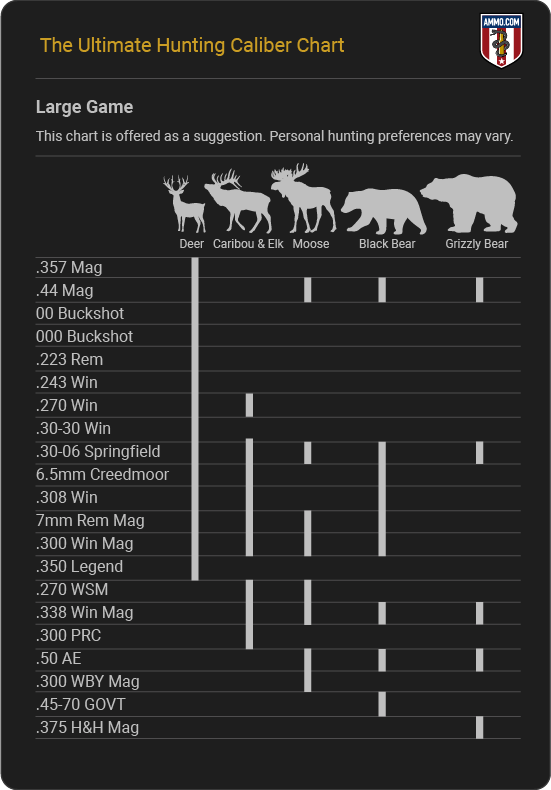
Match Power to Purpose
Caliber selection isn’t “bigger is better”—it’s about sufficient energy, manageable recoil, and ethical harvest. A .375 H&H Magnum is overkill for whitetail; a .223 Remington lacks power for elk.
Minimum Energy Guidelines:
- Deer-sized game: At least 1,000 ft-lbs at impact.
- Elk, moose, bear: Aim for 1,500+ ft-lbs.
Energy comes from bullet weight and velocity. But two other factors matter: ballistic coefficient (B.C.) (aerodynamic efficiency) and sectional density (S.D.) (penetration ability). High B.C. bullets resist wind drift; high S.D. improves bone-breaking penetration.
Top Calibers by Game Type
For Whitetail & Medium Game
- .243 Winchester: Low recoil, accurate, great for youth and beginners.
- 6.5 Creedmoor: High B.C., flat trajectory, light recoil—dominant in long-range hunting.
- .308 Winchester: Proven power, widely available, short-action design.
- 7mm-08 Remington: Mild recoil, flatter than .308, handles heavier bullets than 6.5mm.
- .270 Winchester: High velocity, flat shooting, effective on elk with proper bullets.
For Elk, Moose & Large Game
- .30-06 Springfield: The original all-rounder. Handles 150–200+ grain bullets.
- 7mm Remington Magnum: Flatter trajectory than .30-06, excellent for mountain hunts.
- .300 Winchester Magnum: High energy at long range—best with muzzle brakes or suppressors.
- .375 H&H Magnum: Standard for dangerous game—overkill for deer.
For Youth & Recoil-Sensitive Shooters
- .243 Winchester, 7mm-08, or .350 Legend offer low recoil with ethical stopping power.
- AR-15 in .350 Legend: Adjustable stock, soft kick, ideal for small-framed hunters.
For Straight-Wall Zones
States like Ohio, Indiana, Michigan, and parts of New Hampshire require straight-wall rounds instead of bottlenecked cartridges.
Top choices:
– .350 Legend: Modern, optimized for 100–200 yards, mild recoil.
– .450 Bushmaster: Hard-hitting, great for hogs and big deer.
– .30-30 Winchester: Classic lever-action round, widely available.
Always verify state regulations before choosing a caliber.
Manage Recoil to Improve Accuracy
Why Recoil Ruins Shots
Felt recoil isn’t just uncomfortable—it causes flinching, which leads to missed shots more often than inadequate power. Even experienced shooters anticipate kick, jerking the trigger or dipping the barrel.
Recoil is influenced by:
– Cartridge power: More powder = more kick.
– Rifle weight: Heavier guns absorb energy. Every 1 lb increase reduces recoil by ~10%.
– Stock fit: Poor length of pull or cheek weld increases discomfort.
– Trigger quality: Light, crisp triggers reduce flinch.
Reduce Recoil the Right Way
- Use heavier rifles (7–9 lbs scoped).
- Install a quality recoil pad (Limbsaver, Pachmayr).
- Add a muzzle brake (cuts recoil 30–50%, but increases blast).
- Use a suppressor—most effective recoil reducer; also tames noise and muzzle rise.
- Practice with .22 LR to build confidence without fear.
Pro Tip: A .243 in a 7.5-lb rifle kicks less than a .308 in a 6.5-lb gun. Weight and caliber work together.
Ensure Proper Rifle Fit

Measure Length of Pull Correctly
LOP (length of pull) is the distance from trigger to buttplate. To test fit:
1. Place rifle butt in crook of elbow.
2. Fold forearm around stock.
3. Index finger should rest on trigger face.
– Can’t reach? Too long.
– Finger wraps past second knuckle? Too short.
Standard LOP: 13.75″
Petite shooters: 12.5–13″
Tall shooters: 14″+
Adjustable stocks or spacers help fine-tune fit over time.
Check Cheek Weld and Eye Relief
A consistent cheek weld ensures your eye aligns with the scope every time. Inconsistent placement causes parallax errors and missed shots.
Use adjustable comb stocks or strap-on cheek risers to align your eye with the optic. Also, ensure eye relief is sufficient—3–4 inches minimum, especially for magnum calibers. Without it, “scope bite” can injure your eyebrow.
Mount scopes correctly using quality rings (Talley, Leupold) and verify eye relief before final tightening.
Balance and Weight Matter
Ideal scoped weight: 7.0–8.5 lbs.
– Under 7 lbs: Hard to hold steady, more felt recoil.
– Over 9 lbs: Fatiguing on long hikes.
Balance point should be near the receiver for natural pointability. Lightweight builds (6.5 lbs) work for backcountry; heavier rigs (9 lbs) suit bench rest or truck hunting.
Select the Right Scope
Match Magnification to Terrain
Your scope should match your typical shot distance:
– 3–9x or 4–12x: Most versatile for general hunting.
– 1–6x: Best for thick woods, fast shots.
– 6–24x: For open-country, long-range (300+ yards).
Low magnification helps acquire targets quickly; high magnification aids bullet drop compensation.
Choose the Right Reticle
- Duplex: Simple, fast target acquisition.
- BDC (Bullet Drop Compensator): Holdover marks for distance—no dialing needed.
- Mil-Dot / MOA Turrets: For precision long-range shooting (requires ballistic knowledge).
- Illuminated Reticles: Help in low-light dawn/dusk conditions.
Lens Quality Is Critical
Look for:
– Fully multi-coated lenses (maximizes light transmission).
– Anti-reflective coatings (reduces glare).
– 42–50mm objective lens (gathers more light but adds weight).
A $500 scope often outperforms a $2,000 rifle. Invest wisely.
Build an All-Around Rifle
For hunters who want one rifle for all North American game, consider:
– Caliber: .30-06 Springfield—versatile, ammo everywhere, handles deer to moose.
– Action: Controlled-round-feed for reliability.
– Barrel: 22–24″, stainless, fluted.
– Stock: Synthetic or carbon, adjustable LOP and comb.
– Weight: 8.5–9.5 lbs scoped.
– Trigger: Aftermarket (Timney, TriggerTech), 2.5–3.5 lbs pull.
– Scope: 3–9x or 2–12x with BDC reticle (Leupold VX6, Trijicon AccuPoint).
Expert Pick: Aram von Benedikt uses a .30-06 with Leupold VX6 as his “one rifle for everything.”
Final Tips Before You Buy
- Try before you commit: Handle rifles at gun shops or ranges.
- Dry-fire to test trigger, balance, and ergonomics.
- Prioritize confidence over hype—a rifle you enjoy shooting gets used more.
- Invest in training: Learn shooting positions, wind reading, and range estimation.
- Seek mentorship: Join groups like The Sisterhood of the Outdoors or local hunting clubs.
Summary: Your Rifle Selection Checklist
| Factor | Key Questions |
|---|---|
| User | Who’s shooting? Size, strength, experience? |
| Game | Deer, elk, hogs, bear? |
| Terrain | Thick woods or open country? Typical shot distance? |
| Regulations | Any action or caliber restrictions? |
| Fit | Proper LOP, cheek weld, balance? |
| Recoil | Can shooter handle it? Need mitigation? |
| Budget | Total system cost (rifle, scope, ammo, accessories)? |
| Ammo Availability | Easy to find locally and online? |
| Longevity | Will it grow with the hunter? Can it be upgraded? |
The best hunting rifle isn’t the most powerful or expensive—it’s the one that fits you, shoots accurately, and inspires confidence. Focus on fundamentals, practice relentlessly, and choose a rifle that grows with you. Hunting isn’t just about the gear—it’s about the skill behind it.

0 Comments