You’ve heard the early morning whistle of wings overhead, seen flocks of ducks cupping their wings as they spiral down into a decoy spread, and felt that pull toward the marsh. Duck hunting isn’t just about bagging birds—it’s about cold mornings, mist rising off the water, and the quiet camaraderie of hunters waiting together in a blind. If you’re wondering how to start duck hunting, the good news is: you don’t need decades of experience or a boat full of gear to begin.
This guide breaks down exactly what you need to know—step by step—to go from curious beginner to confident first-time duck hunter. We’ll cover licensing, essential gear, where to hunt, how to set up decoys, calling basics, safety, and what to expect on your first hunt. Whether you’re drawn to the challenge, the tradition, or the taste of wild duck on the table, this is your roadmap to getting started—legally, ethically, and successfully.
Get Licensed and Educated
Before you step into the marsh, you need to be legally prepared. Duck hunting is one of the most regulated forms of hunting, and for good reason: to protect waterfowl populations and ensure fair, sustainable practices.
Pass a Hunter Safety Course
Most states require first-time hunters to complete a hunter education course. These cover:
– Firearm safety
– Wildlife identification
– Ethics and responsibility
– First aid and survival basics
Courses are often free or low-cost and available online or in person through your state’s wildlife agency. Completion is mandatory for purchasing a license in most states.
✅ Pro Tip: Some states offer “Waterfowl Hunter Education” add-ons—take one if available. They cover migratory bird rules, duck ID, and conservation.
Buy the Right Licenses and Stamps
Here’s what you need:
– State Hunting License: Required for all hunters. Buy online via your state wildlife department.
– Federal Duck Stamp: $25, required for waterfowl hunters 16+. Funds wetland conservation.
– State Waterfowl Permit: Some states (e.g., California, Texas) require an additional stamp.
– HIP Certification: Free registration for migratory bird hunters—required in most states.
📍 Action Step: Visit your state’s wildlife website (e.g., tpwd.texas.gov, dnr.illinois.gov) to check season dates, bag limits, and licensing steps.
Choose Your First Shotgun

Your firearm is your most important tool. For beginners, simplicity and reliability matter more than high-end features.
Pick the Right Gauge
- 12-gauge: Most powerful and common for waterfowl. Handles steel shot well.
- 20-gauge: Lighter recoil—ideal for youth or smaller-statured hunters.
Avoid .410 or 16-gauge for duck hunting—they lack range and knockdown power.
Select the Best Action Type
- Pump-action: Durable, affordable, low-maintenance. Perfect for beginners.
- Semi-automatic: Smoother follow-up shots but more expensive and sensitive to mud/salt.
✅ Beginner Pick: 12-gauge pump with 28″–30″ barrel.
Set Up the Right Choke and Ammo
- Choke: Use modified for most shots. Improved cylinder for close-range timber hunting.
- Ammunition: Steel shot is required by law—no lead in waterfowl zones.
- Use #2 or #4 steel in 3-inch shells for balanced power and recoil.
- Shell Limit: Shotguns must be plugged to hold 3 shells max when hunting migratory birds.
🔍 Pro Tip: Pattern your gun. Test different ammo/choke combos at 30–40 yards to see shot spread.
Build a Simple Decoy Spread
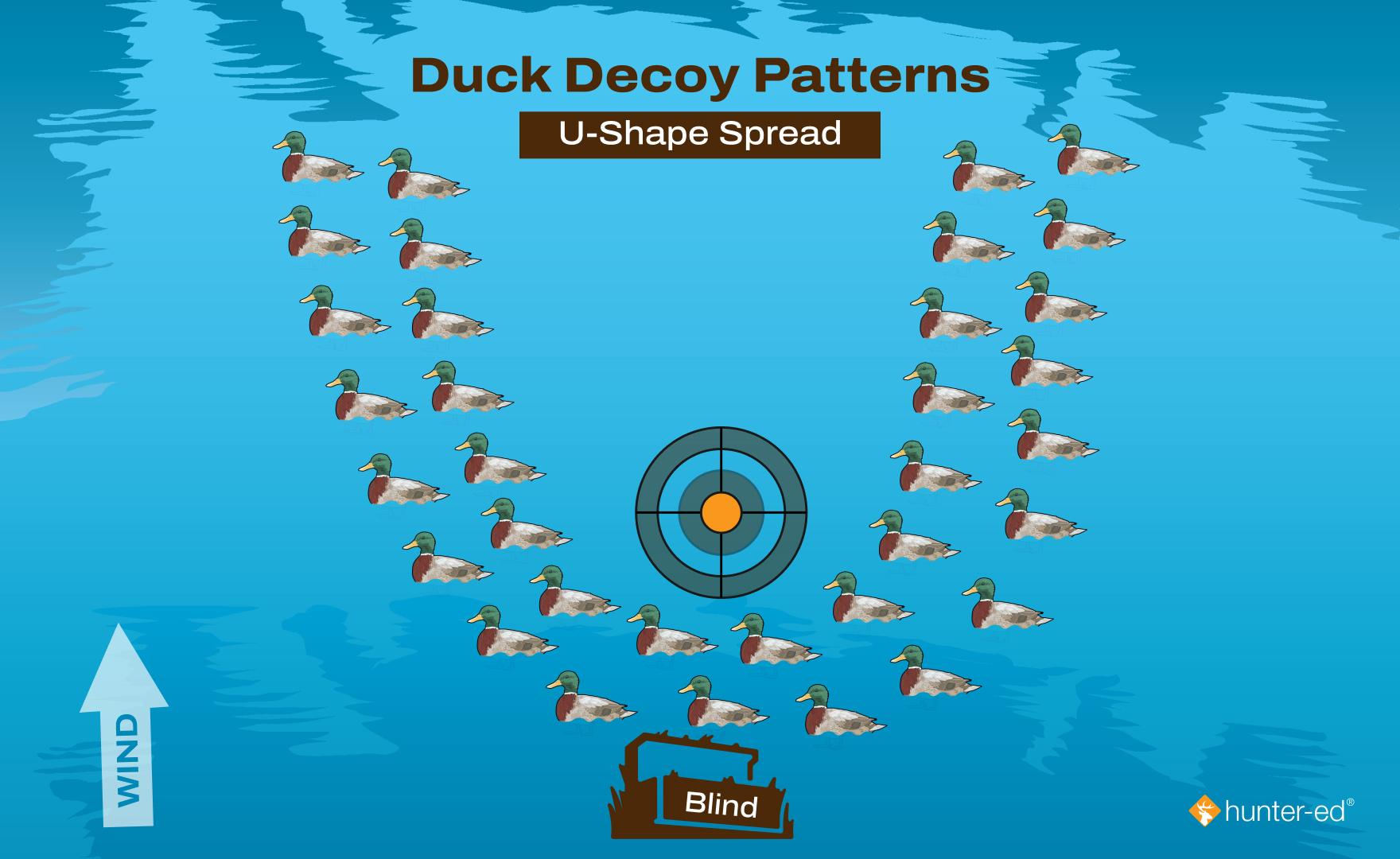
You don’t need 100 decoys to start. A small, well-placed spread works better than a messy large one.
Start with 12 Mallard Decoys
Mallards are common, social ducks that attract other species. Use a mix of:
– Hen (female) decoys: More numerous—6–8 hens
– Drake (male) decoys: 4–6 drakes for realism
Buy full-body or floating decoys—avoid silhouettes for now.
Set Up a U-Shaped Spread
- Shape: Arrange decoys in a U or J shape, open end facing into the wind (ducks land into the wind).
- Landing Zone: Leave a 10–15 foot open space directly in front of your blind.
- Distance: Place decoys 30–50 yards from your position.
🌬️ Visual Cue: Watch the water ripples—wind direction tells you where to open the spread.
Add Motion Later
Skip spinning wing decoys at first—they can spook birds if overused. Start with pulsator-style or swimmer decoys to create subtle water movement.
Dress for Cold, Wet Conditions

Duck hunting means long hours in cold, damp environments. Your clothing keeps you safe and comfortable.
Wear Chest Waders
- Hip waders aren’t enough—you’ll step into deep water or rain pours over the top.
- Chest waders keep you dry and warm.
- Types:
- Neoprene: Warm, durable—best for cold weather.
- Breathable (Gore-Tex): Comfortable for walking, but pricier.
Choose boot-foot waders if you want simplicity. Stocking-foot waders need separate boots but offer better support.
✅ Comfort Hack: Wear long wool socks or sweatpants under waders to prevent boot chafing.
Layer Your Clothing
Use the three-layer system:
1. Base Layer: Moisture-wicking (merino wool or synthetic)
2. Mid Layer: Insulating (fleece, down jacket)
3. Outer Layer: Waterproof camo jacket and pants
Conceal Your Face and Hands
Ducks spot skin instantly.
– Face: Use a camo face mask or camouflage paint
– Hands: Wear wool gloves or elbow-high decoy gloves (great for handling gear)
Learn Basic Duck Calling
You don’t need to be a pro caller to start—but knowing a few sounds helps.
Pick an Easy Duck Call
- Drake whistle (horn call): Simple, loud, great for attracting ducks
- Double reed call: Softer, easier to learn than single reed
Avoid single reed calls at first—they take months to master.
Practice at Home
- Use Ducks Unlimited YouTube videos or calling apps to learn.
- Record yourself and compare to real ducks.
- Never practice in the field—bad calls scare birds.
Use These 3 Basic Calls
- Greeting Call: Loud series of quacks to grab attention of distant ducks.
- Feeding Call: Soft, random quacks—“I’m happy here, come join me.”
- Comeback Call: High-pitched, urgent quacks to lure birds turning away.
🗣️ Golden Rule: Less is more. Call every 15–30 seconds. Stop when ducks are close.
Find a Place to Hunt
You don’t need private land to start. Public spots and small waters work great.
Use Public Lands
- Wildlife Management Areas (WMAs)
- National Wildlife Refuges
- State Parks or Conservation Areas
Check your state agency website for:
– Access rules
– Check-in requirements
– Draw systems (some areas require lottery entry)
📍 Scout Smart: Use Google Maps or onX Hunt to find small ponds, flooded fields, or backwater sloughs.
Try Run-and-Gun Hunting
Carry 6–12 decoys and a backpack. Move frequently to find active birds.
– Hunt at dawn or dusk when ducks fly between roosting and feeding areas.
– Avoid crowded spots—go where others aren’t.
🔍 Scouting Tip: Watch for duck landings, flight lines, and feeding signs (ripples, splashes).
Set Up Your Blind and Stay Hidden
If ducks see you, they’ll flare. Concealment is critical.
Choose the Right Blind
- Natural cover: Reeds, cattails, or brush—free and effective.
- Layout blind: Low-profile for fields or shallow water.
- Panel blind: Lightweight, portable—good for levees or marsh edges.
Stay Concealed
- Sit low—keep your head below the blind line.
- Avoid sudden movements.
- Use camo netting or brush to break your outline.
- Keep your gun hidden until ready to shoot.
✅ Pro Tip: Set up 30–60 minutes before sunrise. Ducks arrive early.
Master Key Hunting Strategies
Timing, setup, and shot discipline make the difference between success and empty returns.
Hunt at the Right Time
- Best: Dawn and dusk—peak duck activity.
- Good: Overcast, windy, or cold midday hunts.
- Worst: Calm, sunny afternoons (ducks sit tight).
Aim for Clean, Ethical Shots
- Effective Range: 30–40 yards. Don’t “sky bust” (shoot at distant birds).
- Lead the Bird: Ducks fly fast—lead by 2–3 feet.
- Shot Placement: Aim for the head and neck for quick kills.
🎯 Practice: Shoot skeet or sporting clays to improve timing and accuracy.
Retrieve Every Bird
- Mark where birds fall.
- Use a retrieving dog if possible.
- If not, wade or paddle out to get downed ducks.
- Never leave a bird behind—it’s unethical and illegal.
Stay Safe in the Field
Duck hunting happens in remote, wet, dark places. Safety comes first.
Follow Firearm Safety Rules
- Treat every gun as loaded.
- Muzzle in a safe direction.
- Finger off trigger until ready to shoot.
- Know your target and what’s beyond it.
Wear a Life Jacket
If hunting from a boat or kayak, wear a PFD (personal flotation device). Hypothermia can set in fast in cold water.
Carry Emergency Gear
Pack a headlamp, first-aid kit, whistle, charged phone, and extra layers.
❄️ Weather Watch: Check forecasts. Avoid hunting in storms or high winds.
Process and Cook Your Ducks
Harvested ducks are a gift—treat them right.
Field Dress Immediately
- Remove entrails.
- Rinse cavity with clean water.
- Cool in ice or fridge within 2 hours.
Breast the Duck (Easy Method)
- Lay duck on cutting board.
- Use your thumb to loosen breast from ribs.
- Slide knife along breastbone to remove meat in one piece.
Cook Like a Pro
- Don’t overcook—duck is red meat. Aim for 135–140°F (medium rare to medium).
- Best methods: Pan-sear with butter, garlic, and herbs.
- Great pairings: Orange glaze, cherry sauce, red wine reduction.
🍽️ Top Species: Mallards, pintails, and teal are flavorful and tender.
Grow Your Skills Over Time
Duck hunting is a lifelong craft. Keep learning.
Join a Hunting Group
- Look for local clubs, DU chapters, or Facebook groups.
- Attend mentored hunts (e.g., “Women’s First-Time Fowlers” events).
Keep a Hunting Journal
Track:
– Weather and wind
– Decoy setup
– Calling used
– Bird activity
– Successes and misses
Review it each season to improve.
Upgrade Gear Gradually
Later, consider:
– Better shotgun (semi-auto, lighter weight)
– More decoys (species-specific, motion)
– Boat or kayak with motor
– Dog trainer or retriever
🔄 Rule of Thumb: Master one skill before buying new gear.
Overcome Common Challenges
Every hunter faces setbacks. Here’s how to fix them.
| Problem | Solution |
|---|---|
| Ducks ignore decoys | Try new spread shape. Add motion. Improve concealment. |
| Birds land out of range | Move spread closer. Use smaller spread. Hide better. |
| Too cold or wet | Upgrade to breathable waders. Add thermal layers. |
| Crowded hunting spots | Scout remote areas. Hunt early season. Run-and-gun. |
| Can’t tell duck species | Study field guides. Use DU app. Practice daily. |
Final Tips for First-Time Duck Hunters
- Start small: Shotgun, waders, 12 decoys, a call, and licenses are enough.
- Hunt early season: More birds, less pressure, better learning.
- Be patient: Most beginners don’t shoot a duck on day one—and that’s okay.
- Focus on fun: The real reward is the sunrise, the flight, the shared silence.
- Find a mentor: The best gear is a trusted hunting partner.
“The best way to get into duck hunting is to start small, learn from others, and enjoy the journey.” — Article 5
Duck hunting isn’t about perfection. It’s about showing up, being prepared, respecting the birds, and embracing the experience. With the right mindset and this guide in hand, you’re ready to take your first steps into the marsh. Get licensed, gather your gear, find a spot, and be there at first light. Your first duck is out there—waiting.

0 Comments