If you’re searching for hunting dog breeds that don’t shed, you’re likely trying to strike a delicate balance: a dog that excels in the field while being welcome on the couch, in the truck, and around allergy-prone family members. You’re not alone—more hunters today want a gundog that can track pheasant through tall grass, retrieve ducks from icy water, and still come inside without leaving a trail of fur on furniture or triggering a child’s sniffles.
The reality? No dog is completely non-shedding, but several breeds shed so little—especially with proper grooming—that they’re functionally hypoallergenic and ideal for indoor living. These dogs typically have hair-like coats instead of fur, grow their coat continuously like humans, and trap loose hair rather than releasing it into your home. That means fewer vacuum sessions, less lint rolling, and more time focused on what matters: the hunt.
This guide cuts through the noise to spotlight the best low- and non-shedding hunting dogs—breeds proven in real-world field performance, backed by hunter testimonials, and vetted for family compatibility. You’ll discover which dogs truly live up to the “no-shed” claim, what grooming really involves, and how to match your hunting style with the right breed.
Pudelpointer: The All-Around Performer
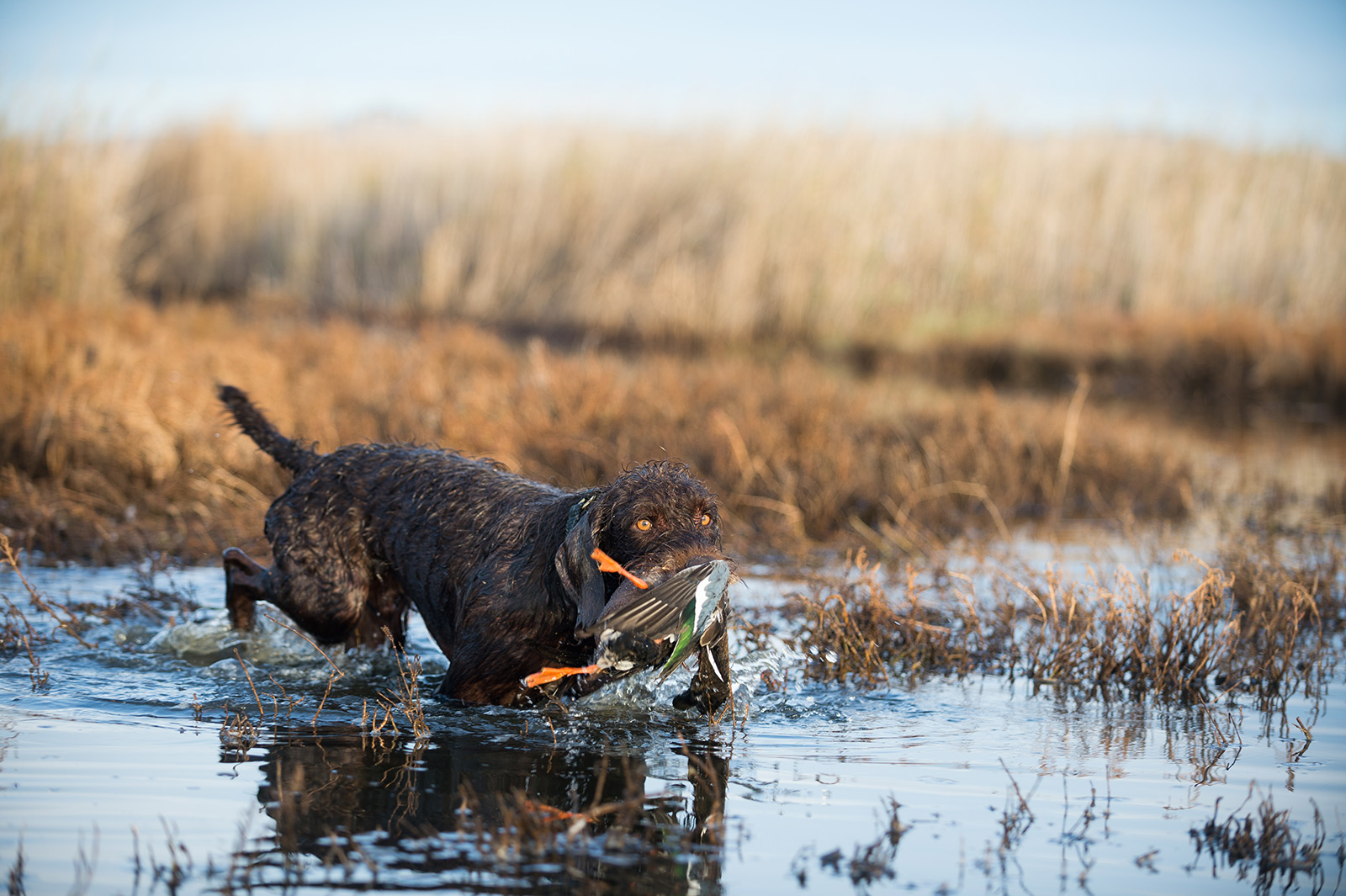
The Pudelpointer is widely regarded as the gold standard for hunters who want a versatile, intelligent, and nearly non-shedding gundog.
Why Hunters Love It
- Shedding: Minimal to none when coat is maintained
- Coat Type: Dense, wirehaired, weather-resistant
- Hunting Skills: Excels at pointing, retrieving, and tracking in both upland and waterfowl settings
- Temperament: Calm “off switch”—focused in the field, relaxed at home
- Family Life: Loyal, intelligent, and great with kids
“After a muddy run, I gave my Pudelpointer a bath—there was dirt in the tub, maybe 4 hairs from burrs, but zero shedding.” — Hunter testimonial
This breed combines the Poodle’s low-shedding coat with the Pointer’s field drive, creating a dog that’s as effective as it is clean.
Grooming Needs
- Brush 2–3 times per week
- Hand-stripping twice a year to remove dead hair
- Occasional trimming around ears and paws
While not low-maintenance, the Pudelpointer’s coat resists mud and burrs better than a Poodle’s, making it a practical choice for serious hunters.
Where to Find One
- Best sourced from working-line breeders like Cedarwood Gundogs (cedarwoodgundogs.com)
- Puppies often cost $1,000+
- Look for NAVHDA-tested bloodlines for proven field performance
Wirehaired Pointing Griffon: The Loyal Low-Shedder
The Wirehaired Pointing Griffon (WPG) is a hidden gem—tough in thick cover, affectionate at home, and sheds so little it’s nearly invisible indoors.
Field and Family Performance
- Shedding: Very low with regular grooming
- Coat Type: Coarse outer layer with soft undercoat; requires stripping
- Hunting Ability: Strong pointer, reliable in water, excels in dense brush
- Family Fit: Adaptable, intelligent, bonds closely with families
Protective by Noise, Not Bite
Unlike many bird dogs, the WPG has a protective streak—but it’s more bark than bite.
“My WPG barks loud and obnoxious when strangers approach—great deterrent, zero aggression.” — DapperKitchen420
This makes it a solid watchdog without the risk of overprotectiveness.
Real-World Shedding Test
“We’ve had our WPG for over six weeks as a house dog—she sheds very little. No fur on furniture, no clumps in the dog bed.” — Owner review
Grooming Tips
- Brush 2–3 times weekly
- Hand-strip twice a year
- Trim around feet and face for neatness
German Wirehaired Pointer: High Performance, Variable Shedding
The German Wirehaired Pointer (GWP) is a classic versatile hunter, but its shedding level depends heavily on bloodline.
What to Expect
- Shedding: Inconsistent—some shed minimally, others more like a Lab
- Coat Type: Wirehaired, weather-resistant
- Hunting Ability: Bred in Germany for all game—strong in pointing, retrieving, and tracking
Why It’s a Gamble
- U.S. breeding lines vary widely
- Some have slick, tight coats (low shed)
- Others grow shaggier fur that mats and sheds more
“It’s hit or miss. I’ve seen GWPs that barely shed and others that leave hair everywhere.” — Field hunter
Grooming & Maintenance
- Weekly brushing
- Occasional stripping or clipping
- Bathe after wet hunts to prevent odor
Pro Tip: Ask breeders for photos of the parents’ coats and shedding history. Prioritize dogs from German VDD lines for more consistency.
Deutsch Drahthaar: The Consistent German Standard
If you want a German Wirehaired Pointer with guaranteed low shedding, the Deutsch Drahthaar (DD) is your best bet—the original German-bred standard.
Why It Outshines the GWP
- Shedding: Minimal when maintained
- Coat Type: Harsh, dense wirehair; water- and weather-resistant
- Breeding Standards: VDD (Verband für Deutsche Drahthaarige) oversight ensures working ability and coat quality
- Hunting Skills: Versatile—excelling in birds, furred game, and water
Temperament & Training
- Calm at home, intense in the field
- Intelligent, eager to please, needs consistent training
- Bonds tightly with family but reserved with strangers
Availability
- Rare in the U.S.
- Best found through VDD-registered breeders
- Higher price point, but more predictable results
Standard Poodle: The Forgotten Gundog

The Standard Poodle is often mocked in duck blinds—but it’s one of the most capable non-shedding hunting dogs ever bred.
Shedding & Allergies
- Shedding: None—hypoallergenic, curly coat
- Coat Type: Dense, single-layer, traps dirt and burrs
“My poodle goes out white and comes in black after a field run—but zero hair in the truck.” — Hunter testimonial
Hunting Ability
- Originally bred as a water retriever
- Excels in field trials, retrieves well, strong nose
- Agile and intelligent—learns fast
Grooming Reality
- High maintenance: Needs clipping every 6–8 weeks
- Prone to matting if not brushed weekly
- Burrs and mud stick easily—bath after every hunt
Social Perception
“I’d get some looks in the marsh with a poodle—but mine hunts better than half the labs out there.” — Article 3
Despite the jokes, the Standard Poodle is a proven gundog with a legacy in waterfowl work.
Irish Water Spaniel: The Non-Shedding Water Specialist
The Irish Water Spaniel is a rare but excellent choice for hunters who want a non-shedding dog built for wetlands.
Key Features
- Shedding: None—tight curls like a Poodle
- Coat Type: Double coat—curly body, smooth muzzle; water-resistant and quick-drying
- Hunting Role: Flushes and retrieves waterfowl; strong swimmer
Size & Temperament
- 40–60 lbs, muscular build
- Quiet, observant, less hyper than other spaniels
- Loyal, intelligent, good with families
Grooming Needs
- Regular trimming (every 6–8 weeks)
- Weekly brushing to prevent matting
- Clean ears often—prone to infections
Note: While not as common as a Lab, the Irish Water Spaniel is a superior shed-free alternative for serious waterfowlers.
Curly-Coated Retriever: Built for the Wild
The Curly-Coated Retriever is one of the oldest retriever breeds—and one of the few that doesn’t shed at all.
Hunting Strengths
- Powerful swimmer with endurance
- Excellent in thick cover and cold water
- Bred from 16th-century spaniels and setters
Coat & Care
- Shedding: Zero—dense, tight curls protect from brambles and ice
- Grooming: Needs brushing to keep curls clean
- Resists matting better than Poodles
Temperament
- Reserved with strangers
- Confident, alert, independent thinker
- Loyal to family but not overly clingy
Ideal for hunters who want a no-shed, high-performance retriever without the grooming nightmare.
Portuguese Water Dog: Tireless in the Field
Made famous by the Obama family, the Portuguese Water Dog is a working breed at heart—built for swimming, retrieving, and long days afield.
Shedding & Coat
- Shedding: None—single-layer, curly or wavy coat
- Coat Type: Water-resistant; comes in two styles: curly or wavy
Hunting Skills
- Bred to herd fish and retrieve gear
- Strong swimmer, capable bird retriever
- Energetic, bold, and mentally tough
Grooming & Maintenance
- Clipping every 6–8 weeks
- Weekly brushing to prevent mats
- Bathe after water hunts to remove algae
Family Fit
- Devoted, playful, thrives on interaction
- Needs daily exercise—best for active homes
Lagotto Romagnolo: The Truffle Hunter
The Lagotto Romagnolo is not your typical bird dog—but it’s a non-shedding scent specialist worth considering.
Shedding & Coat
- Shedding: None—dense, woolly curls
- Coat Type: Hypoallergenic; naturally suited for wet, muddy environments
Hunting Ability
- World’s top truffle-hunting dog
- Exceptional nose—can be trained for upland bird work
- Agile, focused, loves to search
Temperament
- High-energy, alert, social
- Excellent with kids
- Needs mental challenges daily
Best For: Hunters focused on scent work, small game, or specialized upland hunting.
Minimal Grooming Picks: Cirneco & Hamiltonstövare
If you want low shedding with minimal upkeep, these two breeds stand out.
Cirneco dell’Etna
- Shedding: Minimal—short, smooth coat
- Coat Type: Fine, shiny, sun-protective
- Hunting Role: Sicilian rabbit hunter—fast, agile, heat-tolerant
- Grooming: Occasional wipe-down; no brushing needed
- Best For: Warm climates, light hunting, easy care
Hamiltonstövare (Swedish Hound)
- Shedding: Low to moderate—short, dense coat
- Coat Type: Weather-resistant; sheds slightly in season
- Hunting Role: Fox and hare tracker—intelligent, endurance-driven
- Grooming: Minimal—brush once a week
- Best For: Scent hunters in cooler zones
Breeds That Shed Heavily (Avoid If You Want No Fur)
Some dogs are misunderstood as low-shedding—don’t be fooled.
Chesapeake Bay Retriever
- Shedding: Heavy—thick double coat blows seasonally
- Myth: “Short coat = low shed” — false
“Chesapeakes shed crazy. My family’s had them for years.” — bubba1819
Irish Setter
- Shedding: Moderate to high—long, silky coat mats easily
- Note: Full-coated setters require daily grooming
Final Recommendations by Need
| Need | Best Breeds |
|---|---|
| Best Overall | Pudelpointer, Wirehaired Pointing Griffon, Deutsch Drahthaar |
| Best for Waterfowl | Irish Water Spaniel, Curly-Coated Retriever, Portuguese Water Dog, Standard Poodle |
| Best for Upland Birds | Pudelpointer, GWP, WPG, English Pointer |
| Best for Truffle/Scent Work | Lagotto Romagnolo |
| Best for Low Grooming | Cirneco dell’Etna, Hamiltonstövare |
| Best for Allergies | Poodle, Irish Water Spaniel, Curly-Coated Retriever, Portuguese Water Dog |
| Best for Cold/Wet Climates | Deutsch Drahthaar, GWP, Curly-Coated Retriever |
| Best for Warm Climates | Cirneco dell’Etna, Italian Greyhound |
Key Takeaways: What You Need to Know
- No dog is 100% non-shedding, but wirehaired, curly, and single-coated breeds shed so little they’re functionally hypoallergenic.
- Grooming is non-negotiable: Low shedding ≠ low maintenance. Stripping, brushing, and clipping are essential.
- Hunting lines beat show lines: Always source from working or field-bred stock.
- Protectiveness varies: Some breeds bark at intruders (WPG), others couldn’t care less (Poodle).
- Foster before you buy: Test temperament, shedding, and family fit before committing.
Whether you’re bird hunting in Iowa or tracking in the Pacific Northwest, there’s a low-shedding dog that can handle the job—and the household. The key is matching the breed to your climate, game, and lifestyle. Do your homework, visit breeders, and consider a foster—your perfect hunting partner might just be the one that doesn’t leave fur on your flannel.

0 Comments