Duck hunting isn’t just about skill—it’s a battle against the elements. You could have the perfect blind, flawless calling, and a spread of decoys that looks like a wildlife magazine cover, but if you’re cold, wet, or visible, the birds will vanish before you even raise your gun. The secret to lasting all morning in a frigid marsh? How to dress for duck hunting the right way.
Most failed hunts come down to poor clothing choices. Cotton socks that soak up moisture. Noisy jackets that rustle like plastic bags. Exposed skin that glints in the sunrise. Ducks see in full color and spot movement from hundreds of yards away. If you’re not fully concealed and thermally regulated, you’re already at a disadvantage.
This guide breaks down exactly how to layer, what gear to trust, and how to adapt your outfit from early-season teal hunts to late-season ice-outs. You’ll learn how to stay warm without sweating, stay dry without overheating, and stay hidden without sacrificing comfort. Whether you’re wading through flooded timber or sitting in a layout blind at dawn, this is the complete system for dressing like a pro.
Master the Layering System

Success starts with layers—not just wearing them, but understanding how each one works together. A proper duck hunting outfit uses three distinct layers: base, mid, and outer. Each has a job: wick moisture, trap heat, and block the elements. Skip one, and the whole system collapses.
Weather in wetlands changes fast. One minute you’re sweating while hauling decoys, the next you’re shivering in a wind-whipped blind. Layering lets you adjust on the fly. The goal isn’t to wear the most clothes—it’s to wear the right clothes in the right order.
Choose the Right Base Layer
Your base layer is the foundation. It touches your skin and manages sweat—the silent killer in cold weather. When moisture stays on your body, it cools rapidly, pulling heat away and increasing the risk of hypothermia. The right base layer wicks sweat fast, keeps you dry, and regulates temperature.
Merino Wool vs. Synthetic
- Merino wool: Soft, naturally odor-resistant, and warm even when damp. Performs well in both 30°F and 60°F. Ideal for long sits.
- Synthetic (polyester, nylon blends): Dries faster than wool, highly durable, excellent wicking. Best for high-activity hunts.
Never wear cotton. It absorbs sweat, stays wet, and loses insulation. In cold, wet conditions, cotton is dangerous.
What to Wear
- Full-coverage long-sleeve top and long johns
- Lightweight in early season, thermal-weight in late season
- Seamless or flat-stitched seams to prevent chafing
Pro Tip: Even on warm teal hunts, wear a full base layer. You’ll sweat during setup—without wicking fabric, that moisture turns cold fast.
Build Insulation with Mid-Layers
The mid-layer traps heat. It’s your warmth control—add one, two, or none depending on the cold. This layer must breathe to avoid turning your body into a sauna.
Best Mid-Layer Options
- Fleece hoodie or quarter-zip
- Lightweight insulated vest (PrimaLoft or Thinsulate)
- Softshell jacket (wind-resistant, quiet, breathable)
Material Guide
- Fleece: Light, warm, breathable—but not waterproof. Great under a shell.
- Synthetic insulation: Keeps warmth when wet. PrimaLoft Gold is top-tier.
- Down: Super warm but useless if wet. Only use with full waterproof outer.
Avoid bulky sweaters. They restrict movement and cause overheating during wading or decoy work.
Layering Strategy by Temperature
| Temp Range | Mid-Layer Combo |
|---|---|
| 50–70°F | Light fleece or long-sleeve shirt |
| 30–50°F | Fleece + softshell or insulated vest |
| Below 30°F | Fleece + insulated jacket + vest |
Example: In a Minnesota snowstorm, a hunter might wear merino base + fleece pullover + PrimaLoft jacket + softshell.
Seal Out the Elements with Outer Layers
Your outer layer is armor. It blocks wind, rain, and snow while hiding your silhouette. It must be waterproof, windproof, breathable, and quiet—all at once.
Must-Have Features
- Taped seams to stop leaks
- Breathable membrane (e.g., Gore-Tex, BONE-DRY)
- Pit zips for venting heat
- Adjustable hood that fits over a hat
- Quiet fabric—no crinkling like a grocery bag
- Camouflage pattern matched to terrain
Outerwear Types
- Hardshell jacket: Full storm protection. Use in wind, rain, or snow.
- Softshell jacket: More flexible, less waterproof. Good for dry cold.
- Insulated parka: For extreme cold. Look for 3-in-1 models with removable liners.
Pro Tip: Take off your outer layer while moving. Put it back on when still. This prevents sweating and keeps you drier inside.
Warning: Some popular brands (like Drake) have had waterproofing issues. Re-treat gear yearly with ATSCO Silicone Water Guard to maintain performance.
Protect Your Lower Half: Waders, Bibs, and Pants
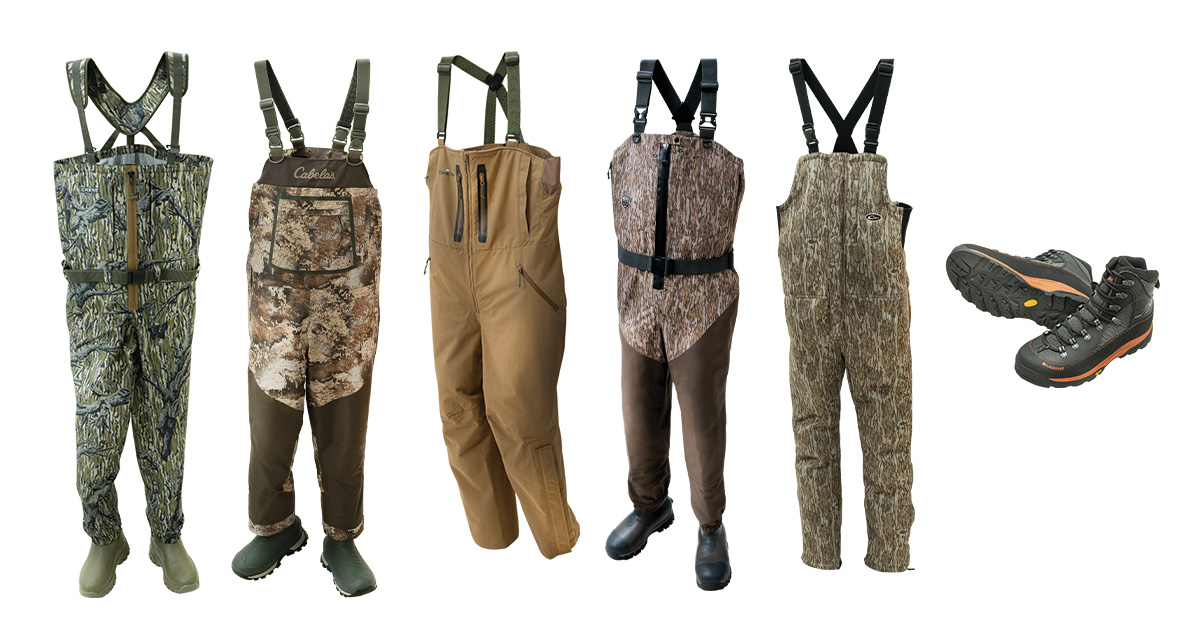
Your legs face mud, water, and cold—often all at once. The right lower-body gear keeps you upright, warm, and dry.
Pick the Right Waders
Waders are standard for duck hunting. They come in two main types:
Neoprene Waders
- 3.5mm thick rubber—insulated and warm
- Best for freezing water and deep wading
- Boot-foot models: No separate boots needed
- Heavier and less breathable
Top Pick: Northern Flight Classic Series II—100% waterproof, durable, proven in ice.
Breathable Waders
- Lightweight fabric (like Gore-Tex)
- Better for variable temps and active hunting
- Require separate stocking-foot boots
- Need regular cleaning to maintain breathability
Pro Tip: Wear one pair of high-quality wool socks (like Darn Tough Heavy Weight). Multiple thin pairs can cut circulation.
Use Bibs When Waders Aren’t Needed
In dry fields or layout blinds, waterproof hunting bibs are lighter and more comfortable.
- Made from ripstop polyester (e.g., 75–150 denier)
- Often fleece-lined for warmth
- Articulated knees for mobility
- Can be worn over waders for extreme cold
Example: Northern Flight Hunting Bibs—durable, quiet, with reinforced knees.
Footwear: Keep Feet Dry and Stable
Cold, wet feet ruin hunts. Good boots give traction, warmth, and support in slippery terrain.
Wader Boots: Built for Mud and Ice
Whether integrated or separate, wader boots need:
- Vibram or deep-lug soles for grip on mud and ice
- Thinsulate insulation (400g, 800g, or 1000g)
- Adjustable calf straps to block water
- Cushioned insoles for all-day comfort
Pro Tip: Rotate socks every other hunt. Wet socks breed bacteria and wear out fast.
Avoid Sinking in Mud
In deep marshes, waders can sink into muck. Prevent this with:
- Store-bought snowshoes strapped to boots
- DIY mud flaps: Cut milk crate bottoms and zip-tie to soles
Bonus: Use your wader boots as hand warmers. Cold hands go inside for instant heat.
Cover Head, Hands, and Face
Up to 20% of body heat escapes through the head. Exposed skin also breaks your outline. Protect every inch.
Headwear That Works
- Ball cap (short bill): For mild weather. Won’t snag in layout blinds.
- Knit watch cap: Lightweight warmth under a hood.
- Toboggan or trapper hat: Full ear and neck coverage. Best below 20°F.
- Boonie hat: Wide brim for rain and sun. Breaks up head shape.
- Balaclava or ski mask: Covers face, adds warmth and concealment.
Pro Tip: Avoid bright colors. Use camo or neutral tones.
Gloves for Dexterity and Warmth
You need to call and shoot—so gloves must balance warmth and touch.
Best Options
- Neoprene gloves: Waterproof, warm, great for wading
- Thinsulate gloves: Lightweight warmth, some with touchscreen tips
- Fleece gloves: Breathable, good as liners
- Fingerless gloves: 99-cent jersey gloves let you use calls and trigger
Pro Tip: Many hunters go gloveless. Use fingerless or thin synthetics to keep hands warm without losing feel.
Neck and Face Protection
- Neck gaiter: Blocks wind, can be pulled up over mouth
- Camouflage net gator: Breaks up facial outline, hides shine
- Wax cotton cap: Water-resistant but can overheat
Avoid shiny skin or glasses. Ducks see glare from 100 yards.
Camouflage: Stay Hidden, Not Seen
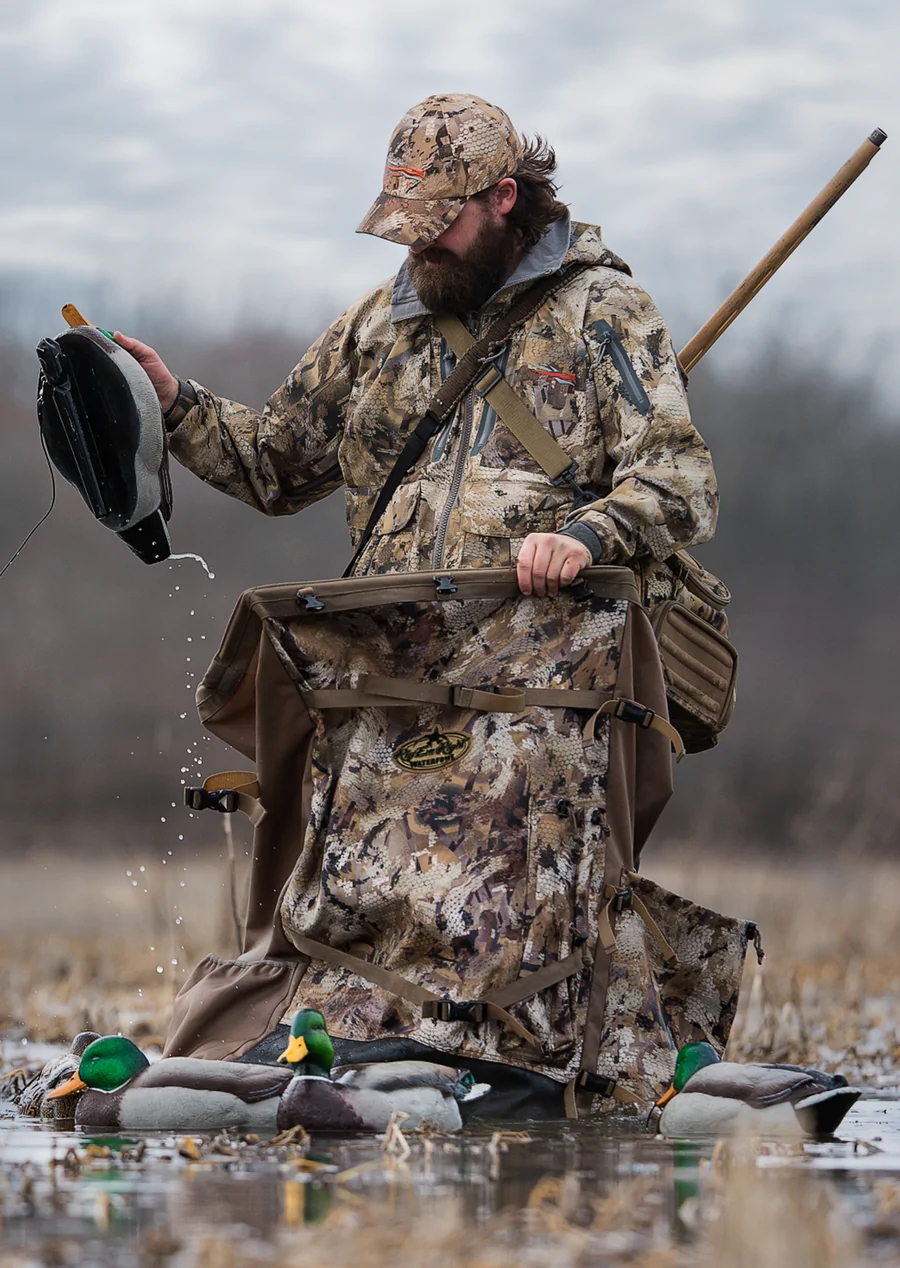
Ducks have vision 2–8x sharper than humans. If they see you, they’re gone.
Camo vs. Solid Colors
- Camouflage: Best for blinds, marshes, timber. Matches reeds, grass, snow.
- Solid earth tones: Can work in open fields but less effective.
Note: Some states require blaze orange during certain seasons. Always check local rules.
Concealment Tips
- Match your pattern to the environment (marsh, timber, snow)
- Break up your outline with cattails, reeds, or natural cover
- Stay still—movement is more detectable than color
- Avoid shiny gear (use flock-coated decoys)
Pro Tip: Wear a full-face mask in layout blinds. Even slight head movement draws attention.
Dress for the Season
Conditions change—your gear should too.
Early Season (Teal Hunts, 60–80°F)
Focus: Stay cool, ventilated, and hidden
- Base: Lightweight merino or synthetic
- Mid: Light long-sleeve shirt or thin fleece
- Outer: Breathable camo shirt and pants (e.g., AVES Scout Pant)
- Footwear: Hip waders or lightweight boots
- Head: Ball cap or boonie hat
Avoid overheating. You’ll be active setting decoys in warm sun.
Mid-Season (40–60°F, Wet and Windy)
Focus: Moisture control and moderate warmth
- Base: Full merino or synthetic
- Mid: Fleece hoodie + softshell jacket
- Outer: Waterproof shell (e.g., Drifter Jacket)
- Footwear: Insulated waders or boots
- Accessories: Gloves, neck gaiter, hand warmers
Watch for rain. Wet clothes cool fast—pack a spare base layer.
Late Season (Below 20°F, Ice and Snow)
Focus: Maximum warmth and wind protection
- Base: Heavyweight merino or thermal
- Mid: Fleece + insulated vest (PrimaLoft or down)
- Outer: Insulated parka (e.g., Bering Kinetic Jacket)
- Lower: Insulated waders or bibs (e.g., Bering Kinetic Bib)
- Accessories: Trapper hat, neoprene gloves, wool socks
Pro Tip: Place 12–18 hour heat packs on your chest and lower back. Core warmth lasts longer.
Essential Accessories
The right extras boost comfort, safety, and success.
Polarized Sunglasses
- Amber lenses: Best for dawn/dusk—boost contrast
- Gray lenses: For bright sun—true color
- Wraparound frames: Block glare and wind
- Hydrophobic coating: Sheds water and mud
Pro Tip: Use interchangeable lenses to adapt to changing light.
Must-Have Gear
- Blind bag: Holds shells, calls, snacks
- Floating gun case: Protects shotgun in water
- Game strap: Carry ducks without dragging
- Call lanyard: Keep calls ready
- PFD: Required for boat hunts
- Duck calls: Single-reed (versatile), double-reed (easier for beginners)
Choose Quality Brands That Last
Not all gear is equal. Invest in proven performers.
Trusted Brands
- SITKA: High-end, breathable, durable
- Banded: Reliable rain gear
- Northern Flight: Tough waders, bibs, parkas
- High and Dry Outdoors: Affordable, functional layers
- Darn Tough: Best over-the-calf socks—lifetime warranty
What to Look For
- Double-stitched seams
- Quiet, non-rustling fabric
- Articulated joints for movement
- Proper fit—no restriction when shouldering your gun
Pro Tip: Test new gear on a short hunt before opening day. Don’t trust unproven equipment.
Final Tips for All-Day Comfort
- Start with what you have—upgrade one piece at a time
- Prioritize moisture control over thickness
- Wear what you forget—the best gear feels invisible
- Rotate and clean gear—extend life with proper care
- Scout smart—no amount of clothing fixes a bad blind location
Remember: The longest hunts go to those who stay warm, dry, and still. Dress right, and you’ll be the last one in the blind—and the first to fill your strap.

0 Comments