Hunting mule deer in Arizona is not for the faint of heart. Unlike the dense forests of the Rockies or the timbered ridges of the North, Arizona’s desert and semi-arid landscapes demand a different kind of hunter—one who thrives on glassing for hours under a relentless sun, reading dry creek beds like a map, and mastering wind patterns in open terrain. The desert mule deer (Odocoileus hemionus eremicus) is a unique subspecies adapted to life in the Sonoran and Mojave Deserts, thriving in rugged, open country where water is scarce and visibility is king.
Whether you’re chasing a trophy in the remote Arizona Strip or hunting public land in Unit 36A, success hinges on more than just showing up. It’s about timing, terrain mastery, and patience. This guide delivers field-tested Arizona mule deer hunting tips—from e-scouting and rut timing to stalking tactics and species identification—so you can avoid rookie mistakes and dramatically increase your odds of filling your tag.
Hunt During the Rut for Maximum Buck Movement
Target January for Peak Rut Activity
The second week of January is your best window for encountering active, rutting bucks—especially during the OTC archery season in Units 22 and 23. Unlike northern mule deer that rut in November, desert mule deer breed later, peaking from late December through mid-January.
Bucks during this time are far less cautious. They’re chasing does, feeding throughout the day, and covering more ground—making them easier to spot and pattern. Glassing during daylight hours becomes far more productive, and even mature bucks may let their guard down.
- December to early January is prime; by late January, most breeding activity tapers off.
- Use this period to maximize long-range glassing and catch bucks on the move.
- Focus on doe concentrations—where you find does, bucks will follow.
Avoid Overpressured November Hunts
In high-demand units like Unit 36A, November rifle seasons attract heavy hunter pressure. Bucks quickly adapt, becoming nocturnal and retreating to remote, hard-to-reach pockets.
- Pressured deer shift to stealthy, nighttime movement, making daytime sightings rare.
- Focus on less-accessible basins, hidden drainages, and remote flats where fewer hunters venture.
- Consider shifting to late-season archery hunts—fewer people on the land means more predictable deer behavior.
Know the Terrain: Elevation and Habitat Are Everything
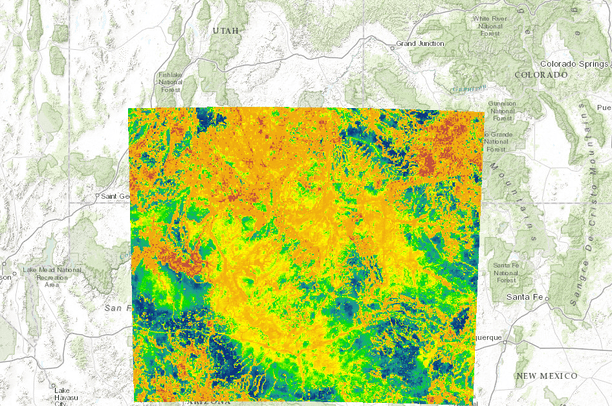
Focus on 2,000–4,000 Feet for Desert Mule Deer
Desert mule deer thrive at lower elevations, typically between 2,000 and 4,000 feet. Above that, Coues and white-tailed deer dominate. In southern Arizona, think flats, rolling foothills, and wide basins—not high timber.
- In Unit 36A, look in mesquite flats, river bottoms, and low hills.
- Avoid assuming deer are in rugged high country unless you’re in northern units like 13A.
- Use elevation filters in GOHUNT or onX to isolate zones within the ideal 2,000–4,000 ft band.
Hunt North-Facing Slopes for Bedding Bucks
During the day, mature bucks seek shade and cooler temperatures. North- and northeast-facing slopes provide natural thermal refuges.
- These slopes retain moisture and green cover longer, offering both comfort and concealment.
- Glass at midday—bedded deer blend into shadows and brush, but their shape often stands out against rock or dirt.
- Approach with caution: bedded bucks watch downwind escape routes and are hyper-aware of movement.
Scout Like a Pro: e-Scouting Before You Go
Map Remote Voids to Avoid Crowds
Most hunters stick to roads, trailheads, and obvious ridgelines. Your edge? Hunt the voids—areas with no access, steep ridges, or headwater basins that only the most committed hunters reach.
- Use onX Hunt and AZ Access Map to identify public land pockets far from roads.
- Mark drainages, green zones, and water catchments as high-probability areas.
- Drop waypoints on secluded ridges and sheltered basins for later glassing.
Simulate Glassing Angles with Google Earth
Use Google Earth 3D view to test vantage points before you arrive.
- Can you see into key drainages from that ridge?
- Are there obstructions like trees or boulders blocking your view?
- Pick glassing spots with downward visibility—ideal for spotting bedded deer in shaded draws.
Drive and Mark Green Corridors
During pre-season, drive access roads slowly and watch for patches of green vegetation in washes or on slopes.
- These indicate subsurface moisture—a lifeline for deer during drought.
- Green zones are deer highways, especially in dry years.
- Mark them on your GPS; return during hunting season when deer are actively using these corridors.
Glass Smart: When and How to Spot Deer

Time Your Glassing by Sun and Slope
Deer shift with the sun. Match your glassing to their thermal habits.
- Morning: Glass south-facing slopes—deer leave beds as the sun warms them.
- Midday: Focus on north-facing slopes—prime bedding zones.
- Evening: Scan canyon rims and flats as deer emerge to feed.
Glass Into the Sun for Better Detection
It’s uncomfortable—but glassing into the morning sun reveals shadows that betray bedded deer.
- Sun behind you creates glare; deer hide in shaded pockets.
- Glassing into the sun casts long shadows, making deer shapes stand out.
- Use a hat or hand to block glare while scanning.
Use a Grid Pattern and Tripod
Avoid random scanning. Use a systematic grid:
- Start with open flats
- Work edges of thick cover
- Scan rock outcrops and brush clumps
- Use binoculars on a tripod for long sessions—reduces fatigue, increases clarity.
- Switch between 10x handheld (close-in) and 14x–15x on tripod (long-range).
Stalk Like a Sniper: The 60-Yard Rule
Never Stalk Closer Than 60 Yards
The “Red Zone” (under 40 yards) is dangerous: wind swirls, movement is obvious, and scent carries easily.
- 60 yards is the sweet spot: long enough to avoid detection, close enough for ethical shot placement.
- Use a rangefinder to confirm distance before advancing.
Aim for the 90° Angle
When a buck rises, position yourself at a 90-degree angle to its expected path.
- Slightly upwind so it walks broadside or quartering-away.
- Avoid:
- Being behind (you’ll get an “ass shot”)
- Being downwind in front (it walks away)
Use Terrain, Not Cover
Arizona lacks thick timber. Use ridges, gullies, and rock lines to stay hidden.
- Go out-and-around obstacles instead of through them.
- If using a partner:
- One stalks, one stays on glass
- Use hand signals to adjust approach
Wait Days if Needed
Randy Ulmer once waited three days for perfect wind before stalking.
- Bucks bed in the same spot for days.
- Wait for uphill thermals or a stable breeze.
- Never rush a low-percentage stalk—bumping a buck ruins future chances.
Identify Mule Deer vs. Coues Deer
Check the Tail and Ears
Misidentification is common. Know the differences:
| Feature | Mule Deer | Coues Deer |
|---|---|---|
| Tail | Black-tipped | White, no black tip |
| Ears | Large, floppy | Large but less floppy |
| Size | Larger, paler body | Smaller, darker coat |
| Movement | “Stotting” gait (all four feet off ground) | More graceful, whitetail-like |
Know the Habitat
- Mule deer: Lower flats, mesquite, grasslands (Unit 36A, Buenos Aires Refuge)
- Coues deer: 4,000–6,500 ft, oak-juniper canyons
If you’re above 4,500 feet, you’re more likely on Coues.
Hunt Water and Drought Clues
Find Hidden Water Sources
Even in dry terrain, deer need water.
- During drought, tanks and streams dry up, but subsurface moisture remains.
- Look for patches of green vegetation—they indicate water below.
- Springs or seeps may exist downhill from green zones, even if not visible.
Focus on Drainages and Washes
Washes are natural travel corridors.
- Deer move along them at night.
- Glass confluence points where two washes meet—bottlenecks for movement.
- Set up ambush points near green mesquite or cottonwood stands.
Gear for the Arizona Backcountry
Optics That Perform
- Swarovski 95 binoculars: Best for midday scanning
- NL4 15x binos with swivel mount: Ideal for diagonal scanning from ridges
- 10x handheld: Quick checks at close range
- Spotting scope (BTX/ATX): For confirmation beyond a mile
- Straight scope: Downward glassing
- Angled scope: Upward scanning; ATX offers best swivel
Footwear and Clothing
- Boots: Sturdy, ankle-supporting for lava rock and decomposed granite
- Pants: Quiet, durable (KUIU Tiburon or Attack Pants)
- Camo: Desert pattern (KUIU Verde) for mesquite and brush
- Layers: Cold nights require insulation; pack a puffy jacket
Navigation and Survival
- GPS: onX, Gaia, or GOHUNT
- Backup: Paper topo map and compass
- Water: 1 gallon per day minimum
- Emergency kit: Shelter, fire starter, first aid
Unit-Specific Strategies
Unit 36A: Flats and Javelina Trails
- Mule deer in low foothills, mesquite flats, river bottoms
- Use javelina hunting as a scouting tool—same terrain, same water sources
- Watch for deer near tanks, saddles, and washes
- Coues deer also present—double-check ID
Arizona Strip (Units 13A and 13B)
- 3 million acres of rugged, remote terrain
- Known for large, mature bucks
- 13A: Tougher access, higher quality
- 13B: More accessible, still excellent bucks
- Tags are draw-only:
- Archery: 15 (13A), 20 (13B)
- General: 40 (13A), 70 (13B)
- Apply early; use bonus points
Units 22 and 23: OTC Archery Opportunities
- December–January OTC archery season aligns with rut
- Good mule deer numbers up to 4,000 ft
- Contact AZGFD biologists:
- Jon Dixon (22): 480-250-4231
- Dave Daniels (23): 480-528-8774
Avoid the Glassing Trap
Big Bucks Live in the Flats
Most hunters crowd hilltops, assuming high vantage = more deer.
- Reality: Mature bucks avoid pressure—they live in remote flats and basins.
- Few hunters hike into these areas.
- Hike in, glass from multiple angles, and stay mobile.
Don’t Ignore the Obvious
- Just because a flat looks “empty” doesn’t mean it’s not used.
- Deer may be bedded in brush or behind small rises.
- Glass at first light and last light—movement reveals location.
Train Like You Hunt
Build Desert-Specific Fitness
Arizona terrain is unforgiving.
- Train with 4+ mile hikes carrying a 30–40 lb pack
- Build leg strength: lunges, squats, step-ups
- Simulate 800+ feet of elevation gain
- Acclimate to extreme temps: hot days, cold nights
Practice Stalking on Non-Targets
- Stalk pronghorn, elk, or even rock piles to refine technique.
- Work on:
- Silent movement
- Wind reading
- Distance estimation
Adapt and Overcome
Monitor Weather and Shift Tactics
- After monsoon rains, deer become more active during the day.
- Cold fronts trigger movement—glass more during and after storms.
- If a tank dries up, relocate to areas with green vegetation.
Be Ready to Move
- Stay flexible. If one area is dead, pack up and go.
- Use mobile base camps in large units like 28 or 31.
- Don’t fall in love with one spot.
Final Tips from the Experts
From Craig Boddington
“Desert mule deer are eremicus, not crooki. Sonoran Desert offers some of the best trophy potential. Glassing and stalking is king—avoid high-racking.”
From James Yates
“Mark bedded bucks with GPS, photos of landmarks, and hand-drawn maps. Focus on downward glassing—it wins.”
From Randy Ulmer
“Scout like your hunt depends on it—because it does. Patience beats speed every time.”
Arizona mule deer hunting isn’t about luck—it’s about preparation, observation, and persistence. Success comes to those who scout harder, glass longer, and stalk smarter. Use these Arizona mule deer hunting tips to master the desert, avoid common pitfalls, and come home with a tag punched and a story worth telling.

0 Comments